Google has officially launched the most significant overhaul of the Play Store's business model in over a decade. Starting June 30, 2026, developers in the United States, the European Economic Area (EEA), and the United Kingdom will see service fees drop to as low as 10% on their first $1 million in annual revenue, as well as on all auto-renewing subscriptions. Announced by Paul Feng, Google's Vice President of Engineering, Product & UX for Google Play, the change marks the culmination of years of antitrust litigation and mounting pressure from regulators around the world.
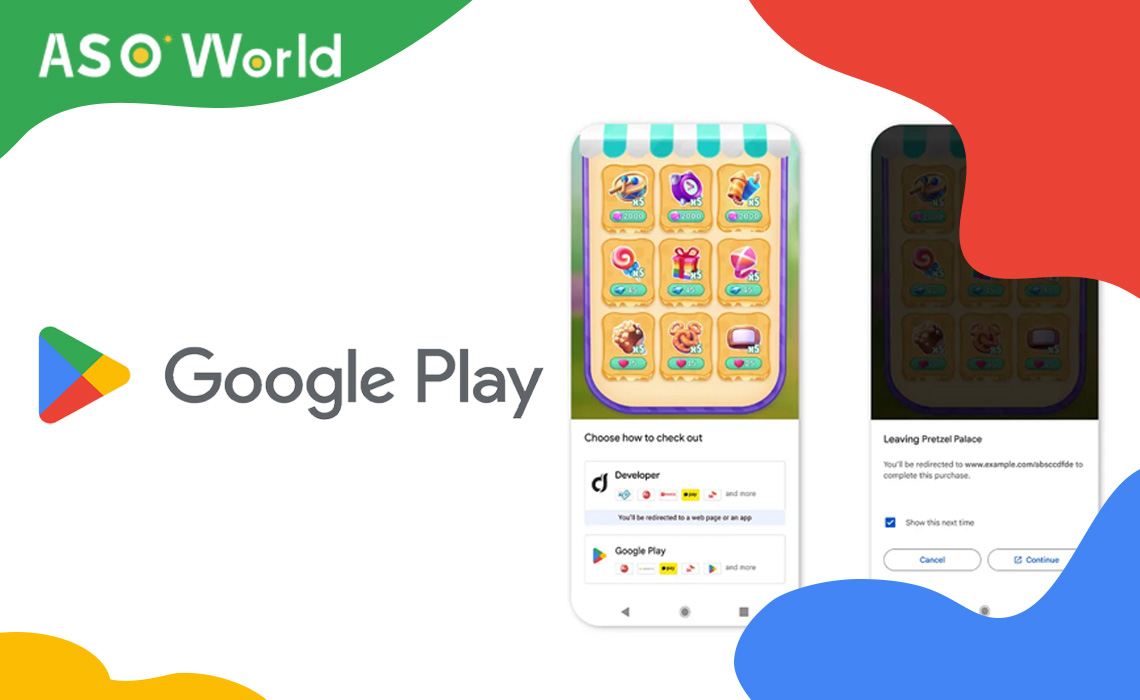
The move also introduces expanded billing choice, allowing developers to process transactions through alternative payment systems or external websites — and in many cases, avoid the additional 5% billing fee that comes with using Google Play's native system.
The New Fee Structure: A Full Breakdown
For the first time, Google has separated its service fee from its billing fee. This means developers who use the Google Play Billing system will pay two distinct charges, while those who opt for an alternative payment method will only pay one.
| Transaction Type |
Service Fee |
Billing Fee (Play Billing) |
Total (Play Billing) |
| First $1M in annual revenue |
10% |
+ 5% |
15% |
| Auto-renewing subscriptions |
10% |
+ 5% |
15% |
| New installs (other transactions) |
20% |
+ 5% |
25% |
| Existing installs (other transactions) |
30% |
+ 5% |
35% |
| Alternative billing or external link |
As above |
$0 (0%) |
No billing fee |
A key distinction lies in how Google defines new installs versus existing installs. A "new install" refers to any user who first installs or updates an app on or after the date the new fee structure takes effect in their region. Users who installed the app before that date will remain on the legacy fee structure until they update. This creates a real incentive for developers to drive fresh acquisition campaigns in newly eligible markets.
Global Rollout Schedule: When the New Rates Take Effect in Your Market
Google is rolling out the changes in phases to allow time for technical infrastructure preparation and alignment with regional regulations. The confirmed schedule is as follows:
| Launch Date |
Markets |
What Goes Live |
| June 30, 2026 |
US, EEA, UK |
New fee structure + Billing Choice Program |
| September 30, 2026 |
Australia, Europe, UK, US |
Games Level Up & Apps Experience programs |
| December 31, 2026 |
Japan, South Korea |
New fee structure + Billing Choice Program |
| September 30, 2027 |
All remaining regions |
Full global availability |
For app marketers operating across the Asia-Pacific region, this means Japan and South Korea — two of the world's highest-spending mobile markets — won't see the new rates until the end of the year. Make sure your campaign planning accounts for this staggered timeline.
📱 An App Marketer's Perspective: What This Means for Growth Strategy
Lower fees = higher LTV per user. With effective take rates dropping from 30% to as low as 10–15% depending on your monetization model, unit economics improve right away. For subscription-based apps in particular, the 10% service fee on auto-renewals is a game-changer — effectively returning up to 20 percentage points of additional margin that can be reinvested into paid user acquisition (UA).
New install incentives create a land-grab opportunity. Because existing users stay on legacy rates until they update, driving fresh installs in newly eligible markets becomes a top strategic priority. Consider front-loading your UA budget toward the US, EEA, and UK in Q3 2026.
Alternative billing builds direct customer relationships. Processing payments through your own systems or a third-party provider lets you hold onto first-party customer data, reduce platform dependency, and cut out the additional 5% billing fee entirely. The trade-offs — managing compliance, tax processing, and chargebacks in-house — are real, but for high-volume apps, the fee savings will often more than justify the added operational overhead.
Related: Looking to maximize your app's visibility during this transition? Consider leveraging ASOWorld's App Store Optimization (ASO) solutions to make sure your app ranks at the top when users search for alternatives.
The Legal Backdrop: Why Google Finally Gave Ground
These changes didn't happen voluntarily. They're the direct result of sustained legal pressure coming from multiple directions.
In December 2023, a jury in the Epic Games v. Google case found that Google had illegally monopolized both the distribution of Android apps and the processing of in-app payments. The verdict followed a $700 million settlement with nearly all 50 US states over similar antitrust claims. In March 2026, Google submitted a remedies proposal to a federal court in San Francisco, which Epic Games CEO Tim Sweeney publicly endorsed, calling the outcome "a victory for open platforms."
US District Judge James Donato has yet to approve the next phase of the settlement — a registration process for third-party app stores. If those terms are confirmed, Google would be required to certify competing app stores and allow them to operate on a level playing field with the Play Store. That would mean a far more dramatic restructuring than a fee cut alone.
Games Level Up & Apps Experience: Preferential Rates for Premium Partners
Beyond the baseline fee reductions, Google is rolling out two new partnership tiers designed to reward developers who invest heavily in the Android ecosystem.
The revamped Games Level Up program and the newly launched Apps Experience program offer additional fee discounts to apps and games that hit specific quality benchmarks, implement Google Play's recommended features, and deliver an outstanding user experience. Detailed eligibility guidelines are already live on Google's dedicated program pages, with preferential rates kicking in on September 30, 2026.
For developers already plugged into Google's ecosystem programs, this is a clear path to further margin improvement. For newcomers, it's a direct signal of what Google considers a best-in-class Android experience.
How This Compares to Apple — and Why It Matters
While Google is tearing down parts of its walled garden, Apple's App Store has seen very little equivalent reform in the United States. Apple made concessions in Europe in response to the Digital Markets Act (DMA), but the standard 15–30% fee structure remains firmly in place across the US market.
This gap creates a rare asymmetry in the competitive landscape. For the first time in Western markets, Android is offering meaningfully better economics for digital commerce than iOS. Developers thinking through their platform priorities — especially those operating on thin margins or with a heavy reliance on subscriptions — may find that the math is starting to favor Google Play.
Sweeney himself addressed the contrast in an interview with the Associated Press, expressing skepticism that Apple would follow Google's lead. "As the song goes, 'You can't always get what you want, but if you try, you can often get what you need,'" he said. "And what we really need right now is competition."
What Comes Next
The immediate impact is simple: starting June 30, developers keep more revenue per transaction. But the real story is in the second-order effects.
As the platform tax comes down, indie studios and mid-sized publishers gain the breathing room to take smarter risks on experimental genres, longer development cycles, and higher production values. Subscription businesses — from fitness apps to language learning platforms — suddenly have room to lower prices or ramp up ad spend. And alternative billing options mean that, for sophisticated operators, it may now be possible to build genuine end-to-end customer relationships within a closed app store ecosystem — something that simply wasn't on the table before.
The next milestone is September 30, when Australia joins the new fee structure and enrollment opens for the Games Level Up and Apps Experience programs. Then, on December 31, the changes take effect in Japan and South Korea — markets where per-capita mobile spending outpaces most Western economies.
By September 30, 2027, every region on the planet should be operating under the same rules. Whether that timeline holds will depend on regulatory friction, technical readiness, and whether Google runs into further legal challenges along the way. But the direction is no longer in question. The era of the unquestioned 30% app store tax is coming to an end — and the app marketers who move fastest stand to gain the most.

 COVID-19 UPDATE