COVID-19 UPDATE


Important Notice:Beware of scams using ASOWorld's name for part-time recruitment or ASO earning app activities. ASOWorld is not hiring any part-time staff. Trust only official information posted by ASOWorld.

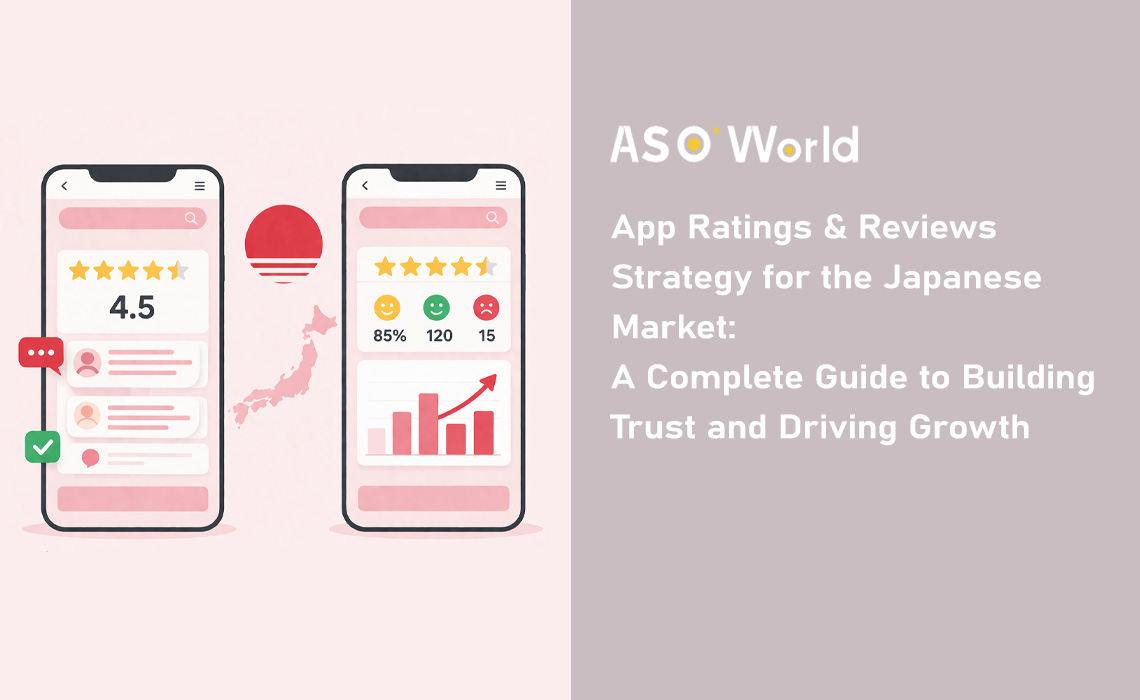
In 2026, app store ratings and reviews are far more than vanity metrics. They function as core trust signals that both Apple and Google weigh heavily in their ranking algorithms. For developers operating in the Japanese market—one of the most sophisticated and discerning app ecosystems in the world—mastering your review strategy is not optional. It is fundamental to sustainable growth.
Ratings and reviews are a significant ranking factor in both the Apple App Store and Google Play, operating alongside download volume and metadata optimization as the most critical drivers of visibility. A strong review profile does not merely look good—it directly influences where your app appears in search results, how users perceive your listing, and whether they ultimately tap the install button.
The stakes are real. Consider the ChatGPT backlash of late 2025: following a controversial update, the app experienced a 295% spike in uninstalls and a 775% increase in 1-star reviews within a single week. The review profile of a top-10 global app was materially damaged in days. For Japanese users, who approach app evaluation with exceptional rigor, a deteriorating review profile can be devastating to long-term trust.
Japan stands apart as a market where user expectations are unusually high, decision-making is deliberate, and trust must be earned through consistency and depth. This guide provides a comprehensive framework for optimizing your ratings and reviews strategy specifically for the Japanese market—whether you are a domestic developer looking to strengthen your position or a team preparing to enter one of the world's most rewarding app ecosystems.
Both Apple and Google have made their positions clear. Apple's developer documentation states that ratings and reviews directly improve discoverability and influence download decisions. Google's review policies emphasize that reviews should be useful, honest, unbiased, and rooted in genuine user experience. These are not passive guidelines—they reflect how the algorithms actually function.
While ratings and reviews carry significant weight in ranking calculations, it is important to maintain perspective: download volume and metadata optimization remain the most critical factors. Reviews amplify the effectiveness of both. An app with strong keyword coverage and healthy download numbers will see its position reinforced—or undermined—by the quality of its review profile.
Google Play places greater emphasis on review recency and volume, recalculating weighted averages more frequently and rewarding apps that maintain a steady flow of recent positive reviews. The App Store, by contrast, allows developers to reset ratings with each new version—a powerful tool when used strategically after addressing user complaints.
In 2026, Apple has introduced AI-generated review summaries that condense user feedback into concise overviews displayed prominently on app listings. This changes user behavior significantly. Rather than reading individual reviews, many users now scan the AI summary to form a quick impression. This means that the overall sentiment and recurring themes across your reviews matter more than any single review. A pattern of complaints about stability or performance will surface immediately in the summary, making it visible to every potential user.
Data from RevenueCat's 2026 State of Subscription Apps report reveals a critical dynamic. AI-powered apps are converting free trials at 8.5%, compared to 5.6% for non-AI apps. On the surface, that looks like a win. But annual retention tells a different story: AI apps retain just 21.1% of subscribers, compared to 30.7% for conventional apps. That retention gap inevitably surfaces in the review ecosystem. Users who churn leave negative reviews. Users who feel misled by overpromised AI capabilities leave detailed, damaging feedback—exactly the kind of sentiment that Apple's AI summaries will highlight.
Understanding your users is the foundation of any effective review strategy, and Japanese users approach app reviews with a mindset that is distinct from most other markets.
Japanese users are fundamentally education-first in their approach to app evaluation. Before downloading, they seek to understand—not just what an app does, but how it performs, what other users have experienced, and whether the developer is responsive and reliable. Search query data confirms this pattern: top Japanese-language queries around reviews include terms like アプリ評価 (app ratings), アプリレビュー (app reviews), and レビューとは (what is a review). These are informational queries—users seeking understanding before engagement.
Where users in some markets are drawn to innovation and novelty, Japanese users prioritize whether an app delivers on its core promise. Does it work as described? Is it stable? Does it respect the user's time? Reviews that address these questions carry the most weight. An app that is technically impressive but unreliable will struggle in Japan far more than in markets where users are more forgiving of rough edges.
Japanese users typically read many reviews before making a download decision. They compare alternatives methodically, look for consensus across reviewers, and pay close attention to how the developer responds to criticism. This longer evaluation cycle means that every review in your profile is doing ongoing work—influencing potential users days or weeks after it was posted.
Japan's communication culture tends toward indirectness, and this is reflected in the review style. Japanese reviews are often measured, detailed, and structured. Even negative reviews tend to be phrased carefully, acknowledging positive aspects before raising concerns. This means that a review that seems mild by Western standards may actually reflect significant dissatisfaction. Learning to read the nuance in Japanese reviews is essential for effective response strategies.
One particularly revealing Japanese search query is “Google Play レビュー削除” (Google Play review deletion). This reflects a deep concern about review integrity. Japanese users are not just reading reviews—they are evaluating whether the reviews themselves are trustworthy. Fake or manipulated reviews are detected quickly in this market, and the reputational damage from being associated with inauthentic feedback can be severe and lasting.
The optimal window for requesting a review in the Japanese market is 3 to 7 days after installation, and only after the user has completed a core action within the app. Prompting too early—before the user has experienced genuine value—feels presumptuous and is likely to be dismissed or, worse, generate a negative reaction. Japanese users expect to be asked for feedback only when they have had sufficient time to form a meaningful opinion.
Review prompts in the Japanese market should be respectful, humble, and non-intrusive. Avoid aggressive language, urgency tactics, or anything that feels like a demand. Phrasing should express gratitude for the user's time and make clear that the review is entirely optional. A prompt that begins with an acknowledgment—such as thanking the user for using the app—before gently requesting feedback aligns with Japanese communication norms and performs significantly better than direct requests.
100 : 20 : 10 is the recommended install-to-rate-to-review ratio for the Apple App Store. For Google Play, aim for 100 : 15 : 5. These ratios should be calibrated based on observed user behavior and adjusted over time.
Maintaining these ratios helps ensure that your review profile appears natural to both users and algorithms. Significant deviations—especially an unusually high review-to-install ratio—can trigger scrutiny and undermine the credibility you have worked to build.
Review volume should follow a natural weekly rhythm. A distribution pattern of approximately 2:2:2:2:3:3:3 across Monday through Sunday reflects organic usage patterns, where activity tends to increase toward the weekend. Sudden spikes in review volume look artificial and can trigger algorithmic flags. Consistency and naturalistic pacing are essential for maintaining a healthy review profile in the Japanese market, where both users and platforms are attentive to signs of manipulation.

Negative reviews are inevitable. How you respond to them—especially in the Japanese market—can determine whether a crisis becomes a catalyst for trust or an accelerant for decline.
In Japan, responses to negative reviews must be formal, respectful, and thorough. A brief, generic response signals indifference—the opposite of what Japanese users expect. Effective responses follow a clear structure:
This structured approach transforms negative reviews from liabilities into demonstrations of professionalism. Potential users reading your responses will evaluate not just what reviewers said, but how your team handled it.
The ChatGPT incident of late 2025 is instructive. A 295% spike in uninstalls and a 775% increase in 1-star reviews within a single week demonstrated how quickly user trust can collapse. In the Japanese market, where trust is built incrementally through consistent performance, a crisis of this magnitude would require an extended, deliberate recovery effort. The lesson is clear: proactive review management is not a luxury—it is insurance against catastrophic reputation damage.
Beyond crisis management, negative reviews are a valuable source of product intelligence. Recurring complaints about specific features, performance issues, or usability problems are direct signals about where your product falls short of user expectations. In the Japanese market, where users provide unusually detailed and structured feedback, negative reviews often contain actionable insights that paid user research would struggle to match. Build a systematic process for routing review insights to your product team and closing the loop publicly when issues are resolved.
The popularity of the Japanese search query “Google Play レビュー削除” reveals a widespread concern among developers: reviews disappearing from their listings. Understanding why this happens—and how to prevent it—is critical for maintaining a stable, trustworthy review profile.
Google Play removes reviews that violate its policies, including reviews that appear to be incentivized, reviews posted by accounts flagged for suspicious activity, duplicate or spam reviews, and reviews that contain inappropriate content. Importantly, Google's detection systems also flag patterns that suggest coordinated review campaigns—sudden spikes in volume, reviews from accounts with no other activity, or clusters of reviews with suspiciously similar language.
The key to avoiding review removal is maintaining a profile that reflects genuine user engagement. This means ensuring that review volume grows proportionally to your install base, that reviews arrive at a natural cadence rather than in bursts, and that the content of reviews reflects diverse, authentic user experiences. In the Japanese market, where users are already evaluating whether reviews are trustworthy, any sign of artificial inflation will damage credibility with both the platform and your audience.
The relationship between ratings and conversion rates is well established, but in the Japanese market, the dynamics are particularly pronounced.
A 4.5-star app consistently outranks and outconverts a 4.0-star app with similar download volumes and metadata optimization. The difference is not marginal. In competitive categories—finance, health, productivity, gaming—that half-star gap translates into measurably higher tap-through rates from search results, higher install rates from the listing page, and stronger long-term retention. The algorithms interpret higher ratings as a quality signal, reinforcing visibility in a virtuous cycle.
4.5 stars are the threshold where conversion rates increase substantially. Apps that maintain a 4.5+ rating in the Japanese market see consistently stronger performance across both visibility and install conversion than competitors rated 4.0–4.4.
Japanese users are particularly sensitive to the quality and authenticity of reviews, not just the star rating itself. A 4.7-star app with shallow, generic reviews may actually convert worse than a 4.4-star app with thoughtful, detailed feedback—because Japanese users read reviews carefully and use them to validate the rating. This means that pursuing a high rating through artificial means is self-defeating in this market. The path to better conversion runs through genuine user satisfaction and organic feedback that reflects real experiences.
Track conversion metrics alongside your review profile: listing view-to-install rate, search impression-to-tap rate, and trial-to-subscription rate. When you see these metrics shift, cross-reference with recent changes in your review profile to understand the causal relationship.
Ratings and reviews do not exist in isolation. They are one component of an interconnected system, and their impact is amplified or diminished depending on how well they integrate with the rest of your ASO strategy.
The most powerful dynamic in ASO is the compounding feedback loop: keyword optimization drives visibility in search results. Visibility drives installs. Installs drive usage. Usage—when the product delivers on its promise—drives positive reviews. Positive reviews improve conversion rates on your app store listing. Higher conversion rates signal quality to the algorithm, which further improves keyword rankings. The cycle accelerates.
This is why improving organic conversions through user experience requires looking beyond any single metric. A faster app generates better reviews. A clearer onboarding flow reduces early churn, which reduces the volume of frustrated 1-star reviews from users who never understood the product. In the Japanese market, where reliability and polish are baseline expectations, every UX improvement is also a review improvement.
Structured, consistent monitoring is essential. Track the following on a weekly basis:
This data-driven approach allows you to identify emerging issues before they escalate and to measure the impact of your optimization efforts with precision. Integrating your review monitoring with your broader app promotion strategy ensures that all channels are working in concert.
Theory is essential, but results are what matter. The most compelling evidence for integrated review optimization comes from documented campaigns that combine review strategy with broader ASO efforts.
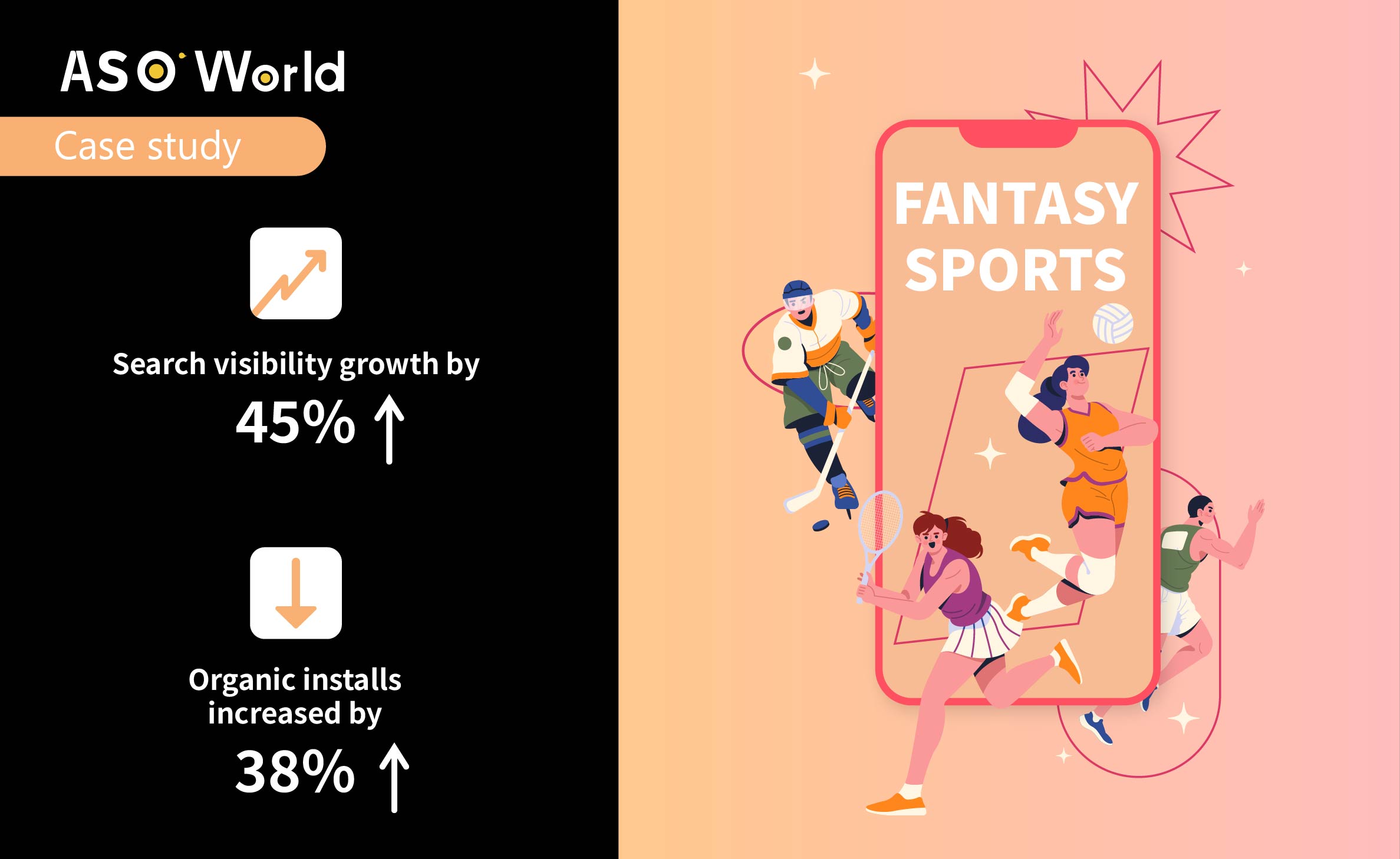
A fantasy sports app case study demonstrated that combining review optimization with keyword-driven installs achieved 38% organic install growth on Google Play. The campaign did not rely on reviews alone or keywords alone—it integrated both into a unified strategy where each reinforced the other. Improved reviews boosted conversion rates, while keyword optimization ensured the app was visible to the right users. The compounding effect produced results that neither tactic could have achieved independently.
This principle applies directly to the Japanese market. Japanese users conduct thorough research before installing, which means that both visibility (keyword rankings) and credibility (review quality) must be strong simultaneously. An app that appears in search results but lacks a convincing review profile will lose Japanese users at the listing page. An app with excellent reviews but poor search visibility will never reach them in the first place.
38% organic install growth achieved by combining review optimization with keyword-driven installs—demonstrating the power of integrated ASO strategy.
ASOWorld provides customized optimization services that integrate ratings and reviews management with keyword strategy, designed to meet the specific requirements of the Japanese market. From review profile auditing to ongoing optimization and monitoring, professional support ensures that your strategy is both effective and compliant with platform policies.
If you are a developer or marketing team based outside Japan and looking to grow in this market, a few additional considerations apply.
Metadata localization is essential. Your app title, subtitle, description, and keyword fields must be professionally localized into Japanese—not merely translated. Japanese users will immediately recognize machine-translated or awkward phrasing, and it signals a lack of commitment to the market.
Review responses must be in natural, professional Japanese. Responding to Japanese reviews in English, or in poorly translated Japanese, undermines the trust you are trying to build. Invest in native-level Japanese communication for all user-facing interactions.
Cultural adaptation matters more than literal accuracy. The tone, structure, and expectations around app store content differ significantly in Japan. What works in your home market—from promotional language to feature emphasis—may need to be rethought entirely for Japanese users. Professional ASO support from teams with deep experience in the Japanese market is strongly recommended for non-domestic entrants.
The apps that will thrive in the Japanese market are not necessarily those with the largest budgets or the most features. They are the ones that understand how trust is built in this uniquely demanding ecosystem—and that invest in earning that trust through every review, every response, and every interaction with their users. In Japan, your review profile is not a metric to manage. It is a relationship to cultivate.
Get a good start for your app optimization with practical ASO guideline!
Want to get the latest Guides & Insights from ASOWorld?
Related posts