COVID-19 UPDATE


Important Notice:Beware of scams using ASOWorld's name for part-time recruitment or ASO earning app activities. ASOWorld is not hiring any part-time staff. Trust only official information posted by ASOWorld.

Instagram Instants hit #1 on the App Store in under 24 hours, but polarized reviews signal retention risks. Learn what app marketers should do next.


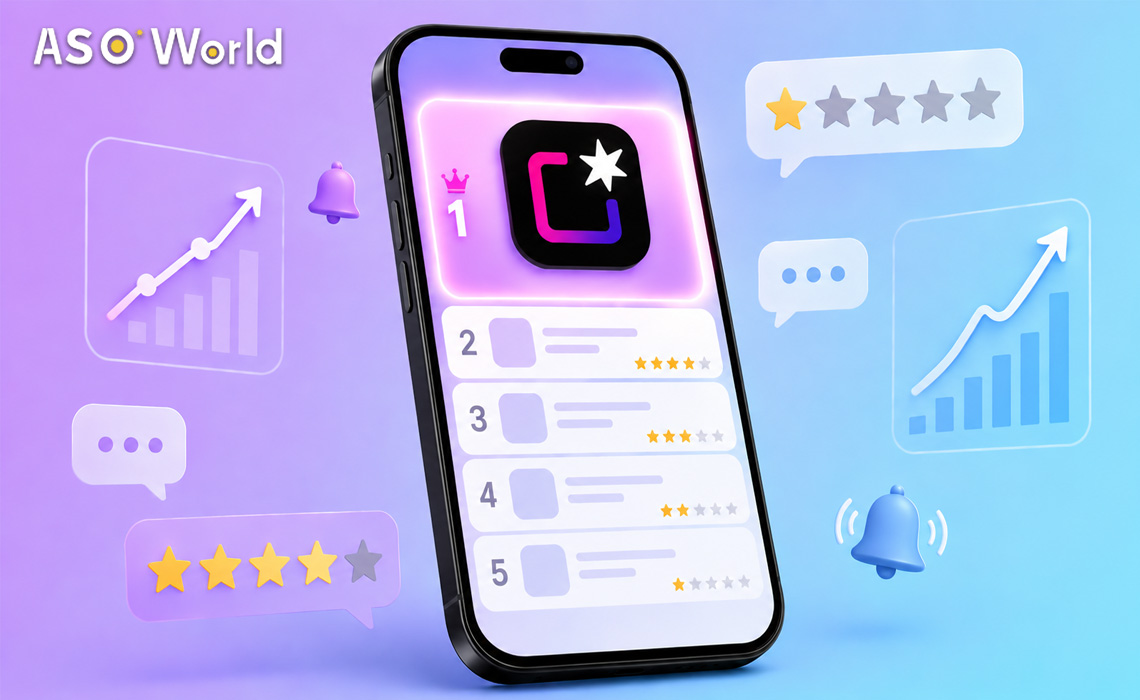
On May 13, 2026, Meta launched Instants — a standalone app built on Instagram's infrastructure — and it shot to #1 on the US App Store free chart in under 24 hours. ChatGPT dropped to #2. Claude fell to #3. For anyone tracking App Store ranking changes in May 2026, this was the single biggest disruption of the month.
But raw chart position only tells half the story. When you dig into the review data, a different picture emerges — one that every app marketer and developer should study closely.
Instants didn't earn the #1 spot through traditional ASO channels. It earned it through platform-level distribution — the kind of muscle only a company with 2+ billion monthly active users can flex.
Meta's launch playbook included:
The result? A volume of installs so massive that it overwhelmed every organic ranking signal in the chart algorithm. This is a pattern we've seen before with Meta product launches (Threads followed a similar trajectory in 2023), and it raises an important question for independent developers: when a platform owner launches a competing product, what can you actually do?
Within 48 hours, Instants accumulated several thousand reviews with a 4.2-star average. On the surface, that looks healthy. But the distribution is anything but normal.
| Rating | Volume | Typical Review Content |
|---|---|---|
| 5 Stars | High | Short, positive: "finally", "love this", "simple and clean" |
| 4 Stars | Very Low | Almost nonexistent |
| 3 Stars | Very Low | Almost nonexistent |
| 2 Stars | Low | Mixed complaints about limited features |
| 1 Star | High | Long essays: "Snapchat clone", privacy concerns, battery drain complaints |
This is a classic U-shaped sentiment distribution. Users who understand the core concept — unedited, ephemeral, in-the-moment photos — rate it highly. Users who downloaded it expecting a full-featured Instagram experience rate it poorly. The middle ground barely exists.
A surprising number of 1-star reviews specifically mention the lack of editing features as a negative — which is, ironically, the entire product premise. This mismatch between user expectation and product reality is a textbook example of what happens when distribution outpaces positioning.
A 4.2-star average might look acceptable on a product page, but app ratings and reviews directly influence both visibility and conversion. Here's why polarized sentiment is more dangerous than a uniformly mediocre rating:
A high star average with polarized sentiment is a ticking clock. The chart position may hold for days, but if retention and review quality don't stabilize, the ranking decay will follow — and it will be steeper than a gradual decline.
Ready to optimize your ratings & reviews strategy?
Explore ASOWorld's services and insights to build an ASO pipeline that turns user sentiment into organic growth.
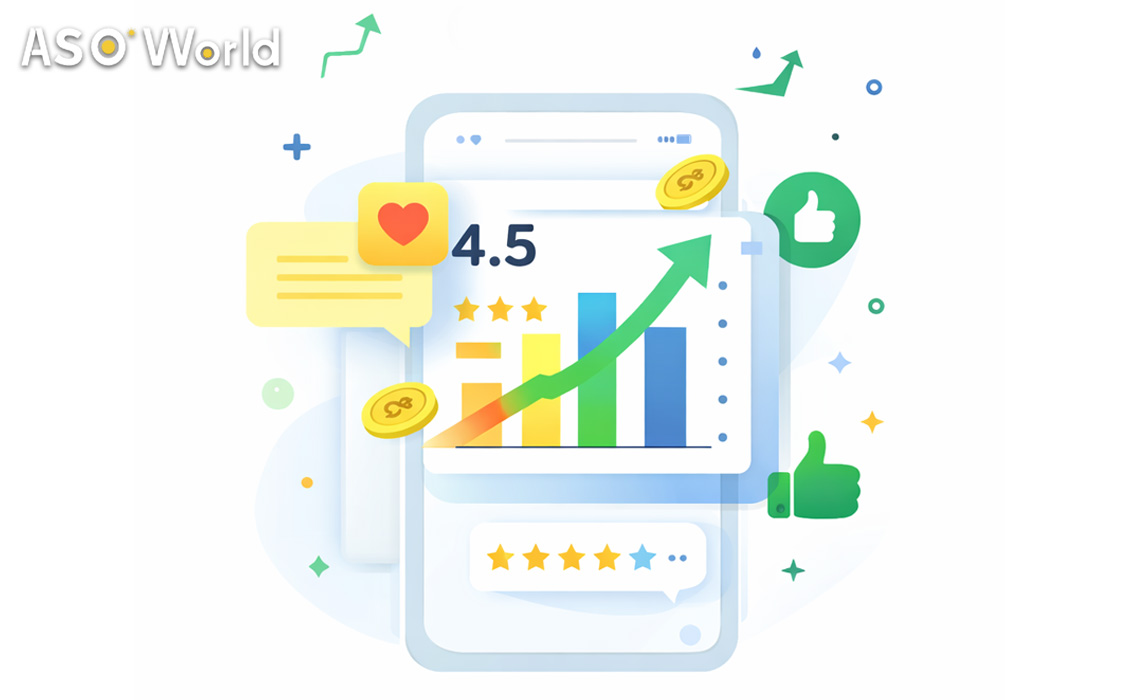
Instants was available on Google Play since early May, weeks before the iOS launch. The Android rollout followed a quiet, organic growth path — no notification blasts, no cross-promotion surge. The result? A higher rating (approximately 4.5 stars on Android vs. 4.2 on iOS) and a more balanced sentiment distribution.
This divergence highlights a critical insight about how retention and engagement now affect app store rankings: the Android early adopters self-selected. They knew what Instants was. They understood the ephemeral, no-edit concept. The iOS launch-day flood brought in a much broader, less filtered audience — many of whom had misaligned expectations.
For app marketers planning their own launches, the lesson is nuanced. A massive Day 1 spike generates chart visibility, but it can also pollute your review profile with users who aren't your target audience. Google Play's new engagement-based ranking metrics (DAU/MAU ratio, User Loss Rate) will punish exactly this pattern over time.
⚡ Expert Tips
If you're marketing an app in the Social, Photo, or Messaging categories, the Instants launch creates both risk and opportunity. The chart disruption displaced dozens of apps from their established positions. But disruptions also create keyword gaps.
When a new entrant captures massive install volume, the surrounding keyword landscape shifts. Terms like "disappearing photos," "ephemeral messaging," and "close friends sharing" are now more competitive — but adjacent long-tail keywords may have temporarily lost their top-ranked apps. This is where disciplined keyword research and optimization separates reactive marketers from strategic ones.
Additionally, if your app competes in a category that Instants has entered, now is the time to reinforce your own keyword install strategy to defend your positions before the new ranking equilibrium settles.
The biggest unknown is whether Instants can retain the users it acquired. The polarized review sentiment strongly suggests a retention problem is coming. Users who rated the app 1 star are unlikely to open it again. That's a significant chunk of the install base that will churn within the first week.
For the broader app marketing community, this is a case study in the tension between distribution power and product-market fit signaling. Meta can put Instants in front of hundreds of millions of people overnight. But it can't force those people to come back tomorrow.
And in 2026's app store algorithms, retention is the ranking factor that matters most. An app that acquires 10 million users on Day 1 but retains only 15% by Day 7 will see its ranking erode faster than an app that acquires 100,000 users and retains 45%.
Meta leveraged its existing Instagram user base through in-app integration, push notifications, and Stories cross-promotion. This platform-level distribution generated an install volume that overwhelmed organic ranking signals in the App Store chart algorithm, pushing Instants to #1 within hours of its iOS launch on May 13, 2026.
A U-shaped distribution means an app has high volumes of both 5-star and 1-star reviews, with very few in between. For ASO, this signals misaligned user expectations. While the star average may look acceptable, the negative review content can hurt keyword relevance, lower conversion rates, and trigger unfavorable AI-generated review summaries on product pages.
The Android version launched weeks earlier with minimal promotion, attracting early adopters who understood the app's ephemeral, no-edit concept. The iOS launch triggered a massive, broad-audience influx through aggressive cross-promotion, bringing in many users with misaligned expectations. This led to lower ratings and more polarized sentiment on iOS.
Focus on three areas: (1) defend your keyword positions by reinforcing keyword install volume for your core terms, (2) monitor the shifting keyword landscape for newly competitive and newly available long-tail opportunities, and (3) strengthen your review profile through proactive review management and strategic in-app review prompts.
Not anymore. In 2026, both Apple and Google evaluate review quality beyond the star average. AI-generated review summaries, sentiment analysis, retention metrics, and engagement ratios all contribute to ranking and conversion. An app with a 4.2-star average but polarized, negative review content may underperform an app with a 4.0-star average and consistently positive sentiment.
 User Acquisition,Mobile Analytics,
Get FREE Optimization Consultation
Let's Grow Your App & Get Massive Traffic!
All content, layout and frame code of all ASOWorld blog sections belong to the original content and technical team, all reproduction and references need to indicate the source and link in the obvious position, otherwise legal responsibility will be pursued.