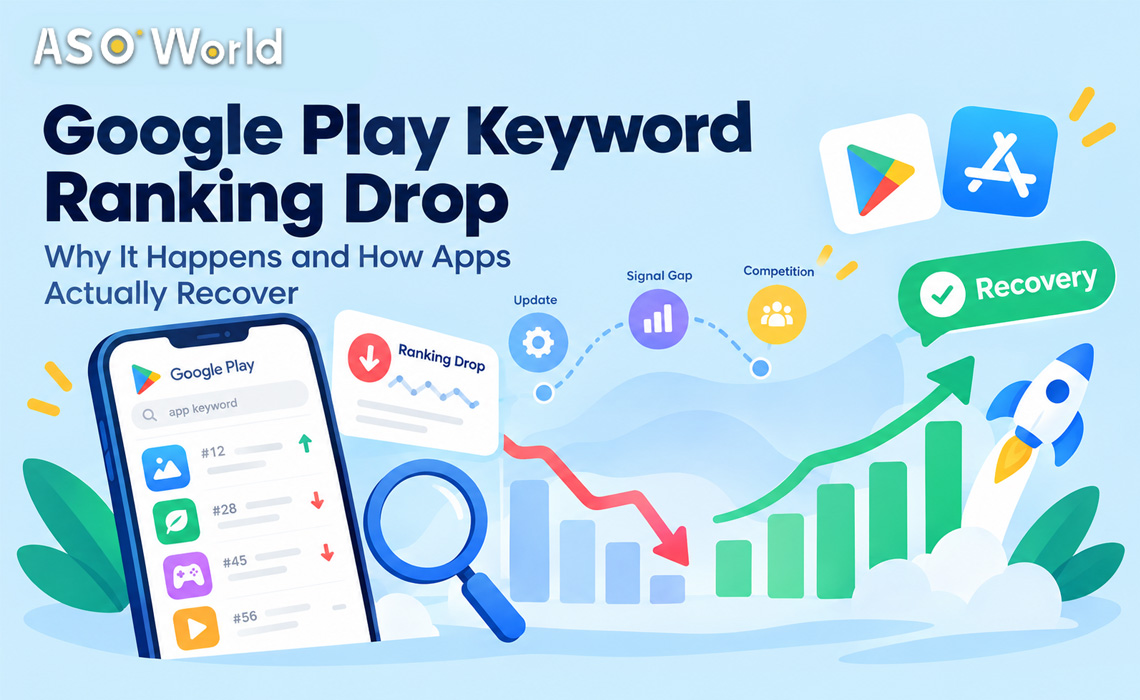
Внезапное падение позиций ключевых слов в Google Play редко является санкцией — почти всегда это одно из трёх: окно повторной оценки алгоритмом после обновления, разрыв в сигналах эффективности (установки/вовлечённость не соответствовали прежнему уровню позиций) или усиление конкурентного давления по тем же запросам. Восстановление происходит по предсказуемому сценарию, если определить, с какой из трёх ситуаций вы столкнулись.
Ниже рассмотрены кривая восстановления, различия между Google Play и App Store в этом конкретном вопросе, а также реальный (деидентифицированный) пример восстановления с фактическими цифрами.
Момент паники: ваше приложение занимало позицию, а теперь её нет
Вы проверяете позиции по ключевым словам и видите, что запрос, по которому на прошлой неделе вы находились на 6–8-й позиции, теперь исчез из первой тридцатки. При этом в листинге ничего не изменилось. Обычно первая мысль: «Google нас наказал», — но в подавляющем большинстве случаев алгоритм ранжирования Google Play не работает через отдельные события санкций. Он постоянно пересчитывает позиции на основе сигналов релевантности и эффективности, поэтому падение позиции — это изменение сигнала, а не наказание.
Почему позиции в Google Play действительно снижаются
1. Повторная оценка после обновления. Каждое обновление приложения обнуляет часть уверенности алгоритма в ваших текущих данных об эффективности. Google Play нужны свежие сигналы, чтобы подтвердить, что обновление не повлияло на качество, скорость загрузки или частоту сбоев. Это приводит к временному снижению, структурно похожему на то, что происходит после любого обновления приложения, — это документированный и ожидаемый сценарий, а не целенаправленное действие против вашего приложения.
2. Ослабление сигнала эффективности. Если скорость установок или вовлечения по ключевому слову замедляется по сравнению с конкурентами — даже без абсолютного снижения показателей, — ваши относительные позиции могут упасть, поскольку Google Play ранжирует приложения на конкурентной основе, а не по абсолютной оценке качества.
3. Вытеснение конкурентами. Иногда в вашем приложении вообще ничего не меняется. Конкурент запустил кампанию установок по ключевым словам, обновил метаданные или просто показал сильные органические результаты за неделю, и позиции вокруг вас сместились.
4. Изменение ключевых полей или метаданных. Это встречается реже, но исключить такую причину стоит: если недавнее обновление изменило название, краткое или полное описание таким образом, что плотность ключевого слова для конкретного запроса снизилась, оценка релевантности этого запроса упадёт независимо от эффективности.
Типичная кривая восстановления
Падение и восстановление позиций обычно проходят в три этапа, а не представляют собой прямой подъём к прежнему уровню:
| Этап |
Срок (обычно) |
Что происходит |
| Начальное падение |
Дни 0–3 после обновления или изменения сигнала |
Алгоритм снижает прежний уровень уверенности; позиции падают быстрее, чем фактически изменилось базовое качество |
| Минимальная точка |
Дни 3–10 |
Позиции находятся на самом низком уровне, пока накапливаются новые данные об эффективности; именно на этом этапе изменения метаданных, вызванные паникой, наносят наибольший ущерб, поскольку снова запускают цикл оценки |
| Восстановление |
Дни 10–21+ |
Позиции возвращаются к прежнему уровню или поднимаются выше него, поскольку свежий сигнал эффективности подтверждает качество; полное восстановление по конкурентным запросам может занять 3–4 недели |
Критическая ошибка, которую совершают большинство разработчиков, — вмешательство на этапе минимальной точки. Изменение названия, описания или поля ключевых слов в середине повторной оценки алгоритмом запускает процесс формирования уверенности заново, с более низкой исходной точки, — зачастую превращая двухнедельное восстановление в восстановление продолжительностью 5–6 недель.
Google Play и App Store: почему сроки восстановления различаются
| Фактор |
Google Play |
App Store |
| Период учёта сигналов ранжирования |
Более продолжительный период поведенческих данных; учитывается стабильная вовлечённость за большее количество дней |
Более короткий цикл обратной связи; изменения позиций могут проявиться в течение 24–72 часов после внесения изменений |
| Чувствительность к обновлениям |
Более высокая — частые обновления могут продлевать циклы повторной оценки, если выпускаются слишком близко друг к другу |
Более низкая — позиции в App Store сравнительно стабильнее при обычных обновлениях |
| Фактор восстановления |
Стабильные установки и вовлечённость на протяжении 2–3 и более недель |
Более быстрая реакция на исправление ключевых слов и метаданных, но для полного подтверждения всё равно требуется реальный сигнал эффективности |
Практический вывод: если вы управляете приложением на обеих платформах, не применяйте сроки восстановления для iOS к падению в Google Play. Период ожидания, разумный для одной платформы, на другой может выглядеть как бездействие, и наоборот.
Деидентифицированный пример восстановления
У приложения-утилиты среднего размера после планового цикла обновлений кластер основных ключевых слов опустился за пределы первой двадцатки. Вместо переписывания метаданных в разгар падения команда запустила структурированную программу улучшения позиций ключевых слов — объединив исследование ключевых слов, чтобы подтвердить актуальность целевых запросов, и целевые установки по ключевым словам для восстановления сигнала эффективности, необходимого алгоритму для повторного подтверждения релевантности.
Результаты относительно показателей до падения: целевой набор ключевых слов вернулся в топ-3, ежедневное количество загрузок увеличилось на 160%, а коэффициент конверсии листинга вырос на 60%. Рост конверсии в основном был обусловлен самим восстановлением позиций, которое вернуло приложению видимость среди пользователей, уже выполнявших поиск с высокой заинтересованностью.
Главный вывод: решением стало не переписывание метаданных, а повторная подача конкретного сигнала (реального поведения пользователей при поиске и установке), который ослаб, с фокусом на ключевых словах, уже подтверждённых как релевантные.
Чек-лист восстановления: что делать (и чего не делать) при падении позиций
Что делать:
- Перед реакцией убедитесь, что падение действительно является устойчивым (3 и более дней), — однодневные колебания являются обычным шумом.
- Проверьте, связано ли падение с недавним обновлением, запуском конкурента или ни с одним из этих факторов.
- Проведите диагностику видимости и конверсии, чтобы понять, продолжаете ли вы отображаться в результатах (только на более низких позициях) или полностью выпали из индекса.
- Если список ключевых слов по-прежнему актуален, сосредоточьтесь на восстановлении сигнала эффективности, а не на переписывании метаданных.
Чего не делать:
- Не изменяйте название, поле ключевых слов или описание на этапе минимальной точки, если только не подтверждена конкретная причина, связанная с метаданными.
- Не считайте падение санкцией и не подавайте апелляцию — стандартный алгоритм ранжирования Google Play не применяет «санкции» за обычные колебания позиций, поэтому обычно обжаловать нечего.
- Не ждите бесконечно бездействуя — если через 3–4 недели по запросу не появилось никаких признаков восстановления, возможно, необходимо повторно проверить само ключевое слово, а не только ждать завершения периода оценки алгоритмом.
- Не запускайте в панике несвязанную кампанию по повышению видимости (например, массовые установки пакета), если фактический разрыв связан с конкретным ключевым словом. Если ваша цель — позиция по определённому запросу, установки по ключевым словам, ориентированные на этот запрос, являются более прямым инструментом, чем общие кампании по увеличению количества загрузок.
Часто задаваемые вопросы
Сколько времени занимает восстановление после падения позиций в Google Play?
Большинство падений, связанных с обновлениями или обычной повторной оценкой алгоритмом, устраняются в течение 10–21 дня, если не вмешиваться или поддержать восстановление сигнала эффективности. Падения, вызванные настоящим вытеснением конкурентами, могут длиться дольше и потребовать расширения стратегии работы с ключевыми словами вместо простого ожидания.
Стоит ли откатывать обновление приложения, если позиции упали сразу после него?
Не автоматически. Кратковременное снижение после обновления в большинстве случаев является ожидаемым поведением. Рассматривать откат стоит только при необычно сильном падении (полном выпадении из индекса, а не просто снижении позиции) или если оно совпадает с сообщениями о сбоях либо негативными отзывами, связанными с самим обновлением.
Является ли падение позиций в Google Play тем же самым, что и санкция?
Нет. Стандартный алгоритм Google Play постоянно пересчитывает позиции на основе релевантности и эффективности; он не применяет отдельные санкции за обычные колебания позиций. Внезапное полное исчезновение из результатов поиска — это иная и гораздо более редкая ситуация, обычно связанная с нарушением правил, а не с механизмами ранжирования.
Действительно ли установки по ключевым словам помогают восстановить позиции или лишь маскируют проблему?
Если исходный список ключевых слов по-прежнему корректен, а падение вызвано разрывом в сигнале эффективности, целевые установки по ключевым словам предоставляют именно тот сигнал, которого алгоритм ожидает для повторного подтверждения. Это становится «маскировкой проблемы» только в том случае, если само ключевое слово больше не является реалистичным соответствием вашему приложению или его конкурентной среде. Поэтому подтверждение актуальности списка ключевых слов важнее источника трафика, который вы используете для восстановления сигнала.
Применяется ли такая модель восстановления к App Store так же, как к Google Play?
Общие этапы (падение, минимальная точка, восстановление) применимы к обеим платформам, но в App Store сроки короче: он быстрее реагирует на исправления метаданных и ключевых слов. Google Play требуется более продолжительный период устойчивых поведенческих сигналов, прежде чем он подтвердит восстановление позиций.
Всё ещё не уверены, связано ли падение с разрывом в сигнале эффективности, проблемой ключевых слов или обычным шумом после обновления? Пройдите приведённый выше чек-лист восстановления, прежде чем направлять бюджет на какое-либо отдельное решение.
 COVID-19 UPDATE