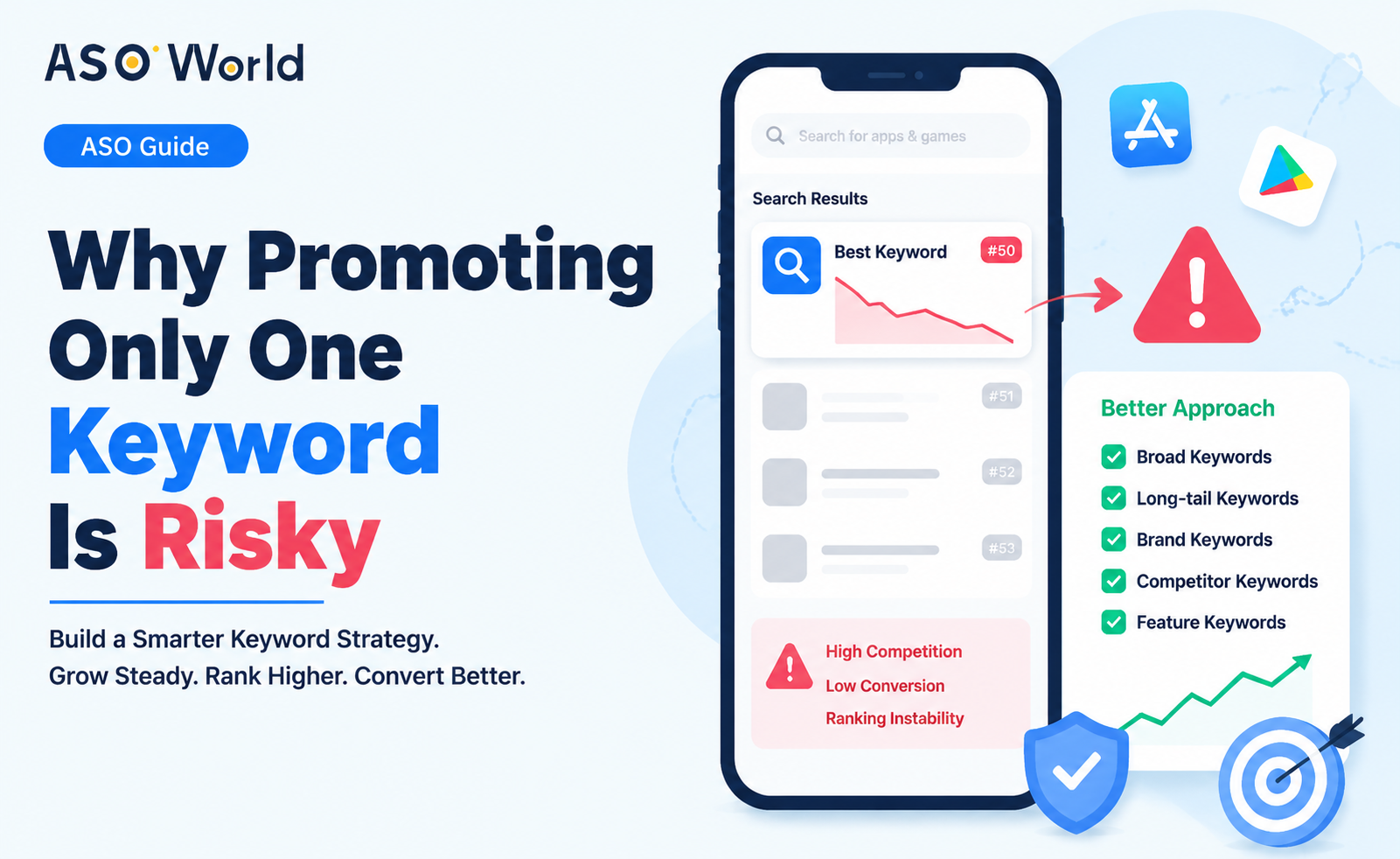
Многие разработчики приложений и начинающие маркетологи начинают ASO с простого вопроса: «Какое ключевое слово мне продвигать?» Бюджеты ограничены, конкуренция высока, поэтому выбор термина с наибольшим потенциалом кажется очевидным решением. Однако такой подход нередко приводит к рискованному решению: поставить всё на одно ключевое слово, которое лишь выглядит лучшим на бумаге.
На практике одно ключевое слово редко отражает всё поисковое поведение целевой аудитории. Пользователи App Store и Google Play ищут приложения с разным уровнем осведомлённости, срочности, с разными формулировками, потребностями в функциях и знакомостью с брендом. Одно ключевое слово может иметь высокий объём поиска, но слабую релевантность, низкое конверсионное намерение или слишком высокую конкуренцию для нового приложения. Если вы только начинаете изучать ключевые слова, это руководство по как проводить исследование ключевых слов и повышать видимость приложения охватывает основы поискового продвижения.
Почему подход «одно лучшее ключевое слово» не работает
Логика одиночного таргетинга по ключевым словам проста: чем выше объём поиска — тем больше загрузок. Объём легко сравнивать: ключевое слово с популярностью 80 выглядит привлекательнее, чем со значением 25, а широкие категорийные термины кажутся ценнее, чем конкретные низкочастотные фразы.
Однако эффективность определяется не только объёмом. Рекомендации Apple Ads подчёркивают важность релевантности наряду с популярностью, а в более широкой практике ASO оптимизация рассматривается как непрерывный цикл, а не разовое решение. Магазины приложений вознаграждают совпадение намерения пользователя, релевантности приложения, ранжирующих сигналов и конверсионного поведения — но никак не одни лишь амбиции.
Например, приложение для медитации может продвигаться по слову «здоровье», однако пользователи, вводящие этот запрос, могут искать фитнес-трекеры, инструменты для диеты, симптоматические чекеры или больничные приложения. Намерение слишком размыто. Термин «медитация для сна» имеет меньший объём, но более чёткое намерение и более высокий конверсионный потенциал. «Лучшее» ключевое слово — не то, у которого самые большие цифры, а то, по которому ваше приложение реально может ранжироваться, конвертировать и вокруг которого можно строить дальнейшее развитие.
Ставка на одно ключевое слово также концентрирует бюджет, ожидания и весь накопленный опыт в одном направлении. Если это слово слишком конкурентно, слишком широко или слишком узко — вся кампания проваливается. Хуже того, поиск в магазинах динамичен: конкуренты обновляют метаданные, запускают кампании и реагируют на тренды. Когда вся стратегия зависит от одного термина, любое изменение сложности или конкурентного давления обрушивает результаты.
Существует и проблема с аналитикой. Продвижение одного ключевого слова почти ничему не учит вас о рынке. Вы можете узнать, что оно не работает, но не поймёте причину — несоответствие намерению, неудачные креативы, сложность ранжирования, локализация или несоответствие продукта рынку. Более широкий набор ключевых слов обеспечивает сравнительное обучение: вы видите, какие группы намерений дают отклик, какие типы растут быстрее и куда направить бюджет в следующем цикле.
⚡ Советы экспертов
- Сгруппируйте ключевые слова-кандидаты по намерению пользователя, прежде чем инвестировать в инсталлы: проблемные, функциональные, категорийные, конкурентные и брендовые запросы.
- Не позволяйте объёму поиска доминировать в принятии решений. Сравнивайте каждое ключевое слово по релевантности, текущей позиции, сложности и ожидаемому конверсионному намерению.
- Используйте один цикл кампании для проверки нескольких возможностей вместо того, чтобы заставлять одно ключевое слово тянуть весь план роста.
Мыслить портфелями, а не одиночными ставками
Портфель ключевых слов — это структурированный набор, работающий как единое целое. Одни охватывают широкий категорийный спрос, другие перехватывают высокоинтентные низкочастотные запросы, третьи защищают брендовое пространство или таргетируют сравнительные запросы, четвёртые используются для ранних побед в менее конкурентных нишах. Вместе они формируют реалистичную ASO-стратегию.
Это соответствует тому, как пользователи на самом деле ищут приложения. Тот, кто вводит «фоторедактор», — не тот же пользователь, что ищет «удалить фон с фото», «AI-редактор портретов» или «альтернатива Canva». Все они могут быть потенциальными пользователями, но на разных стадиях формирования потребности. Продвигая только «фоторедактор», вы упускаете конкретные пути, где конверсия зачастую намного выше.
Инструменты для отслеживания позиций ASO-ключевых слов поддерживают портфельное мышление, отслеживая позиции, анализируя объёмы, изучая конкурентов и предлагая варианты. Суть не в самом инструменте, а в смене мышления: данные должны помогать формировать сбалансированный набор возможностей, а не выбирать единственного победителя.
| Тип ключевого слова |
Основная ценность |
Основной риск |
Лучшее применение в ASO |
| Широкая категория |
Высокий потенциал видимости |
Высокая конкуренция, смешанное намерение |
Использовать после того, как приложение наберёт более сильные сигналы ранжирования и конверсии |
| Низкочастотный (long-tail) |
Более чёткое намерение, меньшая сложность |
Меньший объём по каждому термину |
Использовать для ранних побед в ранжировании и проверки конверсии |
| Функциональный |
Высокая релевантность ценности продукта |
Требует точного соответствия метаданных |
Использовать для связи спроса с ключевыми функциями приложения |
| Конкурентный |
Доступ к пользователям, сравнивающим альтернативы |
Высокая конкуренция, чувствителен к конверсии |
Использовать осторожно, когда ваше ценностное предложение явно дифференцировано |
Построение более безопасного процесса отбора
Более безопасный процесс начинается с релевантности. Описывает ли ключевое слово, что приложение реально делает, какую проблему решает или чего ожидают пользователи после перехода на страницу? Если трафик не соответствует скриншотам, заголовку, подзаголовку, описанию, рейтингам или впечатлению от первого использования — одно лишь ранжирование ничего не решает.
Далее оцените реалистичность. Новые приложения не должны полностью зависеть от самых конкурентных головных терминов категории. Включайте термины, где текущий разрыв в позициях преодолим. Эта статья о расширении поискового трафика в магазинах приложений с помощью исследования и оптимизации ключевых слов объясняет, почему исследование должно фокусироваться на том, как пользователи выражают свой спрос, а не на том, как маркетологи описывают продукты.
Затем свяжите ключевые слова с конверсионным намерением. Умеренный объём с чётким намерением нередко превосходит высокий объём со слабым соответствием. Алгоритмы магазинов реагируют на конверсию, вовлечённость, рейтинги и удовлетворённость пользователей в долгосрочной перспективе — а не только на количество инсталлов. Плохо подобранный платный трафик может дать краткосрочные инсталлы без устойчивого органического роста.
Наконец, распределите ключевые слова по этапам кампании. На ранних циклах акцентируйтесь на достижимых низкочастотных и функциональных терминах. По мере улучшения позиций, конверсии и качества отзывов постепенно тестируйте более широкие термины. Поэтапный подход создаёт импульс, вместо того чтобы сразу вступать в самые жёсткие сражения.
Роль ключевых инсталлов в стратегии
Ключевые инсталлы укрепляют связь между конкретным запросом и путём к инсталлу. Пользователи ищут термин, находят приложение и устанавливают его по этому маршруту. Это поддерживает ранжирующие сигналы при использовании в рамках более широкого плана — но не является заменой стратегии. Инсталлы работают наиболее эффективно, когда ключевые слова уже прошли проверку на релевантность, реалистичность и намерение.
Направление всех инсталлов на один сверхконкурентный термин приводит к нецелевым тратам. Кампании требуется больший объём для достижения видимого прогресса, и она всё равно может не обеспечить эффективного органического роста. Лучший подход — продвигать выбранный набор, наблюдать за изменениями позиций и перераспределять ресурсы по результатам. Это руководство по эффективности кампаний с ключевыми инсталлами объясняет, как потребности в объёме варьируются в зависимости от популярности, конкуренции и базового уровня.
Сервис Ключевые инсталлы позволяет маркетологам объединять выбранные термины для совместного продвижения. Это помогает командам управлять структурированными наборами, а не рассматривать каждое ключевое слово как изолированный эксперимент.
Ключевые инсталлы должны усиливать грамотно подобранный портфель. Они не должны принудительно обеспечивать рост по одному непроверенному термину.
Оценка эффективности портфеля
Оценивайте по трём критериям:
- Динамика: улучшаются ли позиции по выбранным терминам?
- Охват: появляется ли приложение в видимых результатах по большему числу релевантных ключевых слов?
- Качество конверсии: устанавливают ли приходящие пользователи приложение, взаимодействуют ли с ним и оставляют ли положительные сигналы?
Не судите слишком узко. Одно ключевое слово может расти медленно, но стабильно; другое может быстро занять позицию, но привлекать мало трафика; третье может давать инсталлы, но с плохим удержанием. Эти различия уточняют следующий цикл. Отбор становится эффективнее, когда воспринимается как обучающий процесс.
Для новых приложений первая цель — попасть в видимые диапазоны позиций по релевантным терминам. Эта статья о получении позиций по ключевым словам и поисковом трафике в магазинах приложений объясняет, почему важно закрепиться в поисковой выдаче, прежде чем рассчитывать на значительный органический прирост. Когда охват расширится — сместите фокус на улучшение конверсии и масштабирование сильных терминов.
Правильное мышление
Относитесь к предкампанийному отбору как к управлению рисками. Задайте себе не вопрос «Какое ключевое слово привлечёт трафик?», а вопрос «Какая группа ключевых слов даст моему приложению наилучшие шансы учиться, ранжироваться, конвертировать и масштабироваться?» Это позволяет уравновесить амбиции с реалиями исполнения.
Сильная стратегия сочетает высокоинтентные низкочастотные термины, релевантные функциональные ключевые слова, достижимые категорийные позиции и тщательно отобранные конкурентные возможности. Свяжите эти решения с метаданными, скриншотами, рейтингами и целями кампании. Когда все эти элементы согласованы — продвижение становится частью устойчивой системы роста.
Продвижение только одного ключевого слова превращает ASO в лотерею. Построение портфеля превращает его в воспроизводимый процесс. Как только вы усвоите это различие, фреймворки, инструменты и кампании с инсталлами станут значительно более эффективными.
⚡ Советы экспертов
- Составьте шорт-лист из 10–30 релевантных ключевых слов до выбора целей продвижения.
- Разделите шорт-лист на приоритетные группы, а не ранжируйте каждый термин от лучшего к худшему.
- Продвигайте сбалансированный набор, затем используйте данные по позициям и конверсии, чтобы решить, какие термины заслуживают большего бюджета.
Часто задаваемые вопросы
Бывают ли ситуации, когда допустимо продвигать только одно ключевое слово?
Только для очень узких тестов, брендовых кампаний или высококонкретных терминов с подтверждённым намерением. Для большинства кампаний роста ставка на одно ключевое слово ограничивает обучение и увеличивает риски.
Сколько ключевых слов стоит использовать новичку для начала?
Универсального числа не существует, однако начинайте с небольшого портфеля, а не с одного термина. Включите релевантные низкочастотные, функциональные ключевые слова и несколько реалистичных категорийных терминов, исходя из текущего потенциала ранжирования.
Объём поиска или релевантность — что важнее?
Релевантность. Объём имеет значение только тогда, когда ключевое слово привлекает пользователей, которым действительно нужно ваше приложение. Высокий объём при слабом намерении расходует бюджет впустую и снижает эффективность.
Как ключевые инсталлы влияют на ранжирование?
Они укрепляют ранжирующие сигналы, когда пользователи устанавливают приложение через конкретный поисковый путь. Наиболее эффективны при тщательном соответствии ценностному предложению приложения и целям кампании.
Какая самая распространённая ошибка при предкампанийном отборе?
Воспринимать его как поиск одного идеального ключевого слова. Создавайте, продвигайте и оптимизируйте портфель, который распределяет риски и раскрывает реальный потенциал органического роста.

 COVID-19 UPDATE