noticeCOVID-19 UPDATE ASO World entire team is working remotely. we expect no disruptions in our ASO services.
Browser close
1
50% OFF FIRST ORDER
Referral Program
bonusprogram
1
50% OFF FIRST ORDER
Referral Program
bonusprogram
logo
  • 앱 프로모션 서비스
    키워드 설치
    패키지명(직접) 설치
    평점 및 리뷰
    고품질 리뷰 서비스
    키워드 랭킹 서비스 보증
    ASO 제공하다
    맞춤형 솔루션
    더 많은 서비스
  • ASO 도구
    무료 ASO 도구
    키워드 리서치 도구
  • 솔루션
    By vertical
    스포츠
    HOT
    일체 포함
    건강 및 피트니스
    전자상거래
    핀테크
    HOT
    게임
    교육
    데이트
    엔터테인먼트
    여행하다
    소셜 미디어
    레스토랑 및 푸드테크
    생산력
    Lifestyle
    음악
    Utility
    사진 & 비디오
    Casino
    Business
    소식
    NEW
    By Performance
    FIFA World Cup 2026 App Growth
    HOT
    App Reputation & Negative Reviews Management
    앱 순위 및 사용자 확보 향상
    NEW
    유기적 반응 및 사용자 경험 개선
    NEW
    모바일 앱 출시 마케팅
    NEW
    키워드 순위 및 유기적 다운로드 증가
    NEW
    solution-suffix
    고객 스토리
    영감을 주는 고객 사례를 살펴보고 귀하와 같은 기업이 ASO World를 성공적으로 활용하여 강력한 모바일 앱을 만든 방법을 알아보세요.
  • ASO 아카데미
    블로그
    사례 연구
    가이드 및 통찰력
    일반적인 문제
    용어 사전
  • 가격
로그인 가입
logo
  • 앱 프로모션 서비스
    키워드 설치
    패키지명(직접) 설치
    평점 및 리뷰
    고품질 리뷰 서비스
    키워드 랭킹 서비스 보증
    ASO 제공하다
    맞춤형 솔루션
    더 많은 서비스
  • ASO 도구
  • 솔루션
    By vertical
    스포츠
    일체 포함
    건강 및 피트니스
    전자상거래
    핀테크
    게임
    교육
    데이트
    엔터테인먼트
    여행하다
    소셜 미디어
    레스토랑 및 푸드테크
    생산력
    Lifestyle
    음악
    Utility
    사진 & 비디오
    Casino
    Business
    소식
    By Performance
    FIFA World Cup 2026 App Growth
    App Reputation & Negative Reviews Management
    앱 순위 및 사용자 확보 향상
    유기적 반응 및 사용자 경험 개선
    모바일 앱 출시 마케팅
    키워드 순위 및 유기적 다운로드 증가
  • ASO 아카데미
    블로그
    사례 연구
    가이드 및 통찰력
    일반적인 문제
    용어 사전
  • 가격
Important Notice
중요 공지:파트타임 채용이나 ASO 수익 앱 활동을 위해 ASOWorld의 이름을 사용하는 사기에 주의하세요. ASOWorld는 파트타임 직원을 채용하지 않습니다. ASOWorld가 게시한 공식 정보만 신뢰하세요.
Close the Important Notice

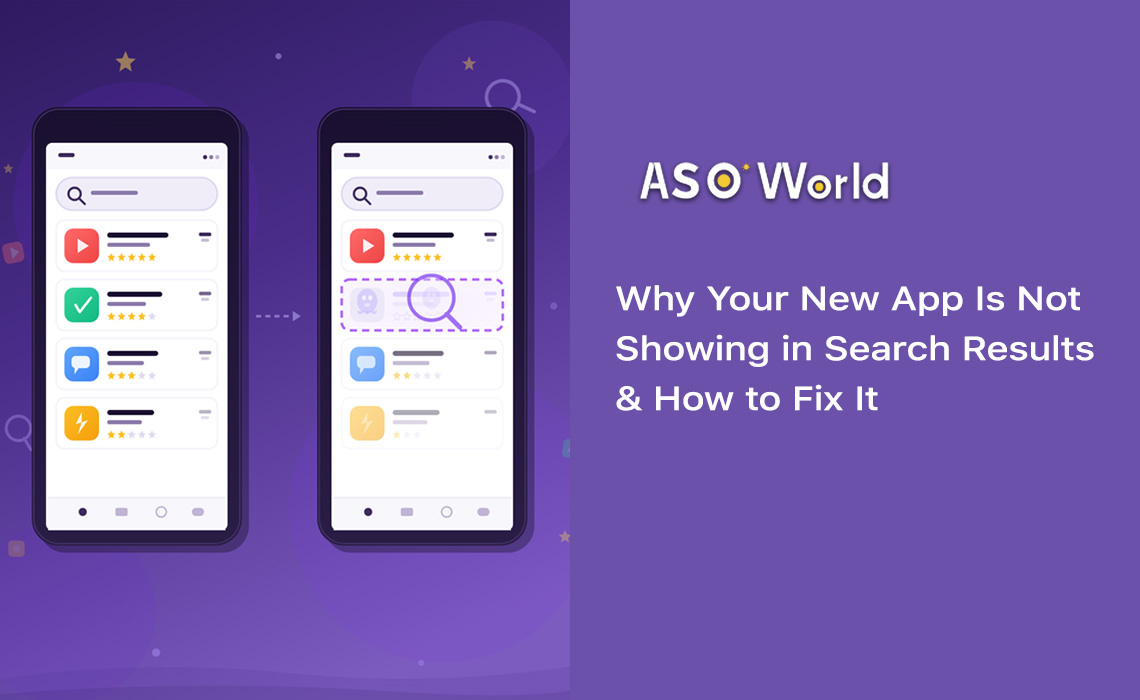
Why Your New App Is Not Showing in Search Results & How to Fix It

Your app is live. Users can't find it. Here's the exact reason why — and the step-by-step playbook to get your app indexed, ranked, and discovered in the App Store and Google Play.

공개 날짜: Today
업데이트 날짜: Today
홈페이지 가이드 및 통찰력 Why Your New App Is Not Showing in Search Results & How to Fix It

Why Your New App Is Not Showing in Search Results & How to Fix It


You spent months building your app. You nailed the design, coded every feature, and hit "Submit" on App Store Connect or Google Play Console with a rush of excitement. But days later, something is wrong.


You search for your app name in the App Store. Nothing. You type in your most important keywords. Still nothing. Your new app is not showing in search results at all.


This is one of the most common — and most frustrating — problems new app developers face. And it's not a bug. It's how app store discovery works.


The App Store hosts over 1.8 million apps. Google Play has more than 3.5 million. When you launch a new app with zero history, zero keyword coverage, and zero install signals, you are essentially invisible to the search algorithm. The app store ranking factors that determine visibility are not based on the quality of your code — they are based on relevance signals, install volume, and engagement data that you haven't built yet.


App stores don't reward the best apps. They reward the apps with the strongest discovery signals. If your app is not showing in search results, the problem is not your product — it's your ASO foundation.


The 7 Root Causes: Why Your App Is Not Appearing in Search Results

After analyzing thousands of app launches, we've identified the core reasons why new apps fail to appear in App Store search and Google Play search results. Understanding these root causes is the first step toward fixing them.


1. No Keyword Coverage (The Cold Start Problem)

When your app is first published, the App Store's indexing system has no data about which search terms your app should rank for. Unlike Google web search, which can crawl your content immediately, the App Store needs install signals tied to specific keywords before it starts indexing your app for those terms.


This is the "cold start" problem: you need installs to get indexed, but you need to be indexed to get installs. Without intervention, new apps can remain in this loop for weeks or even months.


2. Insufficient Metadata Optimization

Your app title, subtitle, keyword field (iOS), and description are the primary signals the App Store search algorithm uses to understand what your app does. If these fields are poorly optimized — stuffed with generic terms, missing key phrases, or ignoring keyword relevance — the algorithm simply won't match your app to user searches.


Many developers write metadata for humans first and algorithms never. This is backwards. App store metadata optimization requires a dual strategy: terms that the algorithm can parse and terms that convert browsers into installers.


3. Low Install Volume Impact on Ranking

Install velocity — the rate at which your app accumulates downloads — is one of the most powerful App Store ranking factors. A new app with 10 installs in its first week will never outrank an established competitor getting 500 installs per day, regardless of how good the app is.


The algorithm interprets low install volume as a signal that users don't find your app relevant, which creates a negative feedback loop: low installs → low ranking → lower visibility → even fewer installs.


4. App Store Indexing Time and Delay

Even after you update your metadata, the App Store doesn't reindex your app instantly. There's a typical App Store indexing delay of 3 to 7 days, and sometimes longer for new apps. Google Play can take even longer — up to 2 weeks for meaningful indexing updates.


Many developers panic after updating their keywords and seeing no change within 24 hours. This is normal. But it also means you need a strategy that accounts for this delay, not one that fights against it.


5. Weak ASO Signals and Trust Deficit

New apps face what we call the "trust signal delay." The App Store algorithm is cautious about ranking unknown apps highly. It needs to see consistent signals over time — steady install growth, positive engagement metrics, low uninstall rates — before it begins surfacing your app in search results.


This is not something you can hack overnight. But you can accelerate the process with the right ASO ranking signals strategy.


6. Poor Conversion Rate in Search

Even if your app starts appearing in search results, a poor conversion rate (the percentage of users who tap "Get" or "Install" after seeing your listing) will cause the algorithm to drop your ranking quickly. Your icon, screenshots, preview video, and ratings all influence this metric.


7. Missing Engagement Signals

The app store discovery system doesn't just measure downloads. It tracks app opens, session length, retention, and in-app engagement. A new app with installs but no usage data sends a mixed signal to the algorithm, limiting its visibility in search.


Stop Guessing. Start Ranking.


ASOWorld helps new apps build keyword coverage and install signals from Day 1 — the right way, at the right pace, on the right platform.


👉 How to Get Keyword Coverage for a New App?


How App Store Indexing Actually Works for New Apps

To fix the problem, you need to understand the mechanism. The App Store search algorithm works differently from what most developers assume. Here's what actually happens when you publish a new app:

Phase 1: Initial Crawl (Hours 0–48)

After submission, Apple's system performs a basic crawl of your app listing. It reads your app name, subtitle, and keyword field. At this stage, your app may technically exist in the index, but it won't rank for any competitive keyword. You might appear for extremely long-tail terms with virtually no search volume.


Phase 2: Signal Collection (Days 2–14)

The algorithm begins collecting data about how users interact with your listing. Are people searching for terms related to your metadata? Are they tapping on your listing? Are they installing? This phase determines whether your app gets expanded into more keyword indexes.


Phase 3: Keyword Assignment (Weeks 2–6)

Based on the install signals tied to specific keywords, the algorithm starts assigning your app to keyword indexes. This is where keyword relevance in the App Store becomes critical — the algorithm matches the keywords in your metadata with the search behaviors of users who install your app.


Key Takeaways

  • 65% of app downloads come from App Store search
  • Typical App Store indexing delay: 3–7 days after metadata updates
  • Approximately 70% of new apps never rank on page 1 for their target keywords
  • The fastest path to indexing: generate install signals tied to target keywords early and consistently


Why Google Play Makes the Problem Even Worse

If you thought the App Store was challenging, Google Play has its own set of obstacles for new app visibility. Understanding the Google Play indexing delay and its unique algorithm is essential for Android app discoverability.


Google Play's Slower Feedback Loop

Unlike the App Store, which updates rankings relatively quickly, Google Play operates on a longer cycle. Changes to your metadata, keywords, and listing typically take 7–9 days to reflect in search results. This means every optimization decision you make has a longer runway before you can measure results.


Description-Based Indexing

Google Play indexes your full app description (unlike the App Store, which uses the dedicated keyword field). This gives you more space to target keywords, but it also means the algorithm needs more contextual data to understand your app's relevance. For new apps with thin descriptions, this is a significant disadvantage.


The CPI Advantage

Google Play responds more strongly to Cost-Per-Install (CPI) signals than the App Store. For eligible apps, combining CPI campaigns with ASO keyword optimization can accelerate indexing and improve ranking more effectively than either strategy alone.


Factor App Store (iOS) Google Play (Android)
Indexing speed 3–7 days 7–14 days
Keyword field 100 characters, dedicated field No dedicated field — full description indexed
Install signal weight High High + CPI amplification
Optimization cycle 3+ days recommended 7–9 days recommended
Key ranking signals Keyword installs, conversion rate Installs, description relevance, engagement


⚡ Expert Tips

  1. Platform rhythm matters. ASOWorld automatically adjusts your optimization cadence — 3-day cycles for iOS, 7–9 day cycles for Google Play — so you never waste budget fighting the wrong timeline.
  2. Layer CPI on Google Play. For eligible apps, combining CPI campaigns with keyword optimization on Google Play accelerates indexing faster than either strategy alone.
  3. Don't copy-paste your ASO approach. The two stores have fundamentally different algorithms. Treat them as separate channels with separate strategies.


Ready to Break the Invisible Cycle?


Thousands of apps went from "not showing in search" to page-one rankings using ASOWorld's structured growth system. No risky review manipulation. No algorithmic penalties. Just sustainable install signals.


→ Start Your App Growth Plan  | Read success stories 

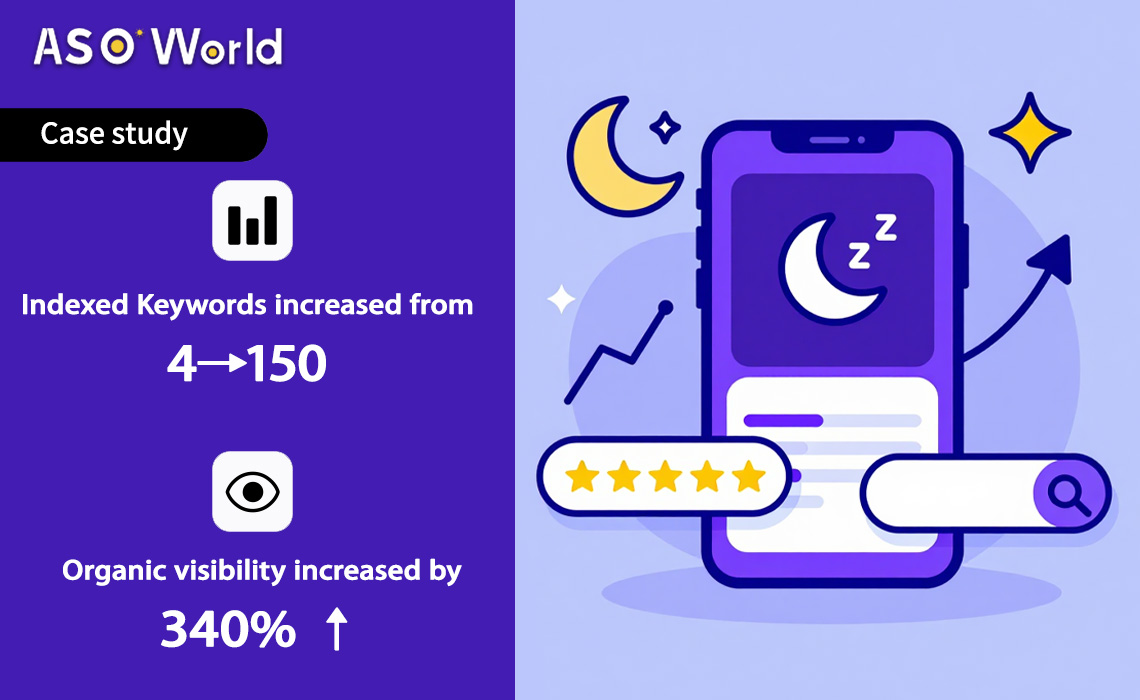
ASO Case Study: How We Helped a New Sleep App Break the "Zero Traffic Loop"


How to Fix Your App Visibility: The Complete Playbook

Now that you understand why your app is not showing in search results, here's how to fix it. This is not a list of vague tips — it's an actionable app store optimization strategy designed specifically for new apps that need to break out of zero-visibility fast.


Step 1: Build Keyword Coverage from Zero

Your first priority is establishing keyword coverage. Without it, nothing else matters. Here's the approach:

  • Audit your metadata: Ensure your app title, subtitle, and keyword field contain your highest-value target terms. Use keyword research tools to identify terms with real search volume and manageable competition.
  • Generate keyword-tagged installs: The most effective way to establish keyword coverage is through install signals that are directly tied to your target keywords. This tells the algorithm "users searching for [keyword] are choosing this app."
  • Avoid review manipulation: Fake reviews or rating inflation might seem tempting, but they carry serious platform penalty risk. Focus on install-based signals instead — they're safer, more sustainable, and more effective for ranking.

⚡ ASOWorld Cold Start Solution

  1. ASOWorld's App Growth Service is built specifically for the cold start problem. From Day 1, it generates keyword-tagged install signals that establish your app's index foundation.
  2. Coverage is built through two combined paths: ASO metadata optimization + sustainable install growth — no risky review games.
  3. See pricing and start your campaign →


Step 2: Optimize Metadata for Both Algorithms and Humans

Your metadata serves two audiences: the indexing algorithm and the humans who see your listing in search results. Both need to be satisfied:

  • For the algorithm: Include your target keywords naturally in your title, subtitle, and keyword field (iOS) or description (Google Play). Prioritize relevance — the algorithm penalizes keyword stuffing.
  • For humans: Your icon, screenshots, and preview video need to convert browsers into installers. A high conversion rate amplifies every other signal you're sending.
  • Iterate based on data: Track which keyword positions change after metadata updates. If a keyword doesn't move after one cycle, adjust your approach.


Step 3: Establish Consistent Install Velocity

One burst of installs won't cut it. The algorithm rewards consistent, sustainable install growth over time. A sudden spike followed by silence looks suspicious and can actually hurt your ranking.


For iOS, aim for sustained install activity over a minimum of 3-day cycles. For Google Play, plan for 7–9 day optimization windows. This matches the natural rhythm of each platform's algorithm and prevents the ranking volatility that comes from aggressive one-time pushes.


Step 4: Monitor, Attribute, and Iterate

The final step is the one most developers skip: measuring what actually worked. You need to see the relationship between your install volume and keyword ranking changes to know which keywords are worth investing in and which to deprioritize.


This is where app store optimization best practices meet real growth analytics. You're not just running campaigns — you're building a feedback loop that continuously improves your app's discoverability.


ASOWorld 첫 구매 할인
첫 주문 시 50% 할인받고 앱 성장을 시작하세요!
adImg


How ASOWorld Solves the New App Visibility Problem

This is exactly the problem ASOWorld was built to solve. Instead of cobbling together tools, guessing at keyword strategies, and hoping for results, ASOWorld provides a structured, data-driven system that takes your app from invisible to discoverable.


Here's the four-step workflow:

1. Cold Start Coverage — From Zero to Indexed

ASOWorld supports keyword coverage from scratch. Through its App Growth Service (combining ASO metadata optimization with install signal reinforcement), your new app starts building index signals immediately. No waiting for organic discovery. The system covers target keywords through sustained, keyword-tagged install volume — establishing your app's presence in the search index without relying on risky review manipulation.


2. Platform-Adaptive Rhythm Control

ASOWorld doesn't treat iOS and Android the same. For App Store campaigns, it uses sustained order models with a minimum 3-day cycle, delivering consistent install signals that avoid the ranking volatility of one-time spikes. For Google Play, it adapts to the slower algorithm feedback loop with 7–9 day optimization cycles — and can layer CPI strategies on top for eligible apps. This "rhythm control" approach replaces brute-force installs with algorithmically-timed growth.


3. Efficient Keyword Operations at Scale

Managing keywords across multiple days and platforms is a nightmare manually. ASOWorld turns it into a structured workflow: recommended keywords + custom keyword library for one-click selection, bulk keyword daily volume configuration, multi-day campaign planning with trend-based delivery, and a preview mode to fine-tune keyword distribution across your campaign timeline. What used to be hours of manual work becomes minutes of structured management.


4. Visual Attribution and Growth Analytics

ASOWorld doesn't just execute campaigns — it shows you what's working. Orders and keyword rankings are displayed side-by-side, so you can see exactly which install volume correlates with which ranking changes. Bar charts show daily delivery volume against ranking movements. The system identifies your "traffic-driving keywords" — the terms that generate real organic growth — so you can optimize your keyword portfolio and double down on what works. This transforms ASOWorld from a tool into a complete app growth analytics system.


Most ASO tools focus on one piece of the puzzle — keyword research, or ranking monitoring, or install campaigns. ASOWorld connects all four steps into a single closed loop: cover keywords → control rhythm → execute efficiently → measure and iterate. That's why apps using ASOWorld see measurable ranking improvements faster than apps using fragmented tools.


Frequently Asked Questions

Why is my new app not showing in App Store search results after publishing?

New apps need install signals tied to specific keywords before the App Store's algorithm will index and rank them. Without keyword coverage and consistent install volume, your app remains invisible. This typically takes 2–6 weeks to resolve organically, but can be accelerated through structured ASO campaigns that generate keyword-tagged install signals from Day 1.


How long does it take for an app to show in search results?

On the App Store, expect 3–7 days for initial indexing after metadata updates, and 2–6 weeks for meaningful keyword rankings. Google Play takes longer — typically 7–14 days for metadata changes to reflect, and 3–8 weeks for keyword positions to stabilize. These timelines can be shortened with consistent install signal campaigns.


How do I get my app indexed in the App Store faster?

Focus on three things: (1) Optimize your metadata with relevant, well-researched keywords. (2) Generate keyword-tagged install volume consistently — not in one burst, but in sustained daily activity. (3) Use a structured ASO approach that matches each platform's algorithm rhythm. Tools like ASOWorld automate this process by combining metadata guidance with platform-aware install campaigns and real-time ranking attribution.


Why is my app not showing in Google Play search results?

Google Play indexes your full app description and has a longer feedback cycle than the App Store. If your app is not appearing, it likely means your description lacks keyword relevance, your install volume is too low to trigger ranking, or the algorithm hasn't collected enough signal data yet. Google Play also responds strongly to CPI signals, so combining paid install campaigns with ASO description optimization is particularly effective on this platform.


Can I increase app visibility without spending on ads?

Yes, but not through metadata optimization alone. Organic ASO requires install signals to establish keyword rankings. While paid advertising (Apple Search Ads, Google UAC) can generate installs, dedicated ASO campaign platforms like ASOWorld offer a more cost-effective approach by specifically targeting keyword-tagged installs that directly improve search rankings — something general ad campaigns don't optimize for.


What are the most important App Store ranking factors for new apps?

For new apps, the most impactful ranking factors are: (1) keyword relevance in metadata, (2) install velocity tied to specific keywords, (3) conversion rate (how many browsers install after finding your listing), and (4) early engagement signals. Ratings and reviews matter, but they're secondary to install signals for initial indexing. Building strength in these four areas simultaneously is the fastest path to search visibility.

목차
    스토어 랭킹 취득 능력 검출 시작
    ASO 도구로 한 단계씩 모든 앱 스토어 최적화 작업 측정

    Get a good start for your app optimization with practical ASO guideline!

    Want to get the latest Guides & Insights from ASOWorld?

    관련 마케팅 가이드라인
    cardImg

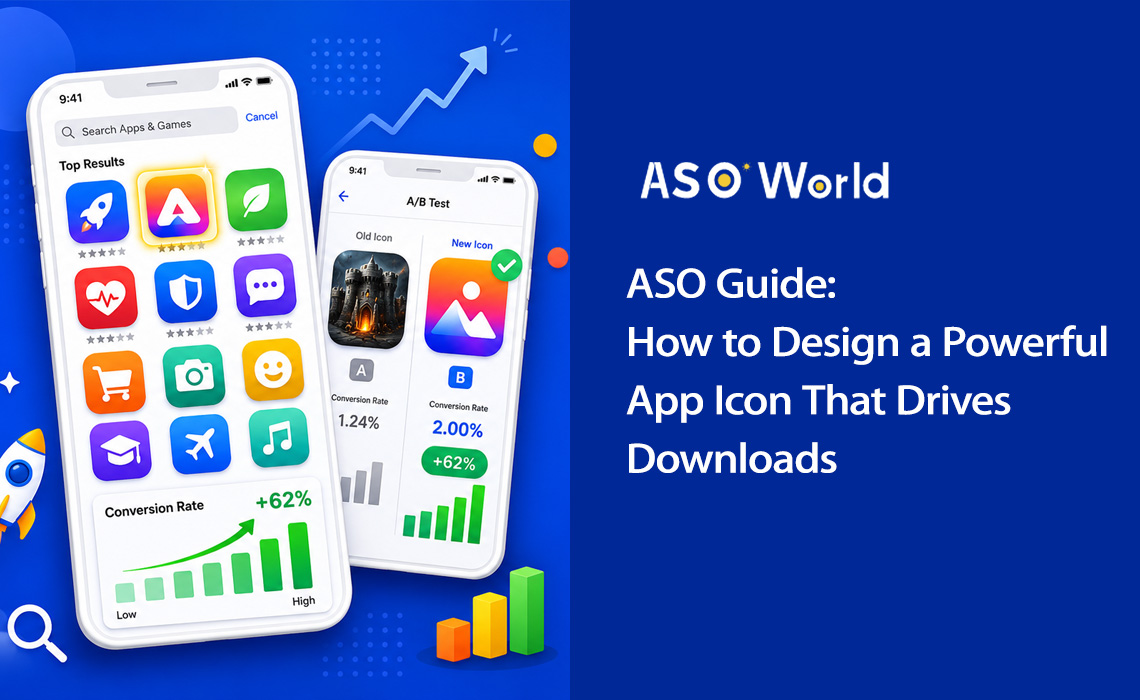
    How to Design a Powerful App Icon That Drives Downloads in 2026

    tag
    ASO 초보자 가이드라인

    Jun 3, 2026

    cardImg

    ASO를 위한 경쟁사 키워드 분석: 키워드, 스크린샷 및 리뷰의 격차를 발견하는 방법

    tag
    ASO 초보자 가이드라인

    May 18, 2026

    cardImg

    앱 스토어 검색 알고리즘 2026: 실제로 키워드 순위를 결정하는 요소

    tag
    ASO 초보자 가이드라인

    Apr 24, 2026

    cardImg

    2026년 앱 신규 버전 출시를 위한 궁극의 ASO 체크리스트: 가시성과 다운로드를 극대화하는 30가지 이상의 단계

    tag
    ASO 초보자 가이드라인

    Apr 9, 2026

    프로모션 지금 바로 시작, 당신의 앱 탐색 여행을 시작하세요!
    고객님이 대기업이든 소규모 신생기업이든 Google Play, App Store, Galaxy Store 와 RuStore 에서 더 저렴한 가격으로 고객님의 앱을 홍보할 수 있도록 도와드립니다.
    프로모션 지금 바로 시작, 당신의 앱 탐색 여행을 시작하세요!
    • ASO
    • Email [email protected]
    • Contact Contact Us
    • twitter facebook linkedin instagram
    • 제공하다
    • 키워드 설치
    • 패키지명(직접) 설치
    • 평점 및 리뷰
    • 고품질 리뷰 서비스
    • 키워드 랭킹 서비스 보증
    • ASO 제공하다
    • 더 많은 서비스
    • ASO 아카데미
    • 블로그
    • 사례 연구
    • 가이드 및 통찰력
    • 일반적인 문제
    • 용어 사전
    • 마케팅 뉴스
    • 회사
    • ASO World를 선택하는 이유
    • 우리에 관해
    • 문의하기
    • 리셀러 프로그램
    ASO World © 2020-2026 all rights reserved
    개인정보 처리 방침 서비스 약관

    당사는 웹사이트에서 쿠키를 사용하여 귀하의 기본 설정과 반복 방문을 기억하여 가장 관련성 높은 경험을 제공합니다. "수락"을 클릭하면 모든 쿠키 사용에 동의하는 것입니다.