COVID-19 UPDATE


중요 공지:파트타임 채용이나 ASO 수익 앱 활동을 위해 ASOWorld의 이름을 사용하는 사기에 주의하세요. ASOWorld는 파트타임 직원을 채용하지 않습니다. ASOWorld가 게시한 공식 정보만 신뢰하세요.


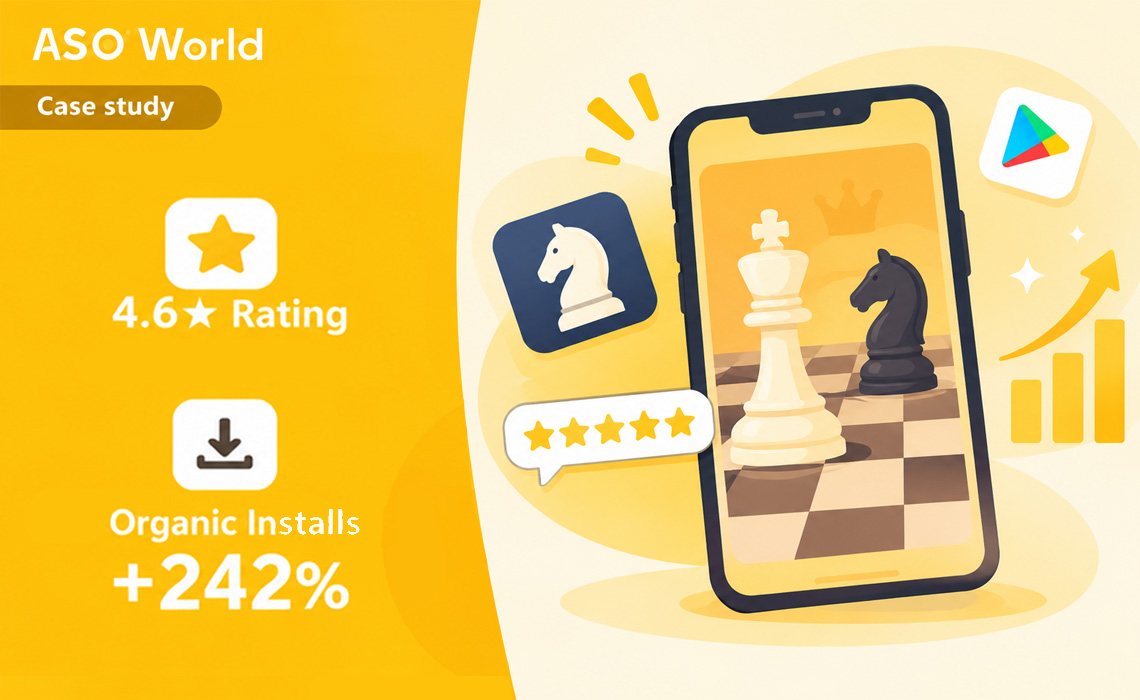
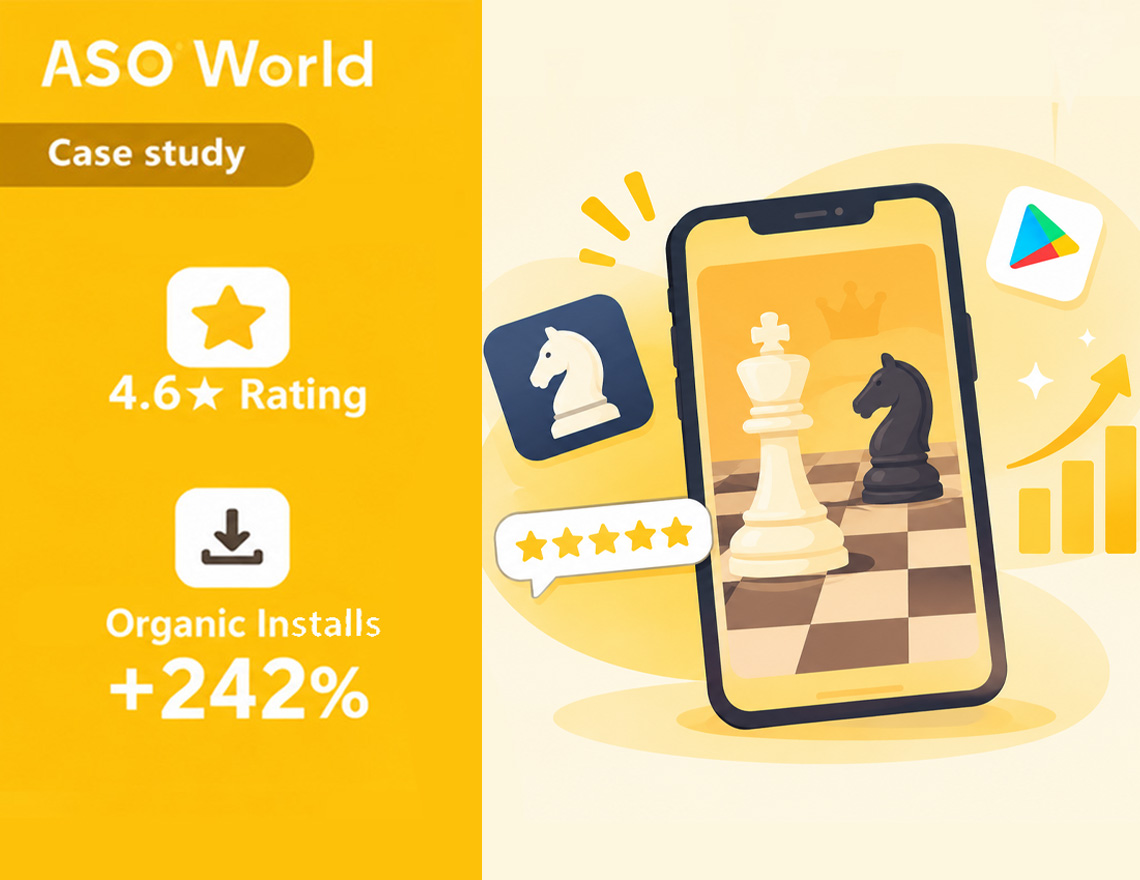
The client is a two-person indie team behind a chess app with daily puzzles and a computer opponent at adjustable levels. The app had just launched on Google Play, with no ratings, no reviews and roughly 12 organic installs a day coming from store search.
The team had a small launch budget and a long wish list. A few agencies had suggested large keyword packages, but the founders were unsure that paying for more traffic made sense when the listing still showed no stars at all.
Games (Board & Strategy)
India
Google Play
Ratings & Reviews, Keyword Installs
Chess and board game apps are easy to find and easy to compare. A few large apps own the biggest terms, and a newcomer with no social proof loses the visitors it does get.
The team faced three specific challenges:
The objective was to give the listing credible social proof first, then add a small, focused layer of keyword coverage, and leave room to scale up once the numbers justified it.
Ready to optimize your ratings & reviews strategy?
Explore ASOWorld's services and insights to build an ASO pipeline that turns user sentiment into organic growth.
The client made the decisions on budget, keywords and the app itself. Because this was its first launch, ASOWorld’s consultants brought what a first-time team usually lacks: a sequence for spending, suggested keywords, and a pacing plan for each service, plus a weekly check-in. The client placed its own orders on the self-service platform.
The founders' first idea was to put everything into keyword installs across about 30 terms. ASOWorld’s consultants walked through the numbers with them. At 9.8% conversion and no rating, extra visitors would mostly leave, and a large keyword order on an app with a 12-a-day baseline would be out of scale.
They suggested a different order: ratings and reviews first, so the listing could convert the traffic it already had, then a small keyword layer, then a decision about scaling. The client agreed to try that sequence.
Before buying anything, the client’s developer changed when the app asked for a rating. The old prompt appeared on the third app open, often before the user had enjoyed anything. The new prompt appeared after a solved puzzle streak or a finished game, and never after a loss. ASOWorld shared ratings and reviews best practices on prompt timing and frequency, and the client made the final call on the logic.
The client then chose ASOWorld’s Ratings & Reviews service to break the cold-start loop that new apps face. ASOWorld recommended a gentle start:
The client placed every order itself. Of 215 ratings placed, 168 were still visible after three weeks, about 78%. The store showed a 4.6-star average from week 3.
Once the rating was visible, the client turned to keywords. From ASOWorld’s suggestions it picked 10 long-tail terms where its features matched the search, such as daily chess puzzles, playing chess against the computer, and learning chess as a beginner. The consultants’ advice on choosing and validating long-tail keywords covered which terms to skip, such as the broadest chess terms owned by large apps.
The client ran Keyword Installs at a few installs per term per day, in proportion to its organic baseline. Because the listing now had a rating, the extra visitors had a reason to stay.
At the four-week review, the client and ASOWorld looked at conversion, visible ratings and keyword positions together. ASOWorld suggested clear thresholds for the next stage: once conversion held above 15% and visible ratings passed 150, widen keyword coverage and start working toward category rankings. The client reached both and added 8 more terms in week 5, while keeping rating growth going through its in-app prompt.
For a new app with no ratings, the first question is not which keywords to buy but whether the listing can turn visitors into installs. In this case, a ratings-first plan, a small keyword layer and clear thresholds for scaling gave a two-person team a controlled way to start, instead of spreading a small budget thin.
Launching a new app with no ratings yet? ASOWorld’s team can help you decide what to spend on first, and how to pace it, before you scale.