noticeCOVID-19 UPDATE ASO World entire team is working remotely. we expect no disruptions in our ASO services.
Browser close
50% OFF FIRST ORDER
Referral Program
bonusprogram
50% OFF FIRST ORDER
Referral Program
bonusprogram
logo
  • 앱 프로모션 서비스
    키워드 설치
    패키지명(직접) 설치
    평점 및 리뷰
    고품질 리뷰 서비스
    키워드 랭킹 서비스 보증
    ASO 제공하다
    맞춤형 솔루션
    더 많은 서비스
  • ASO 도구
    무료 ASO 도구
    키워드 리서치 도구
    키워드 선택 방법
    promote
    리뷰 최적화로 앱 신뢰도 회복
    낮은 평점은 매일 사용자를 잃게 만듭니다. 전문가의 리뷰 최적화 전략으로 앱의 신뢰도를 회복하고 더 많은 다운로드로 전환하세요.
  • 솔루션
    By vertical
    스포츠
    HOT
    일체 포함
    건강 및 피트니스
    전자상거래
    핀테크
    HOT
    게임
    교육
    데이트
    엔터테인먼트
    여행하다
    소셜 미디어
    레스토랑 및 푸드테크
    생산력
    Lifestyle
    음악
    Utility
    사진 & 비디오
    Casino
    Business
    소식
    NEW
    By Performance
    시즌 및 이벤트 마케팅
    NEW
    FIFA 월드컵 2026 앱 성장 전략
    HOT
    앱 평판 및 부정적 리뷰 관리
    앱 순위 및 사용자 확보 향상
    NEW
    유기적 반응 및 사용자 경험 개선
    NEW
    모바일 앱 출시 마케팅
    NEW
    키워드 순위 및 유기적 다운로드 증가
    NEW
    solution-suffix
    고객 스토리
    영감을 주는 고객 사례를 살펴보고 귀하와 같은 기업이 ASO World를 성공적으로 활용하여 강력한 모바일 앱을 만든 방법을 알아보세요.
    how-to-pick-keywords
    앱스토어와 구글플레이를 위한 올바른 키워드 선택 방법
    스토어 검색을 실제 설치로 전환하는 키워드를 찾고, 분류하고, 검증하는 리서치-투-랭킹 프레임워크와 안전하게 순위를 올리는 실행 플랜을 소개합니다.
  • ASO 아카데미
    블로그
    사례 연구
    가이드 및 통찰력
    일반적인 문제
    용어 사전
    promote
    리뷰 최적화로 앱 신뢰도 회복
    낮은 평점은 매일 사용자를 잃게 만듭니다. 전문가의 리뷰 최적화 전략으로 앱의 신뢰도를 회복하고 더 많은 다운로드로 전환하세요.
    promote
    AI 검색 및 앱 스토어 최적화를 위한 앱 설명 작성 방법은 무엇인가?
    AI 검색 발견을 지원하고 앱 가시성과 전환율을 높이는 동시에 App Store Optimization을 개선하는 AI 최적화 앱 설명 작성 방법을 알아보세요.
  • 가격
로그인 가입
logo
  • 앱 프로모션 서비스
    키워드 설치
    패키지명(직접) 설치
    평점 및 리뷰
    고품질 리뷰 서비스
    키워드 랭킹 서비스 보증
    ASO 제공하다
    맞춤형 솔루션
    더 많은 서비스
  • ASO 도구
  • 솔루션
    By vertical
    스포츠
    일체 포함
    건강 및 피트니스
    전자상거래
    핀테크
    게임
    교육
    데이트
    엔터테인먼트
    여행하다
    소셜 미디어
    레스토랑 및 푸드테크
    생산력
    Lifestyle
    음악
    Utility
    사진 & 비디오
    Casino
    Business
    소식
    By Performance
    시즌 및 이벤트 마케팅
    FIFA 월드컵 2026 앱 성장 전략
    앱 평판 및 부정적 리뷰 관리
    앱 순위 및 사용자 확보 향상
    유기적 반응 및 사용자 경험 개선
    모바일 앱 출시 마케팅
    키워드 순위 및 유기적 다운로드 증가
  • ASO 아카데미
    블로그
    사례 연구
    가이드 및 통찰력
    일반적인 문제
    용어 사전
  • 가격
Important Notice
중요 공지:파트타임 채용이나 ASO 수익 앱 활동을 위해 ASOWorld의 이름을 사용하는 사기에 주의하세요. ASOWorld는 파트타임 직원을 채용하지 않습니다. ASOWorld가 게시한 공식 정보만 신뢰하세요.
Close the Important Notice

ASO Case Study: How a Productivity App Broke Its Page-One Ceiling and Locked 9 Keywords into Top 1–2

How a productivity app stuck at rank 10 pushed 9 keywords to Top 1–2 in 3 days and held them 2+ months. Full keyword install process and results.

공개 날짜: Yesterday

홈페이지 사례 연구 생산성 앱 사례 연구 ASO Case Study: How a Productivity App Broke Its Page-One Ceiling and Locked 9 Keywords into Top 1–2

In twitter faceBook

This productivity app was already ranked around position 10 for most of its target keywords — visible, but invisible where it counted. Here is the exact keyword optimization process that moved those terms to Top 1–2 and held them for more than two months.


Optimization Results

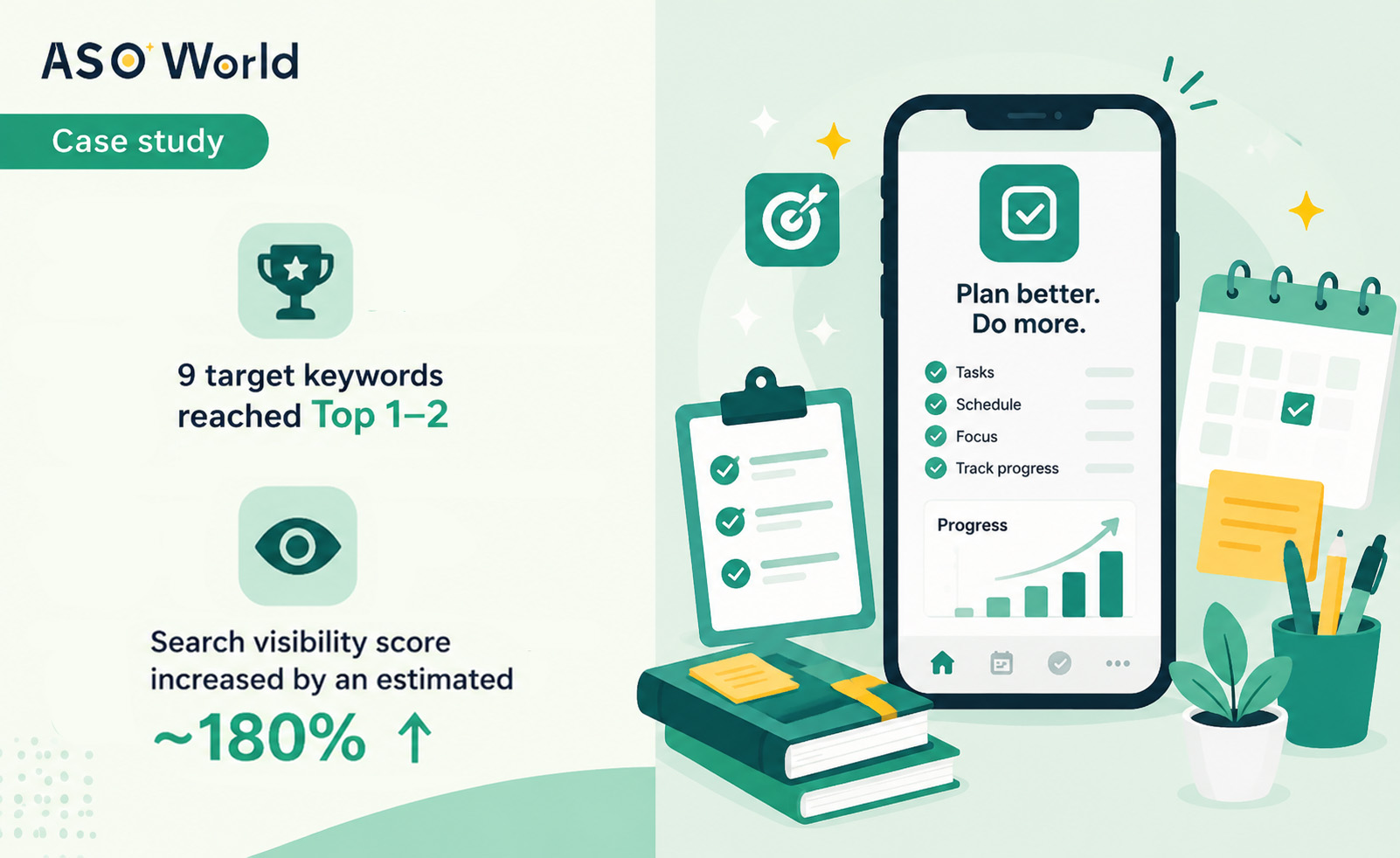
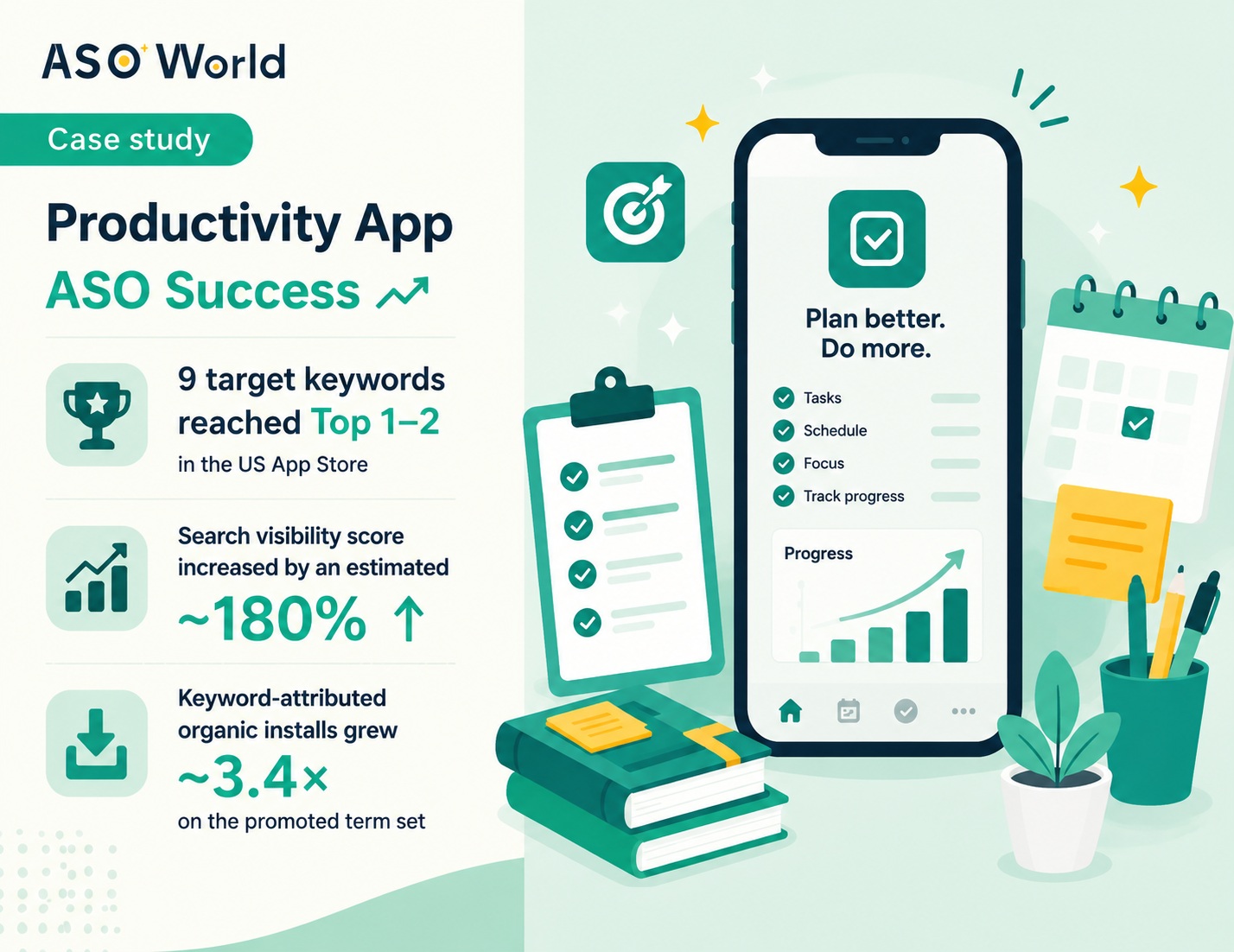
  • 9 target keywords reached Top 1–2 in the US App Store
  • Search visibility score increased by an estimated ~180%, driven by the move from page-one-mid to the top two result slots.
  • Keyword-attributed organic installs grew ~3.4× on the promoted term set, as tap share consolidated into the first two results.


Most ASO case studies start from zero — an unindexed app with no coverage and no traffic. This one doesn't. This client was already doing a lot right: they had real keyword coverage, most of their target terms sat around position 10, and they were pulling steady impressions from App Store search. Their problem was subtler and, frankly, more common: they had hit the page-one ceiling.


Ranking 8th, 10th or 12th for a keyword feels like progress. It looks fine in a dashboard. But in App Store search, the gap between position 10 and position 1 is not incremental — it's the difference between being technically findable and actually being chosen. This is the story of how we closed that gap on nine keywords, and kept it closed.


Client Profile

Our client is an established productivity app in the US App Store — a task and workflow management tool used mainly by working professionals and small teams. Unlike an early-stage app, they arrived with a genuinely healthy foundation: a mature metadata setup, an existing base of ratings, and keyword coverage across several dozen relevant search terms. Roughly a dozen of those terms were already ranking around position 10, generating a consistent flow of search impressions.


In other words, they had already won the hard part that most apps never finish: they were indexed, covered, and visible. What they hadn't won was the top of the results page.


Industry

Productivity
 

Target Market

United States
 

Platform

iOS App Store
 

App Stage

Established — already ranked, seeking breakthrough
 

ASO Service Used

Keyword Installs


The Challenge

The client came to us with a frustration many mature apps will recognise. Their ASO work had plateaued at the exact point where it should have started paying off.

1. Page one wasn't converting like page one. Sitting around position 10 meant appearing at the very bottom of the visible results — or requiring a scroll. Impressions looked acceptable, but the tap-through rate on those impressions was a fraction of what the top slots were pulling. In App Store search, the first two results absorb the overwhelming majority of taps for any given term; everything below competes for the remainder.


2. Metadata optimization had run out of room. They had already refined their title, subtitle and keyword field, and had followed the sort of field-mapping discipline we outline in our guide on how to pick the right app keywords. Those changes had earned them coverage and mid-page rankings — and then stopped producing gains. This is expected: metadata determines whether you can rank for a term. It does not determine where you land within the eligible pool.


3. They were stuck behind entrenched competitors. The top slots for their core terms were held by well-known productivity apps with years of accumulated ranking authority. Waiting for organic momentum to overtake them was not a realistic plan on any useful timeline.


4. Previous gains hadn't held. An earlier attempt at a short promotional burst had produced a brief ranking spike that decayed within days. They needed positions that would stay, not a spike to screenshot.

 
The correct diagnosis: this was not a coverage problem — it was a ranking problem. Store search works in two distinct stages: coverage decides whether your app is eligible to appear for a term at all, and ranking decides where you sit inside that eligible pool. Confusing the two is the single most common reason keyword campaigns underperform. Because this client already had coverage, they didn't need indexing work — they needed install signal directed at positions they already held.
 

The ASO Solution: The Full Keyword Optimization Process

Everything below is what we actually did, in order. Because the entire growth story here rests on keyword rankings, we've documented the complete keyword workflow — selection, auditing, allocation, pacing, delivery and defence — rather than listing generic best practices.


Step 1
Audit the Existing Keyword Set — Separate Coverage from Ranking

We started with the client's current ranking data rather than a blank keyword list. This is a different starting point than a new app requires, and it changes the whole plan.


Using ASOWorld's keyword ranking tools, we pulled every term the app currently had coverage for and tagged each one:

  • Covered and close (Rank 3–15): already inside striking distance of the top. These are the highest-ROI targets in all of ASO — the algorithm already accepts the app as a relevant answer for the term, so install signal has an existing position to lift rather than a position to create.
  • Covered but distant (Rank 16–250): eligible, but requiring far more signal per position gained. Deferred to a later phase.
  • Zero coverage (outside Top 250): excluded entirely from this campaign. There is no position for install signal to push, so spend here would have been wasted. Terms in this bucket belong in a metadata or guaranteed ranking workflow instead.


That audit immediately reframed the campaign. The client had been thinking about "improving ASO" broadly. The data said something much narrower: there were roughly a dozen terms sitting at the edge of the top, and those were the entire opportunity.


💡 Expert Insight: For an app that already ranks, the most expensive mistake is spreading budget evenly across the whole keyword list. Positions 3–15 convert install signal into rank movement far more efficiently than positions 50+, because the app has already cleared the store's relevance threshold. Sort by current rank before you sort by search volume.
 

Step 2
Score and Shortlist — Volume, Difficulty and Chance Together

From that shortlist we scored each candidate on the three dimensions we use for every keyword decision, as covered in our keyword selection guide:

  • Volume — real monthly search demand for the term inside the store.
  • Difficulty — how entrenched the apps currently holding the top results are.
  • Chance — how likely this specific app was to break into the top for that term, given its existing rank and rating base.


The client's instinct was to put everything behind the two highest-volume head terms in their category. We advised against it, and the reasoning matters: those two terms were dominated by category leaders who had held the top slots for years, and concentrating budget on them would have produced a smaller, less durable result than spreading across a wider set of achievable terms.


Instead we finalised 9 keywords for the first campaign — a mix of core terms describing what the app fundamentally is, and longer-tail phrases capturing specific workflow and feature intent. All nine shared one trait: an existing rank close enough to the top that a realistic volume of install signal could close the distance.


💡 Expert Insight: We recommend promoting at least 10 keywords in a plan rather than 1–2. A portfolio pulls traffic from many terms at once, so a single ranking swing can't sink your visibility — and it looks materially more natural to the store algorithm than all signal pointing at one phrase. Nine terms with a strong existing base was the right shape here; two head terms would not have been.


Step 3
Set Volume per Keyword — Sized to the Gap, Not to the Budget

This is where most self-managed campaigns go wrong. Volume was calculated per keyword, based on the distance each term needed to travel and how contested its top slots were — not by dividing a total budget by nine.


The resulting allocation was deliberately modest and tightly bounded:

  • 20 installs per day for the majority of keywords — those needing a lift of roughly 1–5 positions.
  • 25 installs per day for the single most contested term, which required the largest climb.
  • 3-day continuous cycles per keyword, with volume split evenly across all three days rather than front-loaded.


Two rules governed these numbers. First, keyword installs were kept well within 30% of the app's total daily installs — the ceiling we hold to in order to keep the delivery pattern proportionate to the app's genuine organic baseline. Second, volumes were kept flat and even day over day, producing a steady signal rather than a spike. An app already receiving organic traffic doesn't need a surge to move; it needs consistency the algorithm can read as sustained demand.


Why 3 days, not 1: the Apple algorithm reacts to velocity, and you may see ranking updates in around three days. But single-day bursts are exactly what produces the spike-then-drop pattern the client had already experienced. Continuous multi-day orders establish the ranking and give it enough sustained signal to hold once delivery ends. Every keyword in this campaign ran a minimum of three consecutive days.
 

Step 4
Build the Campaign in the Dashboard

With the plan settled, execution followed the standard campaign setup flow:

  1. Add the app and market — the app was added via its store URL with the United States set as the target region.
  2. Select the service — Keyword Installs, the correct choice for an app that already holds coverage and needs to climb.
  3. Import the keyword list — all nine terms were pulled directly from the research and recommendation tools into the order console rather than typed in, eliminating input errors on exact-match phrases. A single misspelled keyword sends an entire day's volume to a term nobody searches.
  4. Allocate daily volume — one-click allocation filled the per-keyword daily volumes across the three-day window, and the multi-day trend planner shaped the delivery curve in one pass instead of nine separate configurations.
  5. Review in preview, then launch — the preview panel showed all nine keywords, all three days, and every daily volume in one view for a final check before delivery started.


Step 5
Track Delivery Against Ranking, Daily

Once live, we monitored delivery and rank movement side by side on the same timeline — install volume delivered per keyword per day, against that keyword's rank change. That pairing is what makes a campaign diagnosable: it shows whether a keyword is failing because it needs more signal, or because the target was wrong to begin with.


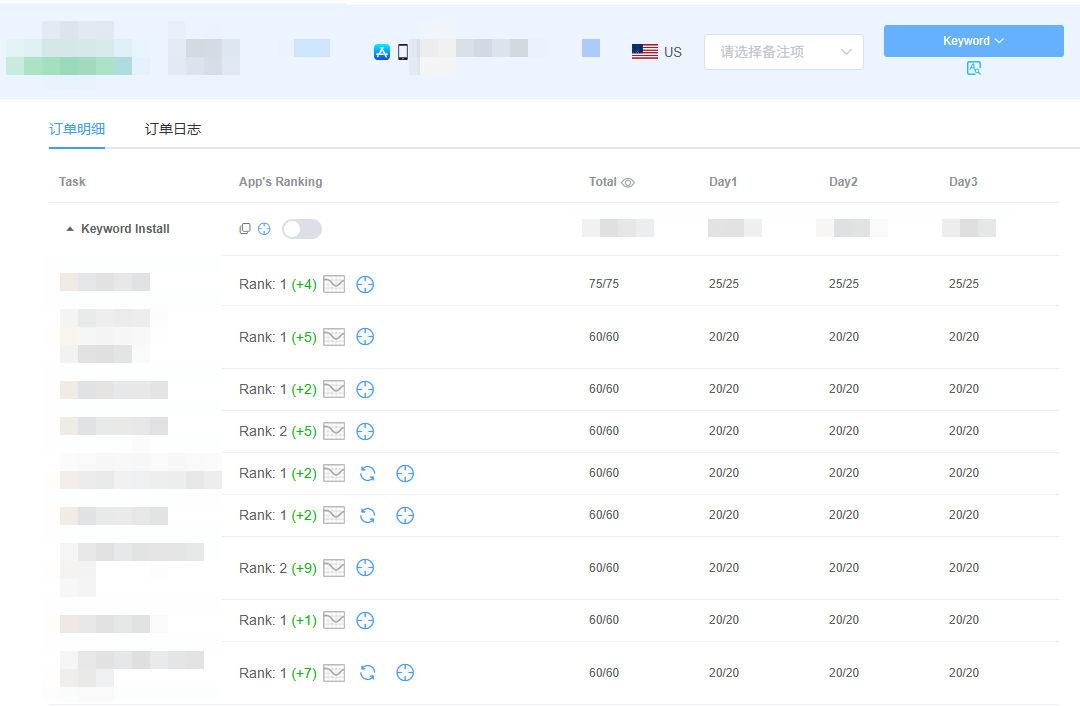
Delivery ran clean. Every task completed at 100% — 75/75 on the highest-volume term and 60/60 across the rest, split evenly at 25/25/25 and 20/20/20 per day. No under-delivery, no catch-up spikes, no gaps in the pipeline.


ASOWorld dashboard showing 9 keyword install tasks, each fully delivered, with app rankings at Rank 1 or Rank 2 and position gains from +1 to +9


Read that ranking column carefully, because it's the clearest illustration of why this app was such a good fit for keyword installs. A +1 gain means a keyword that was already sitting at Rank 2 and simply needed a nudge to take the top slot. A +9 gain means a term around position 10 — precisely the client's plateau — carried all the way to the top on 60 installs delivered over three days. Neither of those outcomes is available to an app without existing coverage. The starting position is the leverage.


Step 6
Confirm the Rankings Held

Reaching Rank 1 is the easier half of the job. Staying there is what determines whether a campaign was worth running, and it's where the client's previous attempt had failed.


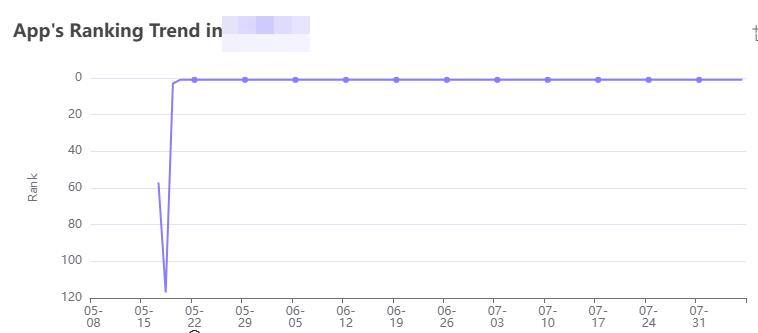
After delivery concluded, we kept tracking the promoted terms without further spend. The rankings did not decay.


Ranking trend chart showing a keyword moving from around position 60 to position 1 in mid-May and holding that position flat through the end of July


That flat line is the most important image in this case study. It shows the ranking becoming self-sustaining. Once the app occupied the top slot, it captured the tap share that comes with the top slot — and those genuine organic installs supplied the ongoing signal the position needed. The campaign didn't rent the ranking; it moved the app into a position its own organic performance could defend.


💡 Expert Insight: Durability is where the difference between a covered app and an uncovered one shows up most starkly. An app with weak retention and no organic base will slide back down once delivery stops, because nothing sustains the position. This client had solid retention and real usage — so the top ranking fed itself. If your app already converts and retains well, you are in the best possible position for keyword installs to produce lasting gains rather than temporary ones.
 

Key Takeaways

If your app is already ranking but stalled outside the top few results, this case maps closely onto your situation. Four things made the difference:

  1. Diagnose coverage versus ranking before spending anything. Covered keywords sitting at positions 3–15 are the most efficient targets in ASO. Zero-coverage keywords need a completely different service. Sorting your list this way costs nothing and determines whether your budget works.
  2. Don't put everything behind one head term. Nine achievable keywords beat two entrenched ones — for total traffic, for durability, and for how natural the campaign looks to the algorithm.
  3. Size volume to the ranking gap, and keep pacing even. Modest, evenly distributed volume across a continuous multi-day cycle outperforms a large single-day burst, and it's what prevents the spike-and-drop pattern.
  4. Existing organic quality is what makes rankings stick. A top position generates real installs, and real installs defend the position. Retention and conversion aren't separate from your keyword strategy — they're what makes it hold.

The uncomfortable truth for a lot of well-run apps is that the work required to reach position 10 is not the work required to reach position 1. Metadata gets you eligible. Install signal decides where you land. If you've already done the first part properly, the second part is a much smaller job than it looks — as nine keywords and 555 installs demonstrated here.

SHARE THIS POST

In twitter faceBook
스토어 랭킹 취득 능력 검출 시작
ASO 도구로 한 단계씩 모든 앱 스토어 최적화 작업 측정
목차

    Categories

    • 게임 성장 사례 연구
    • 건강 및 피트니스 앱 사례 연구
    • 비디오 앱 사례 연구
    • 데이트 앱 사례 연구
    • 소셜 앱 사례 연구
    • 쇼핑 앱 사례 연구
    • 음식 및 음료 앱 사례 연구
    • 교육 앱 사례 연구
    • 생산성 앱 사례 연구
    • 유틸리티 앱 사례 연구
    • 핀테크 앱 사례 연구
    • 라이프스타일 앱 사례 연구
    • 잡지 및 신문 앱 사례 연구
    • Travel Apps Case Studies
    • Sports App Case Studies
    • Business App Case Studies

    Related Cases that help you grow

    ASO Case Study: How a Productivity App Broke Its Page-One Ceiling and Locked 9 Keywords into Top 1–2
    Productivity App Case Studies

    ASO Case Study: How a Productivity App Broke Its Page-One Ceiling and Locked 9 Keywords into Top 1–2

    How a productivity app stuck at rank 10 pushed 9 keywords to Top 1–2 in 3 days and held them 2+ months. Full keyword install process and results.
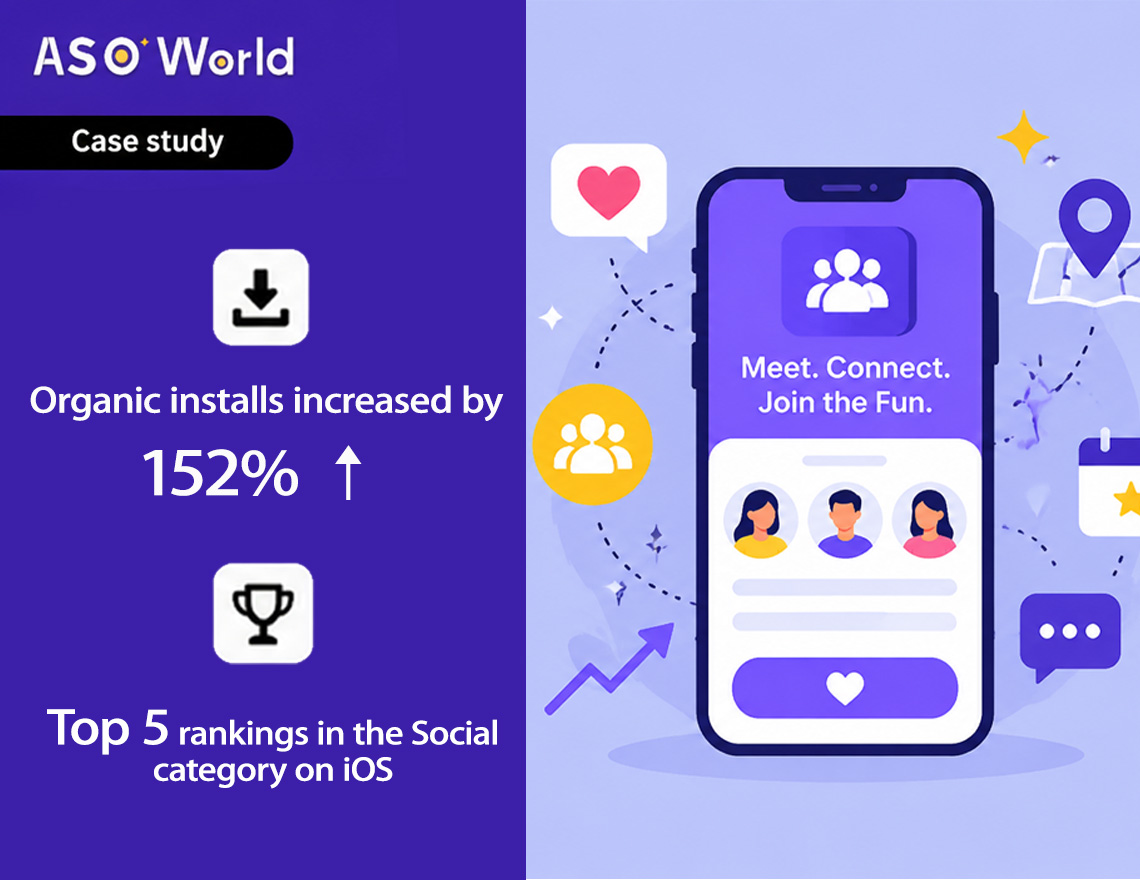
    ASO 케이스 스터디: 소셜 앱이 여름 트래픽을 사로잡아 오가닉 설치수 152% 증가를 달성한 방법
    Social Apps Case Studies

    ASO 케이스 스터디: 소셜 앱이 여름 트래픽을 사로잡아 오가닉 설치수 152% 증가를 달성한 방법

    이 케이스 스터디는 소셜 네트워킹 앱이 계절 맞춤형 ASO 전략을 활용하여 여름 시즌의 치열한 경쟁을 뚫고 iOS와 구글 플레이 모두에서 최상위 키워드 순위를 확보한 방법을 공개합니다.
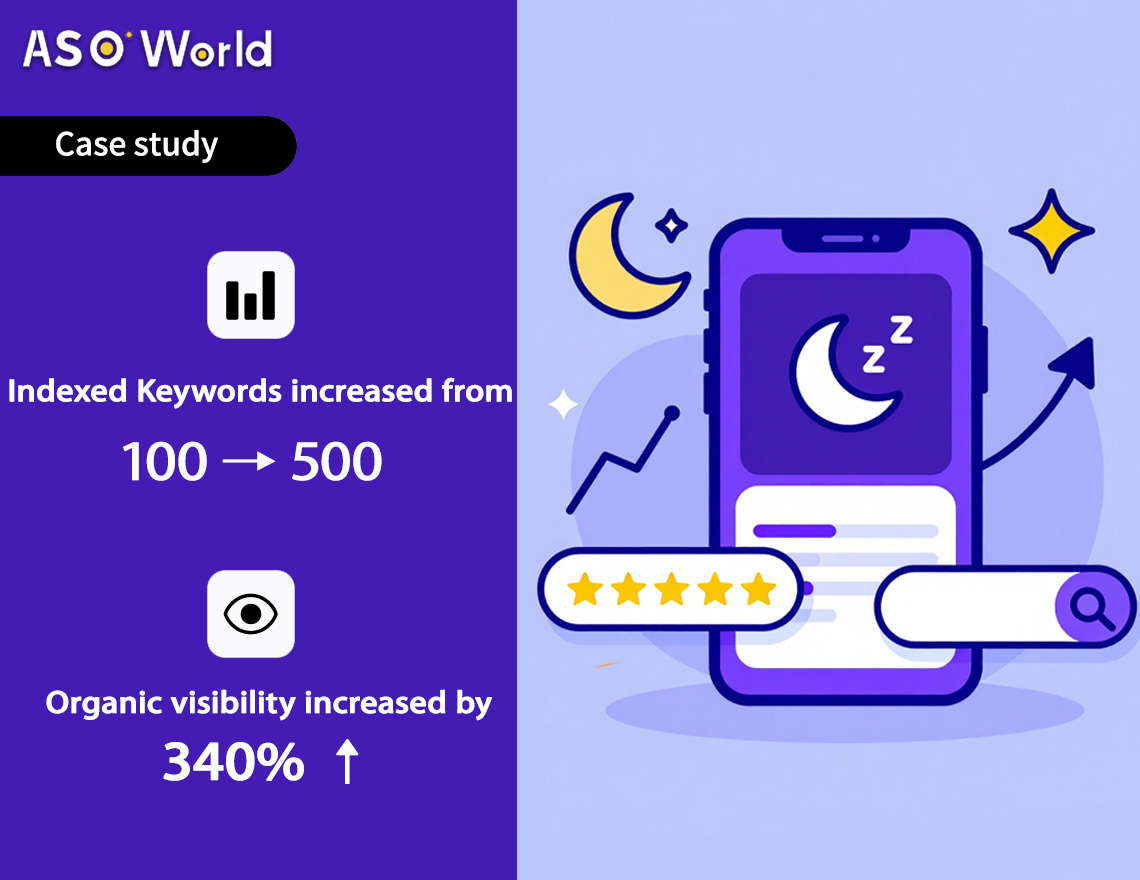
    ASO 사례 연구: 신규 수면 앱이 “제로 트래픽 루프”를 돌파하도록 도운 방법
    Health & Fitness Apps Case Studies

    ASO 사례 연구: 신규 수면 앱이 “제로 트래픽 루프”를 돌파하도록 도운 방법

    ASOWorld가 어떻게 완전히 신규 수면 앱이 전혀 없는 가시성을 극복하도록 도왔는지 알아보세요. 키워드 커버리지, 리뷰, 그리고 상위 10위 랭킹을 위한 우리의 ASO 전략을 확인해 보세요.
    ASO 사례 연구: 퍼즐 게임이 키워드 최적화로 CPI를 41% 절감한 방법
    Games Growth Case Studies

    ASO 사례 연구: 퍼즐 게임이 키워드 최적화로 CPI를 41% 절감한 방법

    해외 퍼즐 게임 스튜디오가 유료 사용자 확보 의존에서 벗어나 ASOWorld의 키워드 설치 전략을 통해 자연 유입 다운로드를 170% 증가시키고 CPI를 41% 절감한 과정을 알아보세요.
    프로모션 지금 바로 시작, 당신의 앱 탐색 여행을 시작하세요!
    고객님이 대기업이든 소규모 신생기업이든 Google Play, App Store, Galaxy Store 와 RuStore 에서 더 저렴한 가격으로 고객님의 앱을 홍보할 수 있도록 도와드립니다.
    프로모션 지금 바로 시작, 당신의 앱 탐색 여행을 시작하세요!
    • ASO
    • Email [email protected]
    • Contact Contact Us
    • twitter facebook linkedin instagram
    • 제공하다
    • 키워드 설치
    • 패키지명(직접) 설치
    • 평점 및 리뷰
    • 고품질 리뷰 서비스
    • 키워드 랭킹 서비스 보증
    • ASO 제공하다
    • 더 많은 서비스
    • ASO 도구
    • 무료 ASO 도구
    • 키워드 리서치 도구
    • 키워드 선택 방법
    • ASO 아카데미
    • 블로그
    • 사례 연구
    • 가이드 및 통찰력
    • 일반적인 문제
    • 용어 사전
    • 마케팅 뉴스
    • 회사
    • ASO World를 선택하는 이유
    • 우리에 관해
    • 문의하기
    • 리셀러 프로그램
    • 시작하기
    • LLM & AI 정보
    ASO World © 2020-2026 all rights reserved
    개인정보 처리 방침 서비스 약관

    당사는 웹사이트에서 쿠키를 사용하여 귀하의 기본 설정과 반복 방문을 기억하여 가장 관련성 높은 경험을 제공합니다. "수락"을 클릭하면 모든 쿠키 사용에 동의하는 것입니다.