noticeCOVID-19 UPDATE ASO World entire team is working remotely. we expect no disruptions in our ASO services.
Browser close
50% OFF FIRST ORDER
Referral Program
bonusprogram
50% OFF FIRST ORDER
Referral Program
bonusprogram
logo
  • アプリプロモーションサービス
    キーワードインストール
    パッケージ名によるインストール
    評価とコメント
    良質なコメントサービス
    キーワードを保証するランキングサービス
    ASO仕える
    カスタマイズソリューション
    その他のサービス
  • ASO ツール
    無料ASOツール
    キーワードリサーチツール
    キーワードの選び方
    promote
    レビュー最適化でアプリの信頼性を回復
    低評価は毎日ユーザーを失う原因になります。専門的なレビュー最適化戦略でアプリの信頼性を回復し、ダウンロード数をさらに増やしましょう。
  • ソリューション
    By vertical
    スポーツ
    HOT
    人工知能アプリケーション
    健康と運動
    eコマース
    フィンテック
    HOT
    ゲーム
    教育
    デート
    エンターテイメント
    トラベル
    ソーシャルメディア
    レストランとフードテック
    生産性
    Lifestyle
    音楽
    効用
    写真とビデオ
    Casino
    Business
    ニュース
    NEW
    By Performance
    季節&イベントマーケティング
    NEW
    FIFA ワールドカップ 2026 アプリ成長戦略
    HOT
    アプリの評判とネガティブレビュー管理
    アプリのランキングとユーザー獲得を向上
    NEW
    オーガニックコンバージョンとユーザーエクスペリエンスの向上
    NEW
    モバイルアプリのローンチマーケティング
    NEW
    キーワードランキングとオーガニックダウンロードを増やす
    NEW
    solution-suffix
    お客様の事例
    感動的な顧客事例を調べて、貴社のような企業がどのように ASO World を活用して強力なモバイル アプリを作成することに成功したかを確認してください。
    how-to-pick-keywords
    App StoreとGoogle Playで成果を出すキーワードの選び方
    ストア検索を実際のインストールへつなげるキーワードを見つけ、分類し、検証するリサーチからランキングまでのフレームワーク。さらに、安全に上位表示させるための実行プランも解説します。
  • ASOナレッジカレッジ
    ブログ
    ケーススタディ
    ガイドと洞察
    一般的な問題
    用語集
    promote
    レビュー最適化でアプリの信頼性を回復
    低評価は毎日ユーザーを失う原因になります。専門的なレビュー最適化戦略でアプリの信頼性を回復し、ダウンロード数をさらに増やしましょう。
    promote
    AI検索とアプリストア最適化のためのアプリ説明文の書き方
    AI対応のアプリ説明文の書き方を学び、App Store最適化を向上させ、AI検索での発見性を高め、アプリの可視性とコンバージョンを向上させましょう。
  • 価格
ログインする 登録
logo
  • アプリプロモーションサービス
    キーワードインストール
    パッケージ名によるインストール
    評価とコメント
    良質なコメントサービス
    キーワードを保証するランキングサービス
    ASO仕える
    カスタマイズソリューション
    その他のサービス
  • ASO ツール
  • ソリューション
    By vertical
    スポーツ
    人工知能アプリケーション
    健康と運動
    eコマース
    フィンテック
    ゲーム
    教育
    デート
    エンターテイメント
    トラベル
    ソーシャルメディア
    レストランとフードテック
    生産性
    Lifestyle
    音楽
    効用
    写真とビデオ
    Casino
    Business
    ニュース
    By Performance
    季節&イベントマーケティング
    FIFA ワールドカップ 2026 アプリ成長戦略
    アプリの評判とネガティブレビュー管理
    アプリのランキングとユーザー獲得を向上
    オーガニックコンバージョンとユーザーエクスペリエンスの向上
    モバイルアプリのローンチマーケティング
    キーワードランキングとオーガニックダウンロードを増やす
  • ASOナレッジカレッジ
    ブログ
    ケーススタディ
    ガイドと洞察
    一般的な問題
    用語集
  • 価格
Important Notice
重要なお知らせ:ASOWorld の名前を騙ってパートタイムの採用や ASO 収入アプリ活動を行う詐欺にご注意ください。ASOWorld はパートタイムのスタッフを募集していません。ASOWorld が投稿した公式情報のみを信頼してください。
Close the Important Notice

ASO Case Study: How a Productivity App Broke Its Page-One Ceiling and Locked 9 Keywords into Top 1–2

How a productivity app stuck at rank 10 pushed 9 keywords to Top 1–2 in 3 days and held them 2+ months. Full keyword install process and results.

公開日: Yesterday

ホームページ ケーススタディ 生産性アプリのケーススタディ ASO Case Study: How a Productivity App Broke Its Page-One Ceiling and Locked 9 Keywords into Top 1–2

In twitter faceBook

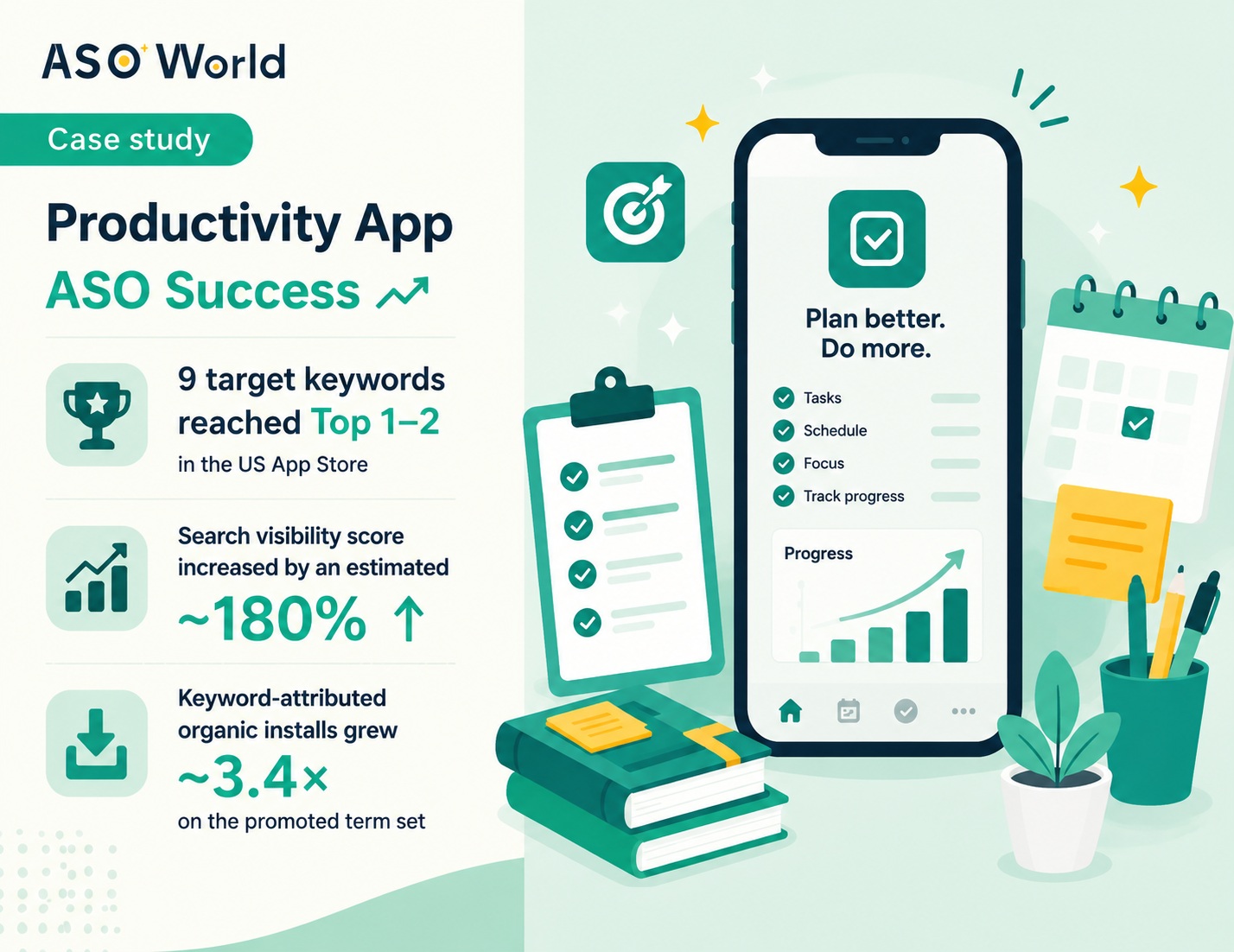
This productivity app was already ranked around position 10 for most of its target keywords — visible, but invisible where it counted. Here is the exact keyword optimization process that moved those terms to Top 1–2 and held them for more than two months.


Optimization Results

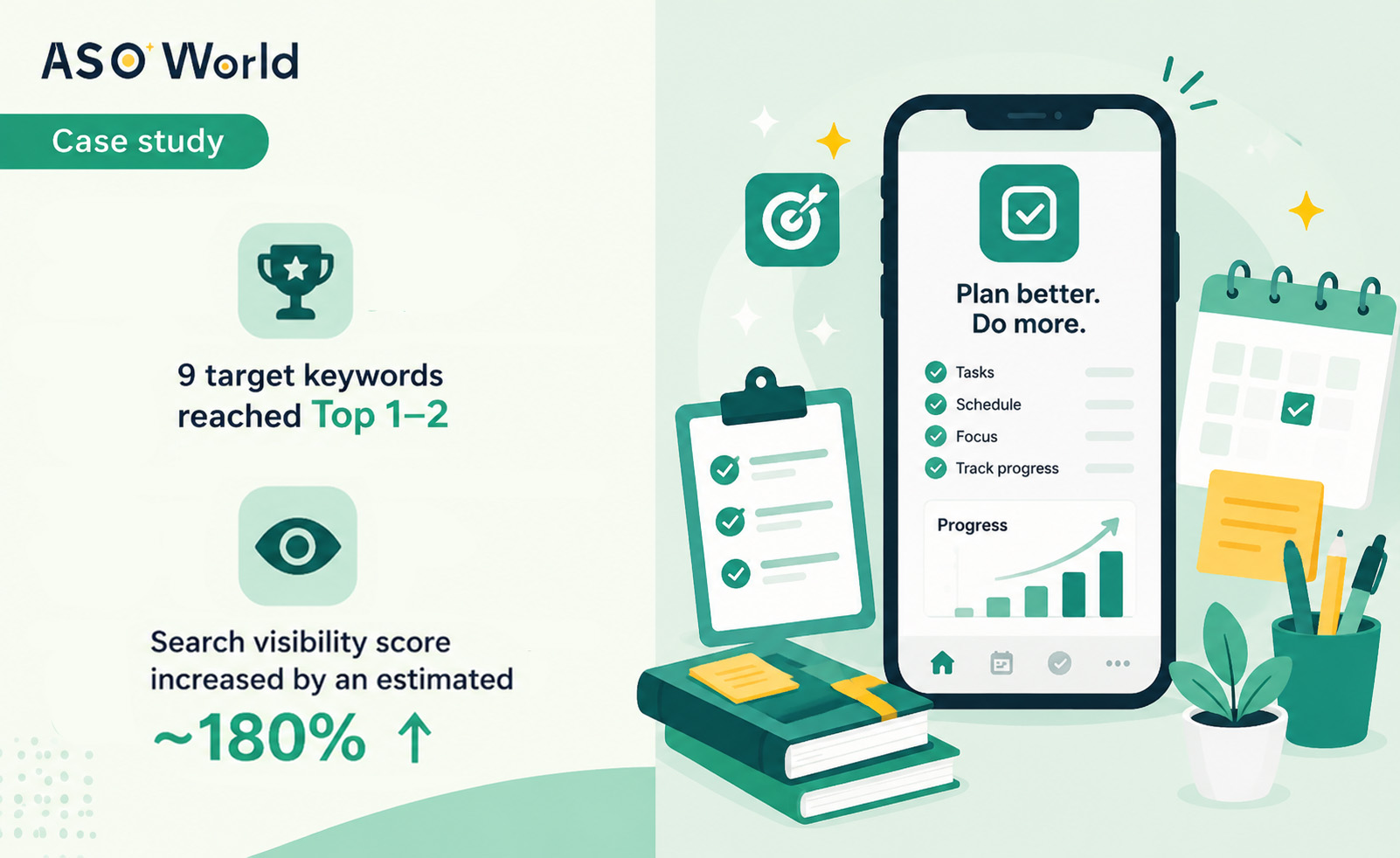
  • 9 target keywords reached Top 1–2 in the US App Store
  • Search visibility score increased by an estimated ~180%, driven by the move from page-one-mid to the top two result slots.
  • Keyword-attributed organic installs grew ~3.4× on the promoted term set, as tap share consolidated into the first two results.


Most ASO case studies start from zero — an unindexed app with no coverage and no traffic. This one doesn't. This client was already doing a lot right: they had real keyword coverage, most of their target terms sat around position 10, and they were pulling steady impressions from App Store search. Their problem was subtler and, frankly, more common: they had hit the page-one ceiling.


Ranking 8th, 10th or 12th for a keyword feels like progress. It looks fine in a dashboard. But in App Store search, the gap between position 10 and position 1 is not incremental — it's the difference between being technically findable and actually being chosen. This is the story of how we closed that gap on nine keywords, and kept it closed.


Client Profile

Our client is an established productivity app in the US App Store — a task and workflow management tool used mainly by working professionals and small teams. Unlike an early-stage app, they arrived with a genuinely healthy foundation: a mature metadata setup, an existing base of ratings, and keyword coverage across several dozen relevant search terms. Roughly a dozen of those terms were already ranking around position 10, generating a consistent flow of search impressions.


In other words, they had already won the hard part that most apps never finish: they were indexed, covered, and visible. What they hadn't won was the top of the results page.


Industry

Productivity
 

Target Market

United States
 

Platform

iOS App Store
 

App Stage

Established — already ranked, seeking breakthrough
 

ASO Service Used

Keyword Installs


The Challenge

The client came to us with a frustration many mature apps will recognise. Their ASO work had plateaued at the exact point where it should have started paying off.

1. Page one wasn't converting like page one. Sitting around position 10 meant appearing at the very bottom of the visible results — or requiring a scroll. Impressions looked acceptable, but the tap-through rate on those impressions was a fraction of what the top slots were pulling. In App Store search, the first two results absorb the overwhelming majority of taps for any given term; everything below competes for the remainder.


2. Metadata optimization had run out of room. They had already refined their title, subtitle and keyword field, and had followed the sort of field-mapping discipline we outline in our guide on how to pick the right app keywords. Those changes had earned them coverage and mid-page rankings — and then stopped producing gains. This is expected: metadata determines whether you can rank for a term. It does not determine where you land within the eligible pool.


3. They were stuck behind entrenched competitors. The top slots for their core terms were held by well-known productivity apps with years of accumulated ranking authority. Waiting for organic momentum to overtake them was not a realistic plan on any useful timeline.


4. Previous gains hadn't held. An earlier attempt at a short promotional burst had produced a brief ranking spike that decayed within days. They needed positions that would stay, not a spike to screenshot.

 
The correct diagnosis: this was not a coverage problem — it was a ranking problem. Store search works in two distinct stages: coverage decides whether your app is eligible to appear for a term at all, and ranking decides where you sit inside that eligible pool. Confusing the two is the single most common reason keyword campaigns underperform. Because this client already had coverage, they didn't need indexing work — they needed install signal directed at positions they already held.
 

The ASO Solution: The Full Keyword Optimization Process

Everything below is what we actually did, in order. Because the entire growth story here rests on keyword rankings, we've documented the complete keyword workflow — selection, auditing, allocation, pacing, delivery and defence — rather than listing generic best practices.


Step 1
Audit the Existing Keyword Set — Separate Coverage from Ranking

We started with the client's current ranking data rather than a blank keyword list. This is a different starting point than a new app requires, and it changes the whole plan.


Using ASOWorld's keyword ranking tools, we pulled every term the app currently had coverage for and tagged each one:

  • Covered and close (Rank 3–15): already inside striking distance of the top. These are the highest-ROI targets in all of ASO — the algorithm already accepts the app as a relevant answer for the term, so install signal has an existing position to lift rather than a position to create.
  • Covered but distant (Rank 16–250): eligible, but requiring far more signal per position gained. Deferred to a later phase.
  • Zero coverage (outside Top 250): excluded entirely from this campaign. There is no position for install signal to push, so spend here would have been wasted. Terms in this bucket belong in a metadata or guaranteed ranking workflow instead.


That audit immediately reframed the campaign. The client had been thinking about "improving ASO" broadly. The data said something much narrower: there were roughly a dozen terms sitting at the edge of the top, and those were the entire opportunity.


💡 Expert Insight: For an app that already ranks, the most expensive mistake is spreading budget evenly across the whole keyword list. Positions 3–15 convert install signal into rank movement far more efficiently than positions 50+, because the app has already cleared the store's relevance threshold. Sort by current rank before you sort by search volume.
 

Step 2
Score and Shortlist — Volume, Difficulty and Chance Together

From that shortlist we scored each candidate on the three dimensions we use for every keyword decision, as covered in our keyword selection guide:

  • Volume — real monthly search demand for the term inside the store.
  • Difficulty — how entrenched the apps currently holding the top results are.
  • Chance — how likely this specific app was to break into the top for that term, given its existing rank and rating base.


The client's instinct was to put everything behind the two highest-volume head terms in their category. We advised against it, and the reasoning matters: those two terms were dominated by category leaders who had held the top slots for years, and concentrating budget on them would have produced a smaller, less durable result than spreading across a wider set of achievable terms.


Instead we finalised 9 keywords for the first campaign — a mix of core terms describing what the app fundamentally is, and longer-tail phrases capturing specific workflow and feature intent. All nine shared one trait: an existing rank close enough to the top that a realistic volume of install signal could close the distance.


💡 Expert Insight: We recommend promoting at least 10 keywords in a plan rather than 1–2. A portfolio pulls traffic from many terms at once, so a single ranking swing can't sink your visibility — and it looks materially more natural to the store algorithm than all signal pointing at one phrase. Nine terms with a strong existing base was the right shape here; two head terms would not have been.


Step 3
Set Volume per Keyword — Sized to the Gap, Not to the Budget

This is where most self-managed campaigns go wrong. Volume was calculated per keyword, based on the distance each term needed to travel and how contested its top slots were — not by dividing a total budget by nine.


The resulting allocation was deliberately modest and tightly bounded:

  • 20 installs per day for the majority of keywords — those needing a lift of roughly 1–5 positions.
  • 25 installs per day for the single most contested term, which required the largest climb.
  • 3-day continuous cycles per keyword, with volume split evenly across all three days rather than front-loaded.


Two rules governed these numbers. First, keyword installs were kept well within 30% of the app's total daily installs — the ceiling we hold to in order to keep the delivery pattern proportionate to the app's genuine organic baseline. Second, volumes were kept flat and even day over day, producing a steady signal rather than a spike. An app already receiving organic traffic doesn't need a surge to move; it needs consistency the algorithm can read as sustained demand.


Why 3 days, not 1: the Apple algorithm reacts to velocity, and you may see ranking updates in around three days. But single-day bursts are exactly what produces the spike-then-drop pattern the client had already experienced. Continuous multi-day orders establish the ranking and give it enough sustained signal to hold once delivery ends. Every keyword in this campaign ran a minimum of three consecutive days.
 

Step 4
Build the Campaign in the Dashboard

With the plan settled, execution followed the standard campaign setup flow:

  1. Add the app and market — the app was added via its store URL with the United States set as the target region.
  2. Select the service — Keyword Installs, the correct choice for an app that already holds coverage and needs to climb.
  3. Import the keyword list — all nine terms were pulled directly from the research and recommendation tools into the order console rather than typed in, eliminating input errors on exact-match phrases. A single misspelled keyword sends an entire day's volume to a term nobody searches.
  4. Allocate daily volume — one-click allocation filled the per-keyword daily volumes across the three-day window, and the multi-day trend planner shaped the delivery curve in one pass instead of nine separate configurations.
  5. Review in preview, then launch — the preview panel showed all nine keywords, all three days, and every daily volume in one view for a final check before delivery started.


Step 5
Track Delivery Against Ranking, Daily

Once live, we monitored delivery and rank movement side by side on the same timeline — install volume delivered per keyword per day, against that keyword's rank change. That pairing is what makes a campaign diagnosable: it shows whether a keyword is failing because it needs more signal, or because the target was wrong to begin with.


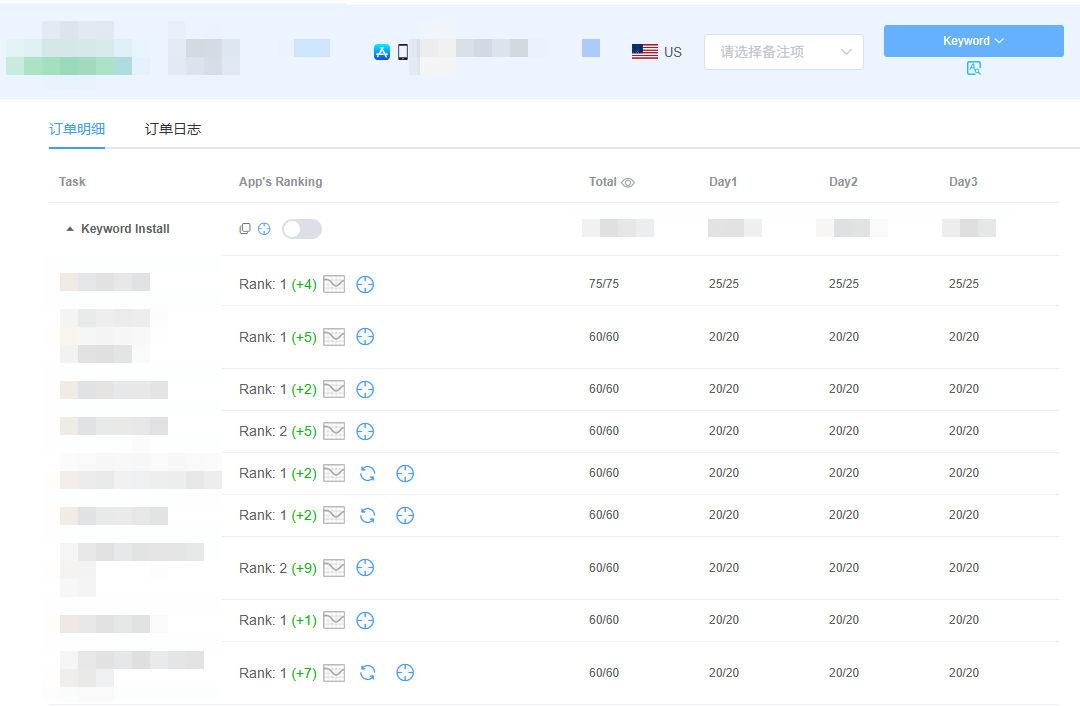
Delivery ran clean. Every task completed at 100% — 75/75 on the highest-volume term and 60/60 across the rest, split evenly at 25/25/25 and 20/20/20 per day. No under-delivery, no catch-up spikes, no gaps in the pipeline.


ASOWorld dashboard showing 9 keyword install tasks, each fully delivered, with app rankings at Rank 1 or Rank 2 and position gains from +1 to +9


Read that ranking column carefully, because it's the clearest illustration of why this app was such a good fit for keyword installs. A +1 gain means a keyword that was already sitting at Rank 2 and simply needed a nudge to take the top slot. A +9 gain means a term around position 10 — precisely the client's plateau — carried all the way to the top on 60 installs delivered over three days. Neither of those outcomes is available to an app without existing coverage. The starting position is the leverage.


Step 6
Confirm the Rankings Held

Reaching Rank 1 is the easier half of the job. Staying there is what determines whether a campaign was worth running, and it's where the client's previous attempt had failed.


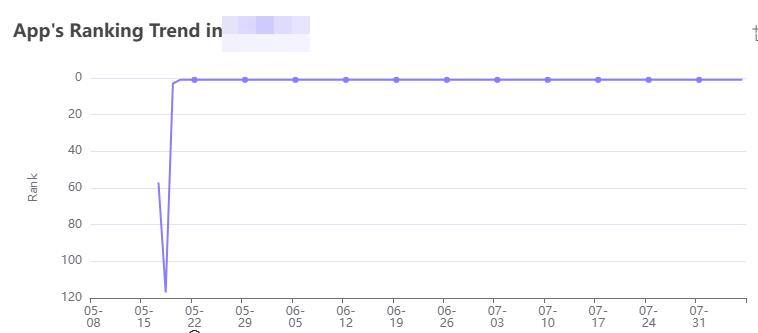
After delivery concluded, we kept tracking the promoted terms without further spend. The rankings did not decay.


Ranking trend chart showing a keyword moving from around position 60 to position 1 in mid-May and holding that position flat through the end of July


That flat line is the most important image in this case study. It shows the ranking becoming self-sustaining. Once the app occupied the top slot, it captured the tap share that comes with the top slot — and those genuine organic installs supplied the ongoing signal the position needed. The campaign didn't rent the ranking; it moved the app into a position its own organic performance could defend.


💡 Expert Insight: Durability is where the difference between a covered app and an uncovered one shows up most starkly. An app with weak retention and no organic base will slide back down once delivery stops, because nothing sustains the position. This client had solid retention and real usage — so the top ranking fed itself. If your app already converts and retains well, you are in the best possible position for keyword installs to produce lasting gains rather than temporary ones.
 

Key Takeaways

If your app is already ranking but stalled outside the top few results, this case maps closely onto your situation. Four things made the difference:

  1. Diagnose coverage versus ranking before spending anything. Covered keywords sitting at positions 3–15 are the most efficient targets in ASO. Zero-coverage keywords need a completely different service. Sorting your list this way costs nothing and determines whether your budget works.
  2. Don't put everything behind one head term. Nine achievable keywords beat two entrenched ones — for total traffic, for durability, and for how natural the campaign looks to the algorithm.
  3. Size volume to the ranking gap, and keep pacing even. Modest, evenly distributed volume across a continuous multi-day cycle outperforms a large single-day burst, and it's what prevents the spike-and-drop pattern.
  4. Existing organic quality is what makes rankings stick. A top position generates real installs, and real installs defend the position. Retention and conversion aren't separate from your keyword strategy — they're what makes it hold.

The uncomfortable truth for a lot of well-run apps is that the work required to reach position 10 is not the work required to reach position 1. Metadata gets you eligible. Install signal decides where you land. If you've already done the first part properly, the second part is a much smaller job than it looks — as nine keywords and 555 installs demonstrated here.

SHARE THIS POST

In twitter faceBook
ストアランキング取得能力の検出を開始します。
当社のASOツールを使用して、段階的にすべてのアプリストア最適化の取り組みを測定します。
目次

    Categories

    • ゲームの成長のケーススタディ
    • 健康とフィットネス アプリのケース スタディ
    • ビデオ アプリのケース スタディ
    • デーティングアプリのケーススタディ
    • ソーシャルアプリのケーススタディ
    • ショッピング アプリのケース スタディ
    • フード&ドリンク アプリのケース スタディ
    • 教育アプリのケーススタディ
    • 生産性アプリのケーススタディ
    • ユーティリティアプリのケーススタディ
    • フィンテックアプリのケーススタディ
    • ライフスタイルアプリのケーススタディ
    • 雑誌・新聞アプリの事例研究
    • Travel Apps Case Studies
    • Sports App Case Studies
    • Business App Case Studies

    Related Cases that help you grow

    ASO Case Study: How a Productivity App Broke Its Page-One Ceiling and Locked 9 Keywords into Top 1–2
    Productivity App Case Studies

    ASO Case Study: How a Productivity App Broke Its Page-One Ceiling and Locked 9 Keywords into Top 1–2

    How a productivity app stuck at rank 10 pushed 9 keywords to Top 1–2 in 3 days and held them 2+ months. Full keyword install process and results.
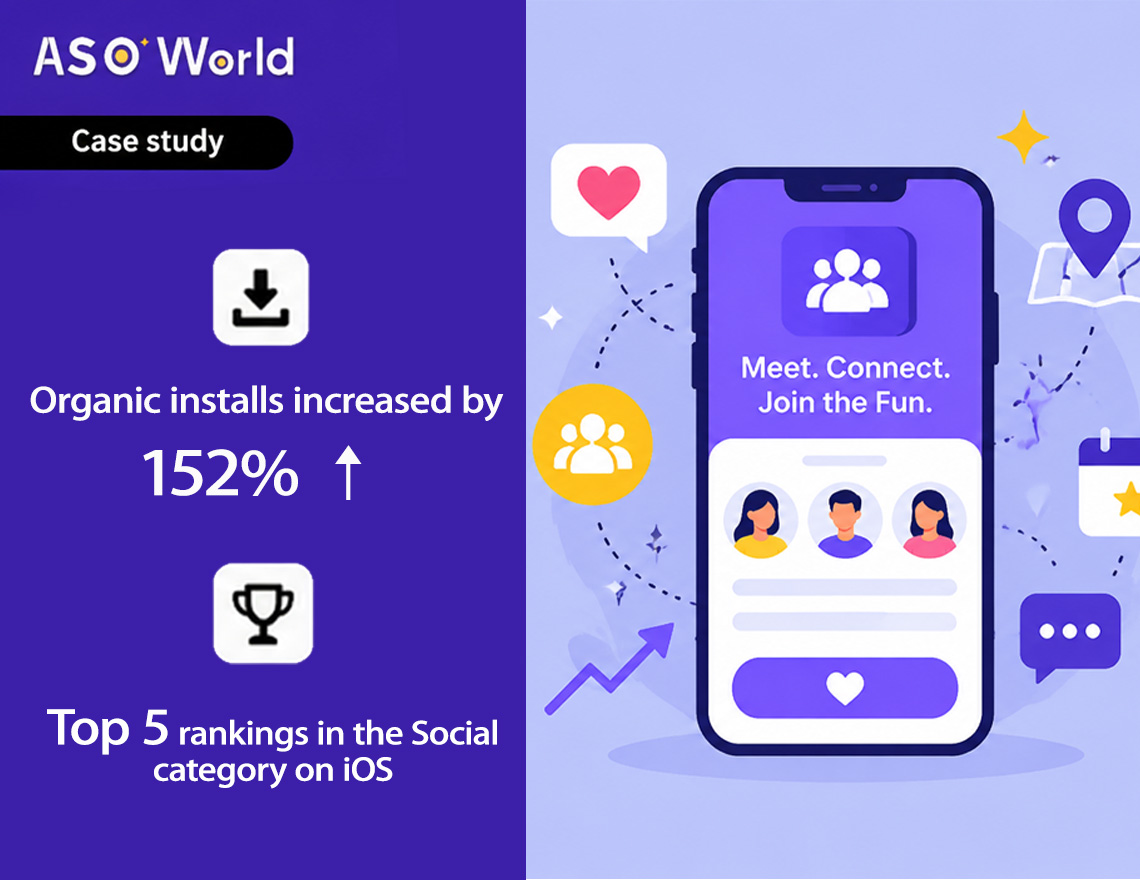
    ASO成功事例:あるソーシャルアプリが夏のトラフィックを獲得し、オーガニックインストール数を152%増加させた方法
    Social Apps Case Studies

    ASO成功事例:あるソーシャルアプリが夏のトラフィックを獲得し、オーガニックインストール数を152%増加させた方法

    本ケーススタディでは、あるソーシャルネットワーキングアプリが季節要因を取り入れたASO戦略を活用し、夏の厳しい競争を勝ち抜いてiOS・Google Play両ストアでキーワード検索の上位表示を獲得した手法について解説します。
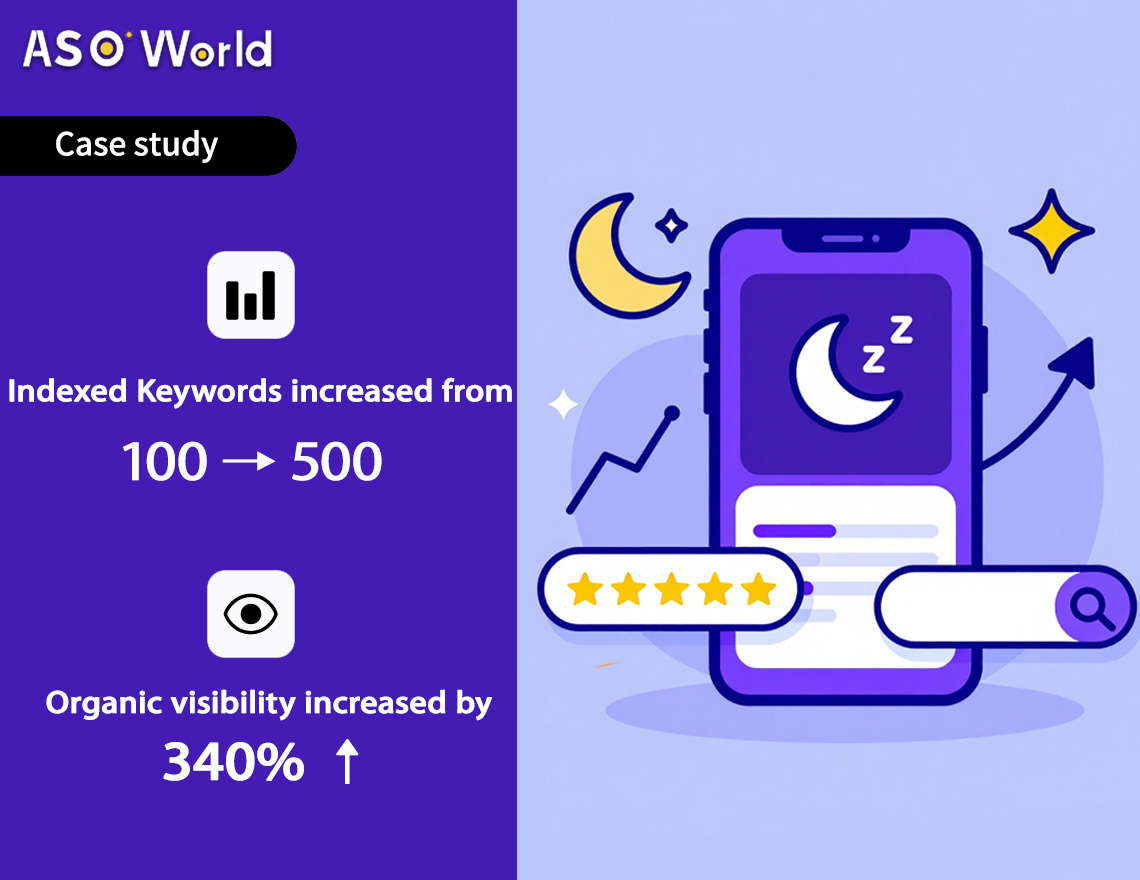
    ASO事例研究:新しい睡眠アプリの「ゼロトラフィックループ」脱却をいかに支援したか
    Health & Fitness Apps Case Studies

    ASO事例研究:新しい睡眠アプリの「ゼロトラフィックループ」脱却をいかに支援したか

    ASOWorldが、まったく認知度のなかった新しい睡眠アプリの可視性ゼロの状態をどのように克服したのかをご紹介します。キーワードカバレッジ、レビュー獲得、トップ10ランキング達成のためのASO戦略をご覧ください。
    ASO事例研究:パズルゲームがキーワード最適化でCPIを41%削減した方法
    Games Growth Case Studies

    ASO事例研究:パズルゲームがキーワード最適化でCPIを41%削減した方法

    海外のパズルゲームスタジオが、有料獲得依存からオーガニック成長へと転換し、ASOWorldのキーワードインストール戦略を通じてオーガニックダウンロードを170%増加させ、CPIを41%削減した方法をご紹介します。
    今すぐプロモーションを開始し、アプリの探索ツアーを開始しましょう!
    大手、小規模のスタートアップを問わず、 Google Play, App Store, Galaxy Store や RuStore でアプリを低価格でプロモーションできるよう支援しています.
    今すぐプロモーションを開始し、アプリの探索ツアーを開始しましょう!
    • ASO
    • Email [email protected]
    • Contact Contact Us
    • twitter facebook linkedin instagram
    • 仕える
    • キーワードインストール
    • パッケージ名によるインストール
    • 評価とコメント
    • 良質なコメントサービス
    • キーワードを保証するランキングサービス
    • ASO仕える
    • その他のサービス
    • ASO ツール
    • 無料ASOツール
    • キーワードリサーチツール
    • キーワードの選び方
    • ASOナレッジカレッジ
    • ブログ
    • ケーススタディ
    • ガイドと洞察
    • 一般的な問題
    • 用語集
    • モバイルニュース
    • 会社
    • なぜASO World
    • 当社について
    • お問い合わせ
    • リセラープログラム
    • 始め方
    • LLM・AI 情報
    ASO World © 2020-2026 all rights reserved
    プライバシーポリシー サービス条項

    当社のウェブサイトでは Cookie を使用して、お客様の好みや繰り返しのアクセスを記憶することで、最も適切なエクスペリエンスを提供します。 「同意する」をクリックすると、すべての Cookie の使用に同意したことになります。