COVID-19 UPDATE


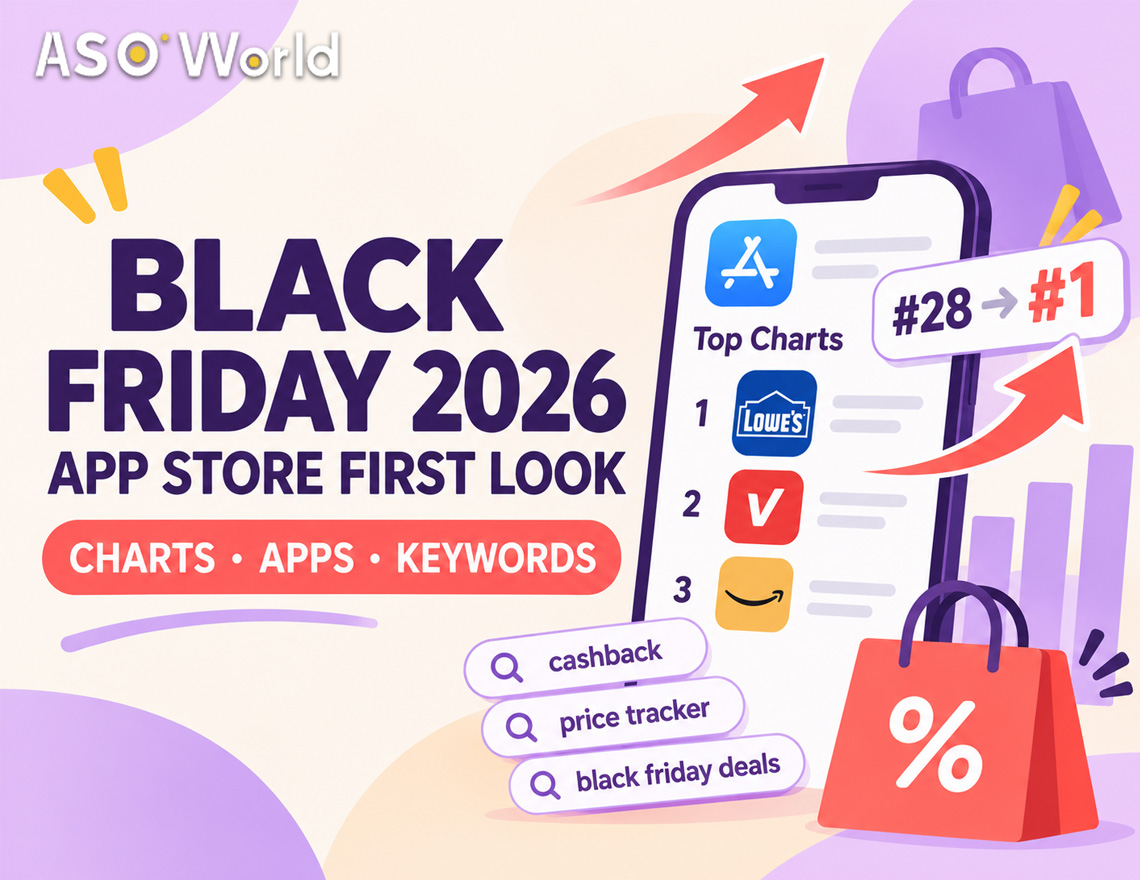
Black Friday 2026 on the App Store: Which Apps, Categories and Keywords Are Moving


重要なお知らせ:ASOWorld の名前を騙ってパートタイムの採用や ASO 収入アプリ活動を行う詐欺にご注意ください。ASOWorld はパートタイムのスタッフを募集していません。ASOWorld が投稿した公式情報のみを信頼してください。

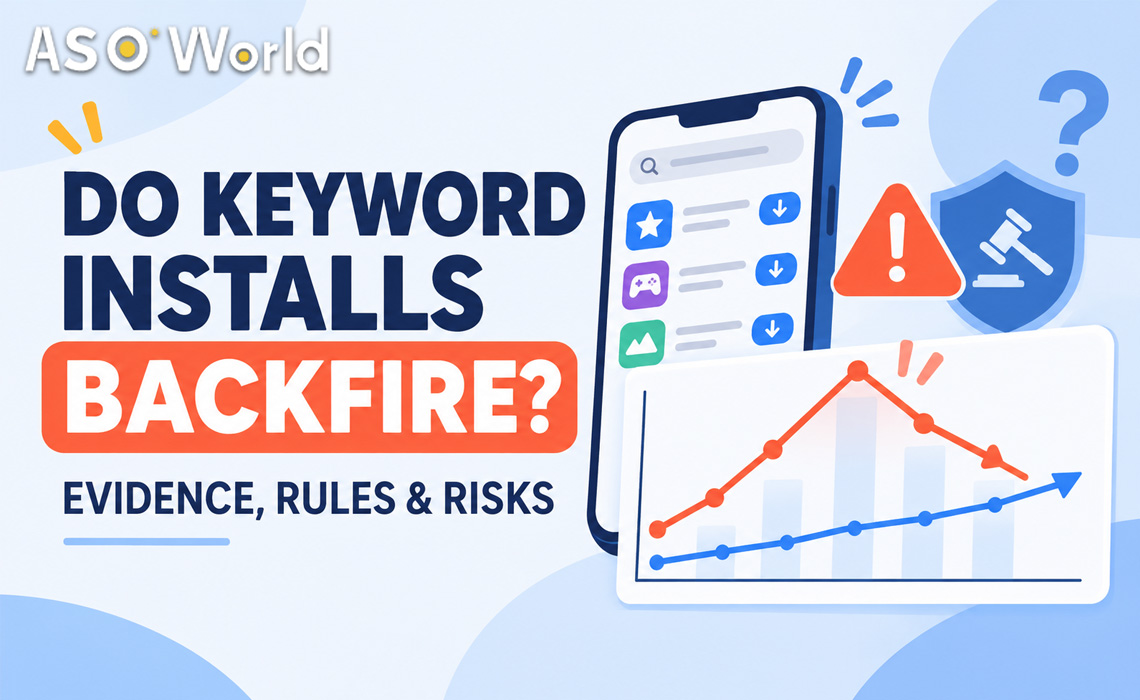
Do keyword installs backfire? What Apple and Google rules say, what the evidence shows, when risk is lower, and a 6-question checklist before you buy.


Short answer
“Keyword installs” is one of the most debated phrases in app marketing. Some vendors sell them as a shortcut to page one. Some tool makers call them a waste of money that can cost you your developer account. As a company that sells keyword installs, we think developers deserve a straight answer: what the rules say, what the evidence does and doesn’t show, and a checklist to decide for your own app.
A keyword install is an install that comes through a search for a specific keyword in a specific country. The user searches the term, finds the app in the results and installs it. Because install volume from a search term is one of the signals stores use to judge relevance, a rise in installs from that term can move the app up for it.
That is different from a package (direct) install, which raises overall install velocity without a search and is mainly used for chart positions. For a side-by-side comparison, see Keyword installs vs direct installs vs CPI.
Start with the rules, in the stores’ own words.
| Store | Rule | What it means for you |
|---|---|---|
| App Store | Guideline 5.6.3 (Discovery Fraud): “Manipulating any element of the App Store customer experience such as charts, search, reviews, or referrals to your app erodes customer trust and is not permitted.” | Search ranking is explicitly covered |
| App Store | Guidelines introduction: apps that try to manipulate ratings or App Store discovery are removed, and the developer is expelled from the Apple Developer Program | The consequence can reach the whole account |
| Google Play | User Ratings, Reviews, and Installs policy: developers must not attempt to manipulate the placement of any apps on Google Play; incentivized and fake activity is prohibited | Placement includes search and charts |
Any honest discussion has to begin here. Keyword installs are a promotion method that sits inside the area these rules address. Providers can control how installs are delivered; they cannot change the rules or guarantee how a store will judge a pattern.
The strongest version of the argument comes from Sonar’s August 2026 article, Keyword Installs: Why Buying Them Backfires. It makes five points, and each deserves a fair hearing.
We agree with the core of points 2, 4 and 5. The policy risk is real, fake reviews are a bad idea, and money spent on installs for a weak listing is money wasted.
The decay finding is worth reading carefully, because it explains most failed campaigns.
Rankings respond to recent activity. When any source of installs stops (a paid campaign, a feature, a press spike), the rank tends to drift back unless organic installs from the new position replace what stopped. A return to baseline after a campaign ends is the expected outcome when nothing else changed. It tells you the keyword’s organic demand didn’t hold the position on its own.
The sample is small and specific. Fourteen launches, tracked by a keyword-tool company, mostly short campaigns. That is useful evidence about short bursts, but it does not tell us what happens with relevant keywords, paced delivery and a tapered ending.
Retention figures depend on the source. Incentivized installs from offer walls behave very differently from installs by people who searched for a term that matches the app. Neither we nor Sonar can publish a clean industry dataset for every delivery method, so the honest answer is to measure it on your own app.
What we can share is our own published result, with its limits stated. In a 2026 case for an AI video app in the US, the number of target keywords in the top 10 rose from 3 to 14 out of 50, search visibility rose 126% and organic daily downloads rose 64% before Black Friday. It is one app, one market and one season, and it does not remove the policy risk above.
The practical test is simple: did organic installs from search rise after the campaign, beyond the installs you paid for? Our guide Did the campaign lift organic installs? shows how to calculate that in your MMP and App Store Connect.
| Factor | Pattern that tends to backfire | Lower-risk pattern |
|---|---|---|
| Volume vs organic | Paid installs are most of the app’s daily installs | Paid installs stay a small share; ASOWorld recommends below 30% of total daily installs |
| Starting rank | App is not indexed or far outside the top 250 | App already ranks in the top 250 for the term |
| Relevance | Broad or off-topic head terms | Terms that describe a feature users see on the first screen |
| Product page | Low conversion; rating below 4.0 | Page converts at or above category average |
| Pacing | One big burst over 1–3 days | Gradual increase over a week or more |
| Ending | Campaign stops abruptly | Volume tapers over one to two weeks |
| Reviews | Fake or bundled reviews | Ratings come mostly from the in-app prompt |
| App status | Under review, recently warned, or new account | Stable account history, no open notices |
| Measurement | Judged by rank on day 3 | Judged by organic search installs over 3–4 weeks |
Two rows matter more than the rest. The starting rank row is why ASOWorld’s keyword installs service requires the app to be within the first 250 results for each keyword and country; pricing starts at $0.20 per install on Google Play and $0.30 on iOS (checked November 27, 2026). The ending row is why we published a 14-day taper plan rather than advising teams to stop on a set day.
The two stores also behave differently. Google Play rankings typically need a longer stabilization period before results can be judged, while iOS can respond within days but drifts back quickly when activity stops. See How long it takes to see Google Play keyword ranking results for the Android timeline.
Answer each question honestly. If any answer is “no”, fix that first or don’t run a campaign.
If your listing fails questions 1–3, the better investment is the listing itself. Our keyword selection method covers relevance, volume and difficulty, and our organic conversion and user experience solution covers the page elements that turn ranking into installs.
Stop all paid promotion activity first, including installs, reviews and incentivized campaigns, and read the notice carefully. Then follow the official response path. Our guide to the App Store “Fraudulent Activity” warning explains what the notice means and how developers usually respond. Resume growth work with organic methods only: metadata, conversion, real ratings and paid ads within the stores’ own ad products.
Ask every provider the same questions in writing: which stores and countries, how delivery is paced, what happens when a campaign ends, what is guaranteed and what isn’t, and how they respond when an app gets a warning. Avoid anyone who promises “100% safe” or “undetectable” installs, because no one can promise that. Our neutral checklist is How to choose a keyword installs provider: 10 questions to ask before you recharge.
Apple’s guideline 5.6.3 says manipulating any element of the App Store, including search, is not permitted, and Google Play prohibits attempts to manipulate app placement. Keyword installs fall within the area these rules cover. That is a policy risk every buyer should weigh; it is not a legal question in most countries.
Both stores invest heavily in detecting unnatural patterns, such as sudden spikes, installs that don’t match an app’s usual traffic, and bundled fake reviews. No provider can guarantee that a campaign won’t be judged as manipulation.
Rankings reflect recent activity, so a rank gained during a campaign tends to drift back after it stops unless organic installs from the new position replace it. Relevance, page conversion and a tapered ending decide how much holds.
No. iOS often responds within days and drifts back quickly. Google Play usually needs a longer period before results are clear. Plan and measure the two stores separately.
We don’t describe it as safe, because no promotion service can remove platform policy risk. We set a top-250 starting condition, recommend keeping keyword installs below 30% of daily installs, recommend gradual pacing and a taper, and advise stopping entirely if an app receives a warning.
Three relevant keywords in one country where you already rank in the top 250, small daily volume for one to two weeks, a taper at the end, and an organic uplift check three to four weeks later.
This is the first guide in our Keyword Installs series. The body above already links seven related guides and cases. One more page worth reading before you decide:
Get FREE Optimization Consultation
Let's Grow Your App & Get Massive Traffic!
All content, layout and frame code of all ASOWorld blog sections belong to the original content and technical team, all reproduction and references need to indicate the source and link in the obvious position, otherwise legal responsibility will be pursued.