COVID-19 UPDATE


Important Notice:Beware of scams using ASOWorld's name for part-time recruitment or ASO earning app activities. ASOWorld is not hiring any part-time staff. Trust only official information posted by ASOWorld.

Discover how app ratings and reviews impact AI app retention. Learn UK-focused strategies to boost visibility, convert trials, and build lasting user trust.


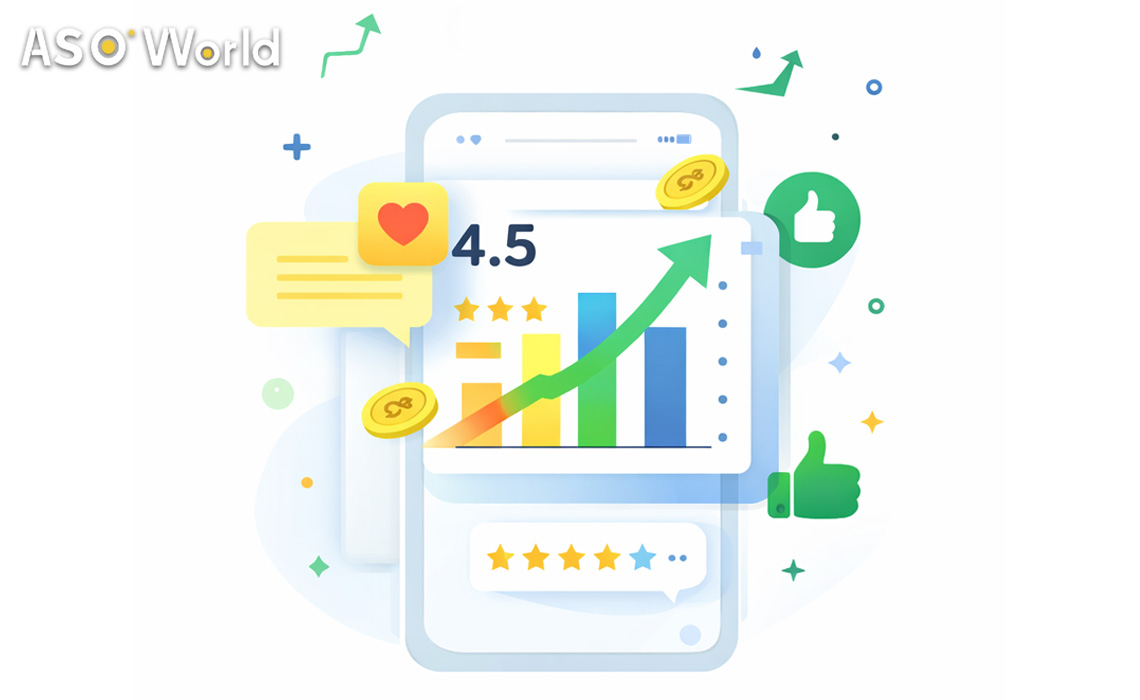
AI applications continue to capture attention rapidly, yet they shed users at an equally swift pace. RevenueCat's 2026 data reveals a telling pattern: AI apps convert free trials into paying subscribers more effectively than non-AI alternatives, yet their long-term retention remains weaker, refund rates are elevated, and revenue proves more volatile. This gap renders reputation management critical within the sector. When users hesitate, they do not linger; they leave a rating, pen a review, and promptly seek alternatives.
The ChatGPT controversy in late February rendered this behaviour impossible to disregard. Following news of its DoD partnership, US uninstalls surged 295% day-on-day, one-star reviews rocketed by 775%, and Claude briefly capitalised on the sentiment shift. For app teams, the lesson is clear: in the AI sector, trust shifts as swiftly as installations.
We examine three core areas:
The pattern is pronounced. As RevenueCat indicates, AI apps convert free trials to paid subscriptions at 8.5% compared to 5.6% for non-AI apps, yet annual retention lags at 21.1% versus 30.7%. Refund rates are similarly elevated at 4.2% versus 3.5%, whilst median RLTV stands at $18.92 for AI apps compared to $13.59 for their traditional counterparts.
In essence, AI apps excel at rapid monetisation but struggle to sustain value over time.
| Key Retention Metrics (2026) | AI-Driven Apps (Median) | Traditional Apps (Median) | Difference |
|---|---|---|---|
| Monthly Retention Rate | 6.10% | 9.50% | -3.40% |
| Annual Subscription Retention | 21.10% | 30.70% | -9.60% |
| Refund Rate | 4.20% | 3.50% | +20% |
| Monthly Revenue LTV (RLTV) | $18.92 | $13.59 | +39.2% |
Source: RevenueCat
This is precisely where ratings and reviews transcend mere storefront metrics, becoming the public manifestation of product-market fit—or its absence.
Both the App Store and Google Play treat ratings and reviews as fundamental trust signals. Apple's official guidance states that developers may solicit ratings and respond to reviews to enhance discoverability, encourage downloads, and foster rapport with users. Meanwhile, Google Play stipulates that app reviews should prove useful, honest, unbiased, and grounded in genuine experience. This positions the review surface as integral to the growth stack, not merely a support channel.
For AI apps, this proves particularly vital. Users frequently sample products for their novelty, then assess them for stability, utility, and fit within mere sessions. When the product falters, this feedback surfaces immediately in ratings. When it delivers, the same channel becomes a conversion asset. Leading teams therefore treat ratings and reviews as integral to launch planning, feature rollouts, and category positioning—never as an afterthought.
The ChatGPT episode represented more than a simple backlash; it was a visibility event. A public trust incident altered uninstall behaviour, review volume, and competitive ranking pressure within a compressed timeframe. This illustrates precisely why app store reviews prove crucial for AI applications. When sentiment shifts, users require no lengthy explanation; they scan the store page, peruse several reviews, and determine whether the app remains worthy of trial.
This creates a distinct opportunity for app teams. If your product improves, your review profile should reflect that evolution. If your category grows more competitive, your public proof must prove robust enough to support conversion. When product updates alter user perception, your ratings and reviews strategy should accelerate the visibility of that shift within the store.
Expert Insight: Apple confirms that ratings and reviews feed directly into discoverability and download metrics, extending beyond mere reputation management.
In such scenarios, a more agile response to user reviews can prove decisive.
When sentiment shifts rapidly, app teams require mechanisms to restore confidence without relying solely on organic recovery. Consequently, many teams combine review optimisation with keyword installs and comprehensive ASO activity, ensuring the store page, search visibility, and social proof advance in concert.
For apps enjoying genuine traction, this coordinated approach helps stabilise conversion and supports subsequent growth phases.
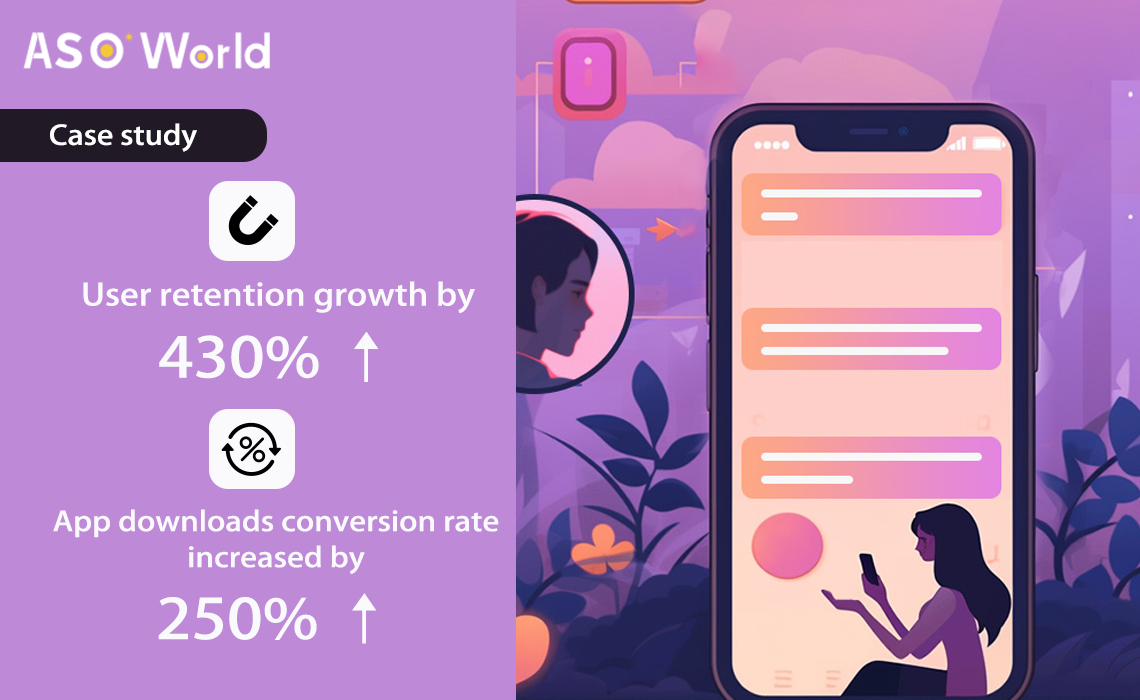
Exemplifying this, our collaboration with a dating app demonstrated particular efficacy—securing substantial gains in both user retention and overall store conversion.
👉 View the complete case study
The best-performing AI apps in 2026 will not merely win trials; they will convert those trials into visible proof. Such proof typically manifests first through ratings, reviews, and the overall presentation of the App Store or Google Play listing.
The objective is straightforward: construct a product users wish to retain, facilitate straightforward pathways for satisfied users to express this within the store, and leverage platforms like ASOWorld to accelerate the moment when positive momentum becomes visible. This frequently marks the distinction between a modest launch and category leadership.
👉 Complete Guide to Purchasing App Store and Google Play Reviews to Boost Your App
The "Daily Drip" method yields optimal results. Rather than acquiring reviews in bulk, distribute them progressively using active, US-based accounts. To satisfy Apple's current verification protocols, reviewers should engage with the app at least 2–3 times prior to posting, thereby simulating authentic user behaviour.
Prioritise platforms such as ASOWorld or Apptimizer offering manual reviews and "Guaranteed Positioning" services. Avoid low-cost providers employing automated scripts. In 2026, Google Play and the App Store deploy microsecond-level device fingerprinting; low-quality bot reviews are readily detected and typically trigger app suspension.
Indeed, improper execution carries substantial risk. To avoid penalties, adhere to a "Natural Growth Model." Maintain a review-to-organic-download ratio not exceeding 1:100. Ensure review content varies—mixing longer and shorter sentences—and avoid repetitive templates or excessively generic praise.
Ratings and sentiment signals currently account for 25%–30% of total ranking weight. Data indicates that a 4.5-star app typically ranks 15–20 positions higher than a 4.0-star equivalent, even when download volumes are identical.
The standard organic ratio approximates 1,000 installs per review. During optimisation phases, you may safely adjust this to 100:1. However, exceeding a 10:1 ratio will likely trigger anti-fraud alerts and prompt manual account review.
High ratings alone do not generate traffic; they require support from Download Velocity (speed of new installations) and Keyword Relevance. Even with a perfect 5-star rating, an app remains invisible without optimisation for specific, high-volume search terms. Quality must be underpinned by robust keyword strategy to ensure discoverability.
 Mobile App Growth,Customer Retention,
Get FREE Optimization Consultation
Let's Grow Your App & Get Massive Traffic!
All content, layout and frame code of all ASOWorld blog sections belong to the original content and technical team, all reproduction and references need to indicate the source and link in the obvious position, otherwise legal responsibility will be pursued.