COVID-19 UPDATE


Important Notice:Beware of scams using ASOWorld's name for part-time recruitment or ASO earning app activities. ASOWorld is not hiring any part-time staff. Trust only official information posted by ASOWorld.

The 2026 FIFA World Cup is set to captivate 6 billion supporters across 39 exhilarating days. Discover how streaming, food delivery, and e-commerce apps can seize this extraordinary user acquisition opportunity through tried-and-tested ASO techniques


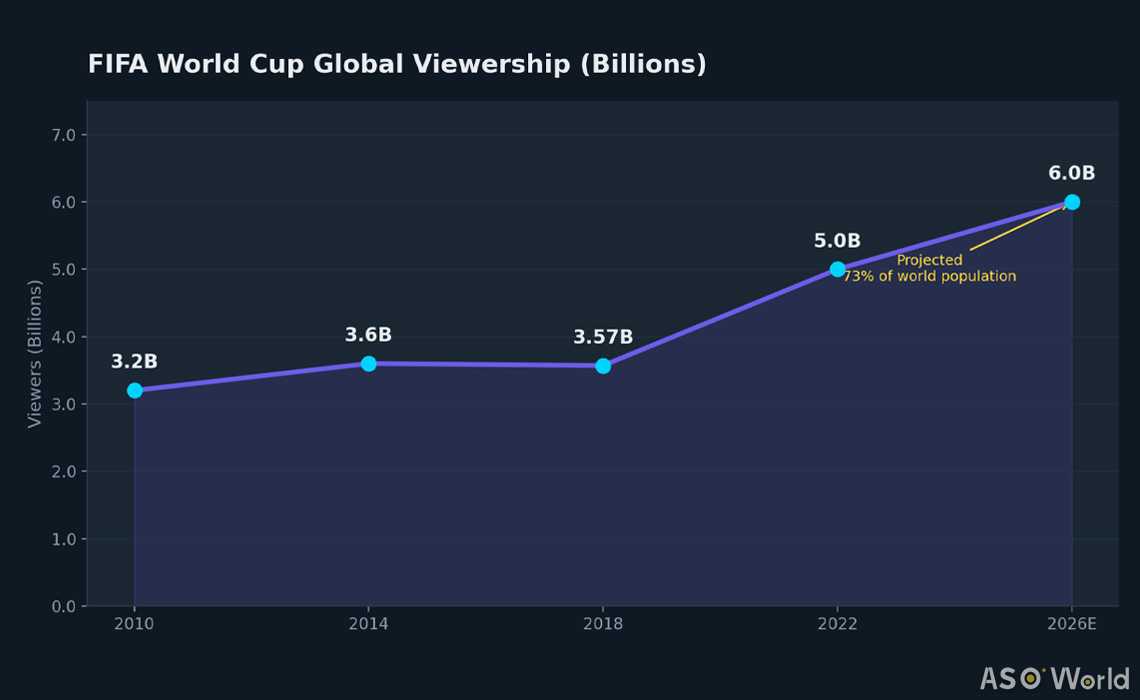
The 2026 FIFA World Cup is not merely a sporting event — it is shaping up to be the largest user acquisition opportunity the app economy has seen this decade. With 6 billion people expected to engage globally (73% of the world's population), app developers and marketers across streaming, food delivery, and e-commerce verticals are looking at a six-week window that could fundamentally reshape their annual growth trajectory.
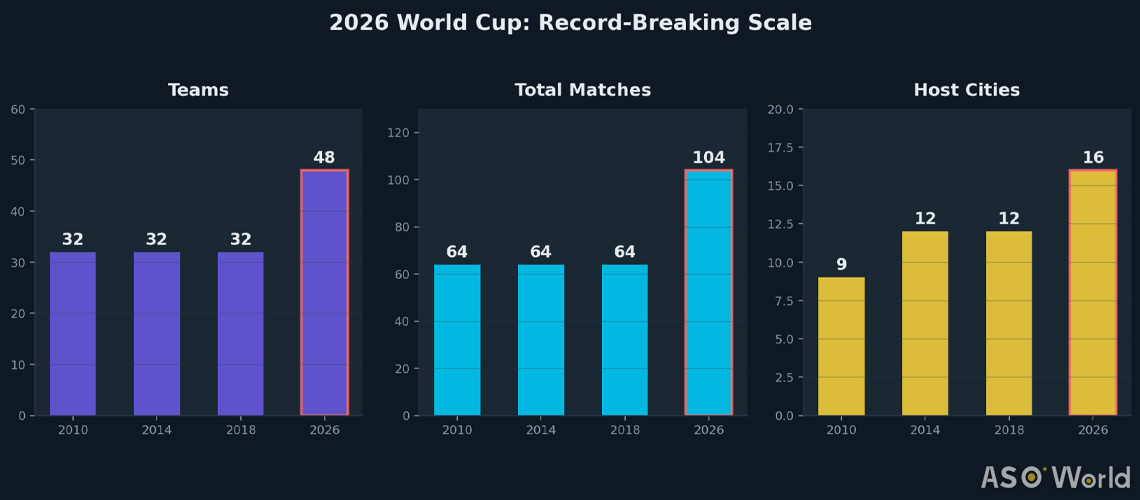
The 2026 edition is the largest in FIFA history: 48 nations, 104 matches across 39 days, and 16 host cities spanning the United States, Canada, and Mexico. Ticket requests exceeded 150 million in just 15 days — 30 times oversubscribed. For brands and app marketers, this translates into sustained, high-intent user behaviour over a considerably longer tournament window than any previous edition.
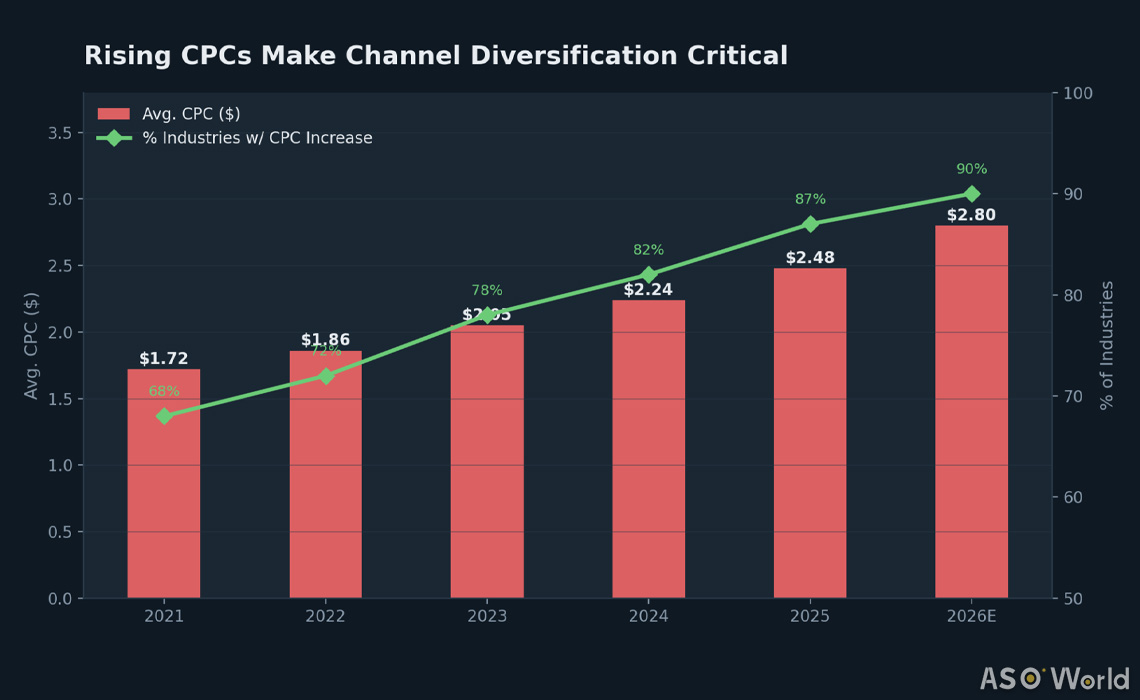
Global ad spend is forecast to surpass $1 trillion in 2026, with the World Cup cited as a key driver. But rising competition means costs are climbing too — CPC is up year-on-year for 87% of industries by an average of 12.88%. Marketers who rely solely on traditional paid search and social will face mounting margin pressure. Those who come out on top will be the ones who diversify their acquisition channels and leverage app store seasonality to capture organic demand.
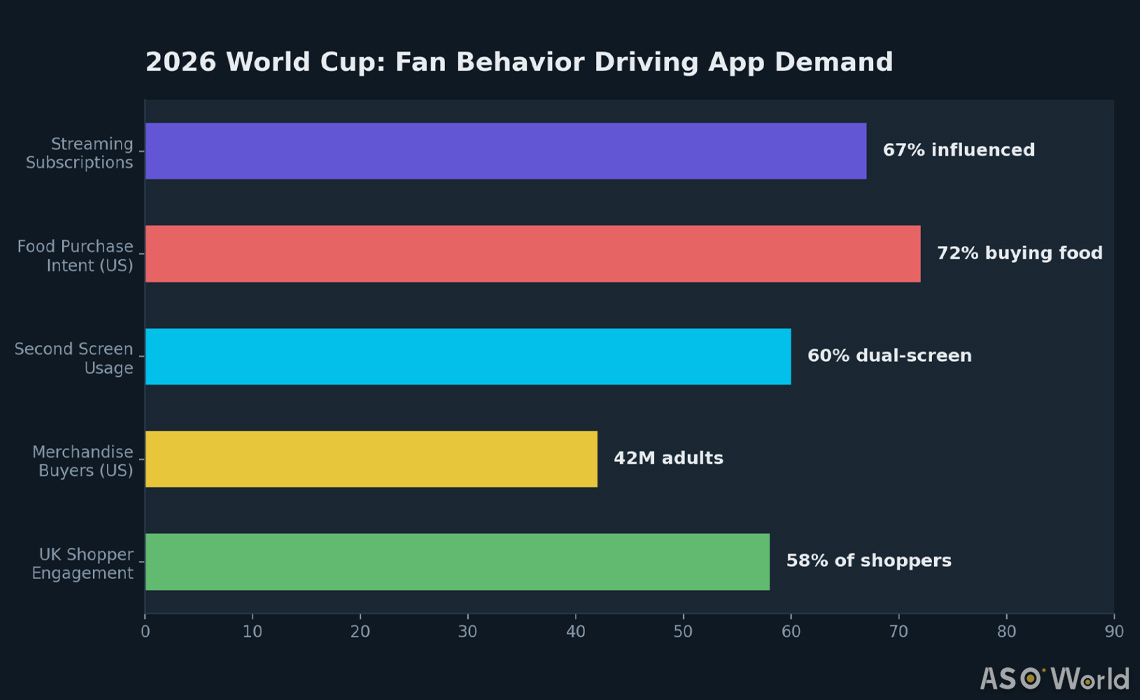
The World Cup is the single biggest subscription trigger of the year. With 67% of viewers saying the event will influence their subscription decisions, streaming platforms are competing for a wave of new sign-ups. For app marketers, this means optimising metadata around World Cup keywords, localising creatives by market, and timing campaigns to align with the fixture schedule.
If your app serves live content or sports highlights, this is your window to capture users searching for streaming access.
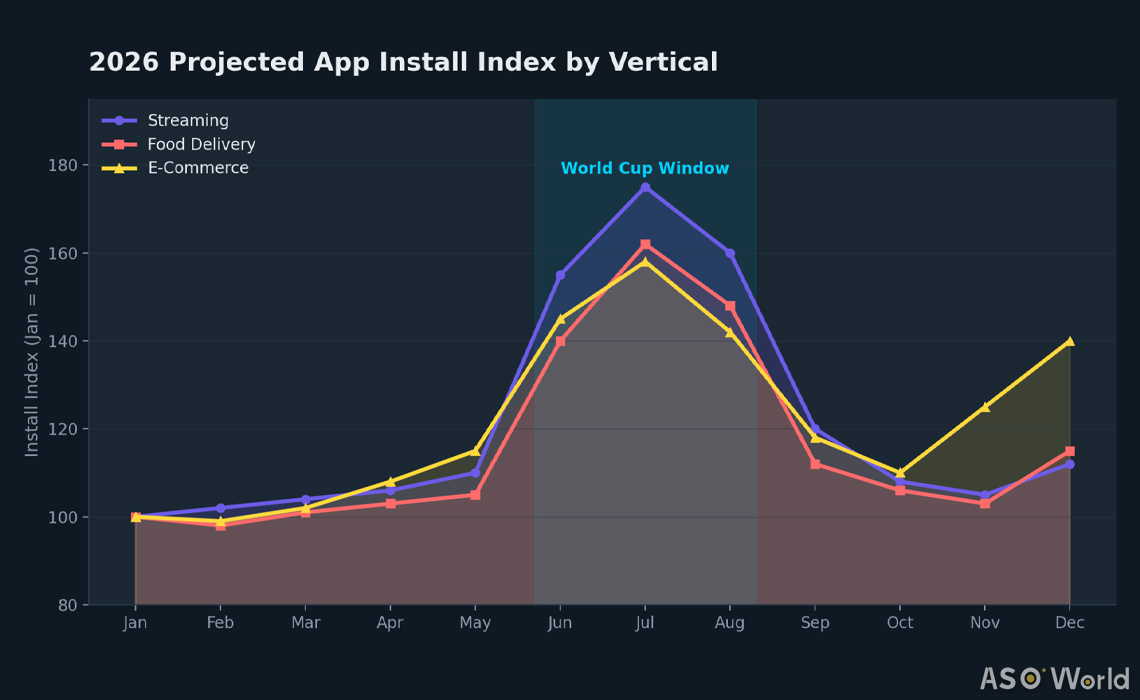
Of the 23.7 million Americans planning to host World Cup viewing parties, 72% will be buying food. In the UK, 58% of shoppers say they intend to get involved in the World Cup, driving demand for food and drink across match nights.
For food delivery apps, the opportunity is clear: matchday kick-offs, half-time breaks, and final whistles create entirely predictable spikes in ordering intent. Apps that align push notification strategies and in-app promotions with the match schedule will capture a disproportionate share of order volume. A well-considered seasonal app marketing strategy is essential to convert this demand effectively.
With 42 million US adults planning to purchase World Cup merchandise and 40% of viewing party hosts buying audio/visual equipment, e-commerce apps are facing a sustained demand cycle — not a single-day spike.
Retailers that update their app store listings with event-relevant keywords and launch time-limited promotions tied to tournament milestones will see measurable uplift in both installs and conversions.
| App Vertical | Key World Cup Demand Signal | Primary KPIs |
|---|---|---|
| Streaming | 67% of viewers influenced on subscriptions | Subscriptions, CAC Reduction, Installs |
| Food Delivery | 72% of party hosts buying food | Orders, GMV, User Acquisition |
| E-Commerce | 42M US adults buying merchandise | ROAS, Conversion Rate, AOV |
| Sports Betting | 104 matches across 39 days | Installs, Registrations, Deposits |
⚡ Expert Tips
The 2026 World Cup is not a one-day event — it is a 39-day acquisition window. Apps that approach it as a sustained campaign — with phased creative refreshes, localised metadata, and multi-channel distribution — will significantly outperform those running a single burst. Start optimising now: the biggest user acquisition moment of the year is already under way.
 Customer Acquisition,Mobile Insights,
Get FREE Optimization Consultation
Let's Grow Your App & Get Massive Traffic!
All content, layout and frame code of all ASOWorld blog sections belong to the original content and technical team, all reproduction and references need to indicate the source and link in the obvious position, otherwise legal responsibility will be pursued.