COVID-19 UPDATE


Important Notice:Beware of scams using ASOWorld's name for part-time recruitment or ASO earning app activities. ASOWorld is not hiring any part-time staff. Trust only official information posted by ASOWorld.

AI apps convert fast but struggle with retention. Learn how ratings and reviews influence trust, rankings, and long-term growth in 2026—and what app teams should do next.


AI apps still get attention fast. They also lose users fast. RevenueCat's 2026 data shows a familiar pattern: AI apps convert trials to paid users better than non-AI apps, but long-term retention is weaker, refund rates are higher, and revenue is more volatile. That gap is what makes reputation so important in this category. When users are unsure, they do not wait long to move on. They leave a rating, write a review, and try the next app.
The ChatGPT backlash in late February made that behavior impossible to ignore. After news of its DoD partnership, U.S. uninstalls jumped 295% day over day, one-star reviews surged 775%, and Claude briefly benefited from the shift in sentiment. For app teams, the lesson is simple: in AI, trust moves as fast as installs.
We are looking at three things:
The pattern is not subtle. As RevenueCat says, AI apps convert free trials to paid subscriptions at 8.5% versus 5.6% for non-AI apps, but annual retention is weaker at 21.1% versus 30.7%. Refund rates are higher too, at 4.2% versus 3.5%, while median RLTV is $18.92 for AI apps versus $13.59 for non-AI apps.
In other words, AI apps can monetize quickly, but they struggle to hold value over time.
| Key Retention Metrics (2026) | AI-Driven Apps (Median) | Traditional Apps (Median) | Difference |
|---|---|---|---|
| Monthly Retention Rate | 6.10% | 9.50% | -3.40% |
| Annual Subscription Retention | 21.10% | 30.70% | -9.60% |
| Refund Rate | 4.20% | 3.50% | +20% |
| Monthly Revenue LTV (RLTV) | $18.92 | $13.59 | +39.2% |
Source: RevenueCat
That is where ratings and reviews become more than a storefront metric. They become the public version of product-market fit, or the lack of it.
The App Store and Google Play both treat ratings and reviews as core trust signals. The Apple store official says, developers can ask for ratings and respond to reviews to improve discoverability, encourage downloads, and build rapport with users. Google Play store says, app reviews should be useful, honest, unbiased, and based on genuine experience. That makes the review surface part of the growth stack, not just a support channel.
For AI apps, this matters even more. Users often try the product for novelty, then judge it on stability, usefulness, and fit within a few sessions. If the product misses the mark, that feedback shows up immediately in ratings. If the product delivers, the same surface becomes a conversion asset. That is why the best teams treat ratings and reviews as part of launch planning, feature rollouts, and category positioning, not as an afterthought.
The ChatGPT episode was not just a backlash story. It was a visibility story. A public trust event changed uninstall behavior, review volume, and competitive ranking pressure in a very short window. That is exactly why ratings and reviews are so important for AI apps. When sentiment turns, users do not need a long explanation. They scan the store page, read a few reviews, and decide whether the app still feels worth trying.
That creates a clear opportunity for app teams. If your product is improving, your review profile should reflect it. If your category is getting more competitive, your public proof should be strong enough to support conversion. And if a product update changes user perception, your ratings and reviews strategy should help that shift show up faster in the store.
Expert Tips: Apple’s own guidance confirms that ratings and reviews are part of discoverability and downloads, not just reputation.
In cases like this, a faster ratings and reviews response can make a real difference.
When sentiment shifts quickly, app teams need a way to restore confidence without waiting for organic recovery alone. That is why some teams pair review lift with keyword installs and broader ASO work, so the store page, search visibility, and user proof all move in the same direction.
For apps that already have real traction, this kind of coordinated approach can help stabilize conversion and support the next growth step.
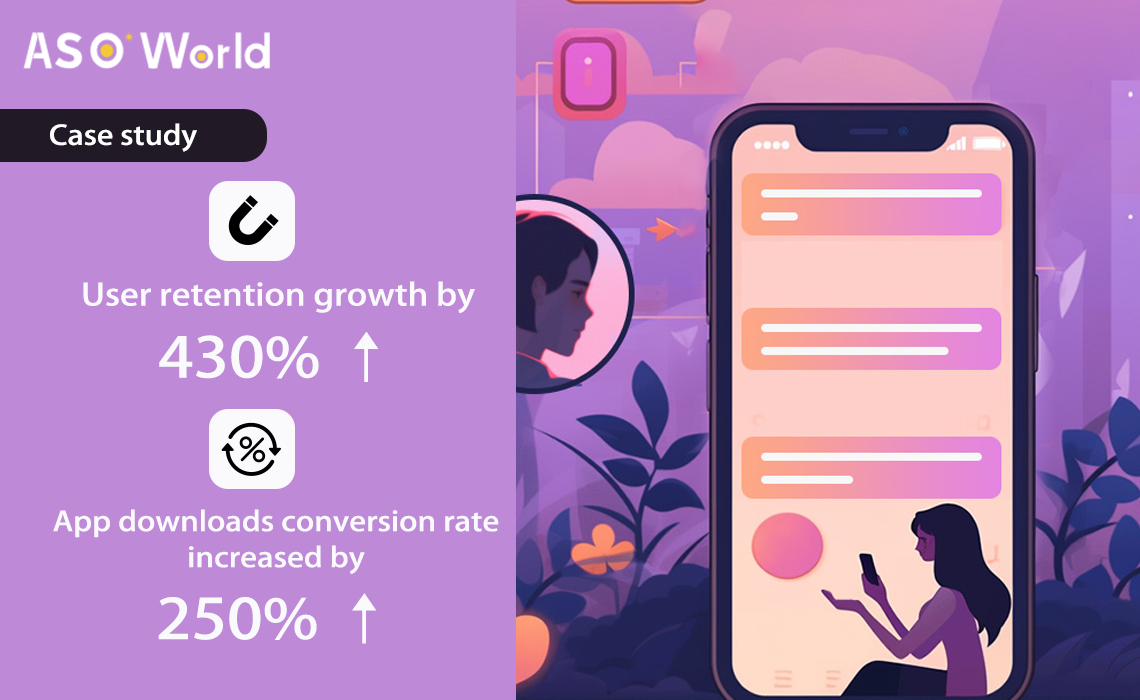
For example, in our work with a dating app, this integrated strategy proved particularly effective—helping them achieve a significant boost in both user retention and overall store conversion.
👉 See the full case study here
The best-performing AI apps in 2026 will not be the ones that only win trials. They will be the ones that can turn those trials into visible proof. That proof is usually seen first in ratings, reviews, and the overall shape of the App Store or Google Play page.
So the goal is straightforward. Build a product people want to keep using, make it easy for satisfied users to reflect that in the store, and use a platform like ASOWorld to speed up the moment when positive momentum becomes visible. That is often the difference between a decent launch and a category leader.
👉 A Complete Guide of Buying App Store and Google Play Reviews to Boost Your App to The Top
The most effective approach is the "Daily Drip" method. Rather than purchasing reviews in bulk, distribute them over time using active, US-based accounts. To satisfy Apple's latest verification logic, reviewers should interact with the app at least 2–3 times before posting a rating to simulate authentic user behavior.
Prioritize platforms like ASOWorld or Apptimizer that offer manual reviews and "Guaranteed Ranking" services. Avoid low-cost providers using automated scripts. In 2026, Google Play and the App Store utilize microsecond-level device fingerprinting; low-quality bot reviews are easily detected and often lead to app suspension.
Yes, improper execution carries high risk. To avoid penalties, follow a "Natural Growth Model." Maintain a review-to-organic-download ratio of no more than 1:100. Ensure review content is varied—mixing long and short sentences—and avoid using repetitive templates or overly generic praise.
Ratings and sentiment signals currently account for 25%–30% of the total ranking weight. Data shows that a 4.5-star app typically ranks 15–20 positions higher than a 4.0-star app, even when both have identical download volumes.
The standard organic ratio is approximately 1,000 installs per 1 review. During an optimization phase, you can safely increase this to 100:1. However, exceeding a 10:1 ratio is highly likely to trigger anti-fraud alerts and result in a manual review of your account.
High ratings alone do not generate traffic; they must be paired with Download Velocity (speed of new installs) and Keyword Relevance. Even with a perfect 5-star rating, an app will remain invisible if it is not optimized to rank for specific, high-volume search terms. High quality must be backed by a strong keyword strategy to be discoverable.
 Mobile App Growth,Customer Retention,
Get FREE Optimization Consultation
Let's Grow Your App & Get Massive Traffic!
All content, layout and frame code of all ASOWorld blog sections belong to the original content and technical team, all reproduction and references need to indicate the source and link in the obvious position, otherwise legal responsibility will be pursued.