During September 2026, Google pushed out five separate waves of releases on Google Play: Play services v26.35 to v26.37, Play Store v53.1 to v53.3, Android WebView v154 and v155, plus ongoing AICore and System Intelligence refinements. Taken one by one, most of them look like routine changelog entries. Taken together, they change how apps are discovered (a new description field within Similar Apps), how ratings are gathered (a redesigned Contribution Hub), how payments feel to users (real-time Wallet pricing and NFC transit cards), and how family and safety features work across devices.
This roundup explains what has actually changed, separates the noise from the changes that call for a response, and shows where each update fits into your Q4 ASO and app marketing plan.
Which Google Play System Updates Matter Most in September 2026?
Below is everything Google shipped this month, grouped by release wave and explained in terms of what it means for developers and marketers, rather than as a bare changelog.
23 Sept — Android WebView v155: Thread-Safe Navigation APIs
- Thread-safe Navigation APIs: The androidx.webkit
Navigation and NavigationListener APIs have been reworked so that they're thread safe.
- Security and privacy: General improvements and bug fixes.
- New developer features: Extra capabilities for apps that display web content in-app.
As with WebView v154 the previous week, Google points out that some of these features are experimental and only available to certain users.
🔧 Developer Tip: If your app calls WebView navigation methods, or listens for navigation events, from a background thread (common in hybrid apps that keep navigation state in sync with native code), this update removes a class of race conditions that you may have been handling by hand. Once your users are on v155, it's worth running a quick regression pass over any custom thread-hopping logic around NavigationListener.
21 Sept — Google Play Store v53.3 & Play services v26.37: Wear Improvements, Motion Assist and Emoji Fonts
- Local currency expansion: Users in Argentina, Azerbaijan, Uzbekistan and Ethiopia can now pay in their local currency across Auto, PC, Phone, TV and Wear.
- Wear search results redesign: The Play Store search results page on Wear OS has been given a visual refresh.
- Pre-registration to wishlist: Users can now add a pre-registered paid title to their wishlist as soon as it's published, ahead of the full launch.
- Wear data sync: Real-time metric data sent from a watch to a phone benefits from reliability improvements and bug fixes.
- Motion assist: Subtle on-screen shapes that move in time with the vehicle now help to ease motion sickness when using apps in a car.
- Driving Do Not Disturb: This feature is now easier to find in the system settings.
- Device performance: General stability and performance improvements to system management services, plus support for larger, more refined system emoji fonts across Auto, PC, Phone, TV and Wear.
🌐 Market Expansion Tip: Local-currency support in Argentina, Azerbaijan, Uzbekistan and Ethiopia is a signal rather than just a convenience update. Google tends to add local pricing rails in markets where it expects install volume to grow. If any of these are on your radar, now is a good time to review your store listing localisation and pricing tiers before your competitors move in.
14 Sept — Google Play Store v53.2 & Play services v26.36: Wallet, Contribution Hub and Cross-Device Setup
- Contribution Hub: A new cluster on the Play Store "You" tab lets users submit ratings and reviews while keeping track of the social impact of their contributions.
- Real-time Wallet pricing: Cart prices now update in real time when a shopper switches payment method during checkout, on PC and Phone.
- Tap-and-pay re-enrolment: Users moving to a new device are now prompted to add their Google Wallet tap-and-pay cards again.
- Cross-OS device setup: New developer features let apps support device setup flows that span several operating systems.
- Maps-related developer features: New APIs for Google and third-party developers building Maps-adjacent functionality.
- Location sharing: A better location-sharing experience within account management on Phone and Wear.
- Device connectivity and Location & Context: New developer-facing features in both areas, along with general updatability and diagnostics improvements to system management.
💸 Monetisation Strategy Tip: Real-time cart price updates remove a familiar point of friction at checkout, because users who switch payment method no longer see an out-of-date price. If your app offers in-app purchases or subscriptions, this is worth testing now: fewer abandoned carts at the payment-method step should show up in your funnel data within a few weeks.
Not sure where your app stands right now, before you plan next month's optimisation push?
Run a free check with ASOWorld's ASO tools to see your current keyword coverage and ranking distribution before you decide what to prioritise from this wave of updates.
Check My App for Free →
10 Sept — Android WebView v154: Security, Privacy and the Finch Consistency Shift
- Finch consistency change: WebView Finch (Google's remote feature-flagging system) has moved from application-level to device-level consistency, which can alter how experimental WebView features roll out across the apps on a given device.
- Security and privacy: General improvements and bug fixes.
- New developer features: Extra capabilities for apps that display web content in-app.
Google warns that some WebView features are experimental and only available to certain users. If your app embeds web views for onboarding, help centres or hybrid screens, treat any behavioural differences you spot this month as normal rollout variance rather than a fault on your side.
7 Sept — Google Play Store v53.1 & Play services v26.35: Similar Apps Descriptions, Supervision and NFC Wallet
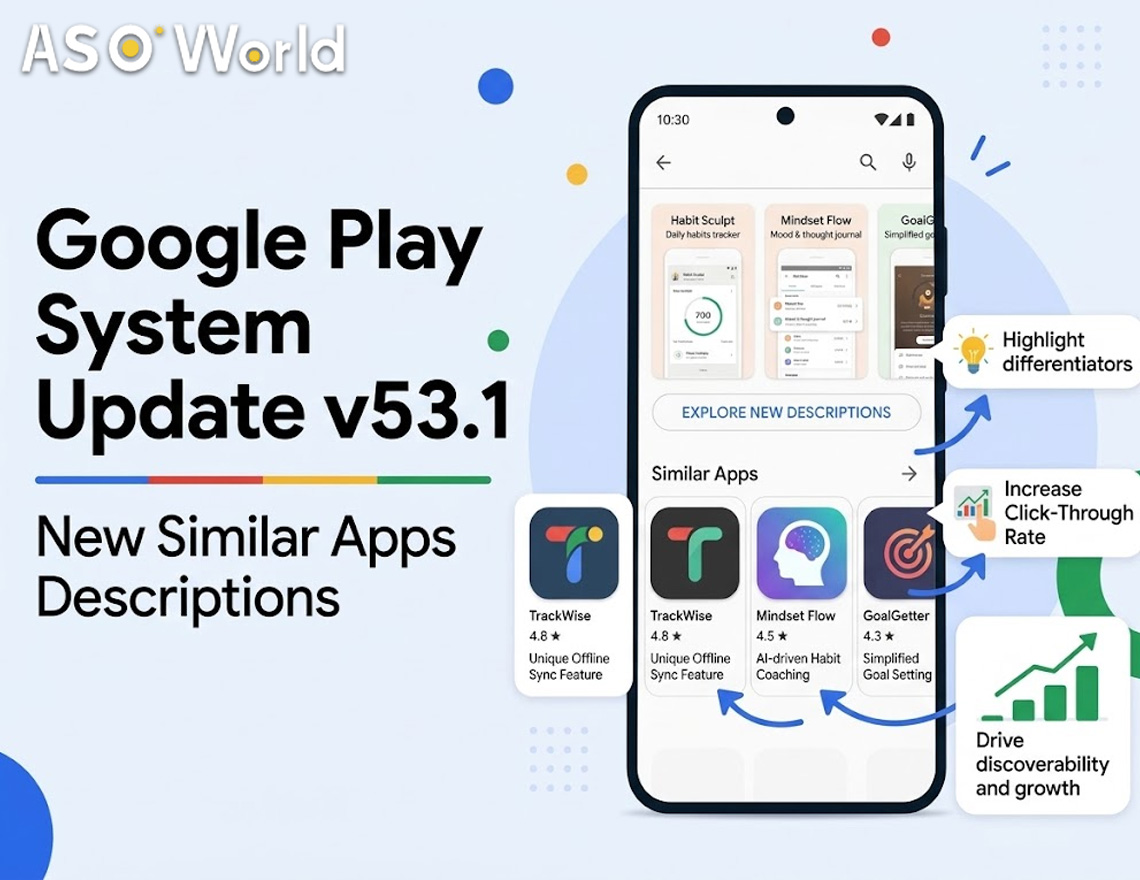
- Similar Apps short description: A short description of key features now sits alongside each result in the Similar Apps section of app detail pages, covered in depth below.
- Other devices sub-navigation: Users can now see which of their devices an app is installed on while they browse recommendations.
- New navigation bar: A redesigned navigation bar helps users explore more of their interests directly from Play Store home pages.
- Supervision improvements: Account management updates strengthen parental supervision controls on Phone and Wear.
- Kids Auth Module: New infrastructure manages and displays regulatory compliance notices for apps covered by children's privacy rules on Android.
- Location sharing safety status: Locations shared through the location sharing API now carry safety status information.
- NFC transit cards: Users can add physical transit card passes and balances to Google Wallet using NFC.
- Wallet "Add a card" redesign: A new success screen with a better UI appears after a card has been added.
🔒 Compliance Tip: If your app is rated for, or appeals to, a mixed-age audience, it's worth going through the new Kids Auth Module compliance infrastructure with your legal or policy team this month. Regulatory-notice requirements for children's apps have been tightening worldwide throughout 2026, and the fact that Google is surfacing this at platform level suggests enforcement is becoming more visible, not less.
Android AICore & System Intelligence — On-Device AI Continues to Mature
- Android AICore: Model management enhancements, wider device compatibility, performance optimisations and better diagnostics for on-device AI on PC and Phone.
- Android System Intelligence B.29 / C.7 (3 Sept): Bug fixes and general maintenance.
Why Does the New Similar Apps Description Matter for Your ASO?
Of everything in this wave of releases, the Similar Apps short description (Play Store v53.1) is the one change with a direct, measurable ASO impact. Until now, the Similar Apps section was a passive recommendation slot: Google decided what appeared there, and developers had no say in how their app was presented. Now a short feature description that developers can influence sits next to each app in that section, which turns it into a genuine optimisation surface.
We've covered the mechanics and early-adopter strategy for this feature in detail in our dedicated breakdown of the Similar Apps description update. In short, most developers haven't optimised this field yet, which makes the next few weeks a higher-leverage window than it will be once the field becomes standard practice. Distinctive, easy-to-scan copy that opens with a concrete competitive advantage, rather than a generic value proposition, is what separates apps that convert from the Similar Apps section from those that simply get scrolled past.
Ranking well enough to appear in the right Similar Apps slots still comes first.
A well-written description achieves nothing if your app isn't appearing alongside the right competitors in the first place. ASOWorld's Keyword Installs service sets install volume day by day against your target keywords, which determines whether you rank in the neighbourhoods where Similar Apps traffic originates. Because Google Play's algorithm reacts more slowly than Apple's, we generally advise a 7–9 day cycle for Google Play campaigns rather than judging results after a day or two. If your app qualifies under Google's CPI policies, combining a CPI push with your keyword campaign can also reinforce ranking gains more quickly.
How Should the Contribution Hub and Wallet Updates Influence Your Strategy?
Two changes in this wave concern trust and money respectively, and both call for a measured response rather than a hasty one.
Contribution Hub and reviews. The new Contribution Hub brings rating and review submission together in a single cluster on the "You" tab, alongside a running view of the "social impact" a user has made by contributing. In practice, this is a UX change to where and how reviews are collected, not a new acquisition channel. It's worth keeping an eye on your review volume and Contribution Hub visibility over the coming month, but we'd advise against treating review generation as a primary growth lever: review-focused tactics tend to retain less well than ranking-driven acquisition, and Google Play in particular offers little lasting benefit from review volume alone. For a fuller picture of how review acquisition works, and the risks and rewards involved, our guide to App Store and Google Play reviews takes you through it. The more sustainable route is usually the reverse order: improve ranking and organic visibility first, and let genuine users who found you organically leave the reviews that really make a difference.
Wallet and monetisation. Real-time cart price updates, NFC transit cards and the "Add a card" UI refresh all form part of Google's continued drive to make Wallet the default payment layer across Android. Most developers won't need to change any code, but if your app processes in-app payments, it's worth re-testing your checkout flow this month to confirm that the real-time pricing behaviour displays correctly against your own pricing logic, particularly if you use dynamic or promotional pricing.
What Should App Developers and Marketers Do Next?
-
Write and test a Similar Apps description this week. Of everything in this wave of releases, this is the action with the highest leverage and the lowest effort. Open with your single strongest differentiator in plain language, then revisit it after two to three weeks, once you can see whether it's affecting click-through from that section.
-
Re-examine your keyword and ranking strategy before Q4 seasonal traffic arrives. If your visibility in Similar Apps depends on ranking for the right terms, now is the time to check whether your current keyword coverage is really doing its job. Our guide to keyword research and optimisation is a good place to begin if you haven't audited your coverage recently.
-
Match your ASO investment to where your app really is. A brand-new app with no keyword coverage needs a different approach from an established app fighting for a place in the top 10. If you're unsure which service tier suits your stage, our breakdown of Standard vs. Premium ASO packages matches growth stage to the right level of investment.
-
Audit compliance and checkout flows where they apply to you. Apps aimed at families should go through the implications of the Kids Auth Module with their legal team, while apps with in-app payments should re-test checkout against the new real-time Wallet pricing behaviour.
None of this has to be done today, but the Similar Apps window closes the longer you wait, and with Q4 search volume on the way, ranking work started now will have compounded by the time holiday traffic arrives.
Frequently Asked Questions (FAQs)
Which Google Play system updates matter most in September 2026?
The two changes with the most direct bearing on app marketing are the new short description in the Similar Apps section (Play Store v53.1, 7 Sept) and the Contribution Hub for ratings and reviews (Play Store v53.2, 14 Sept). Everything else this month, including the Wallet upgrades, Wear improvements, WebView v154/v155, Supervision and Kids Auth changes and the ongoing AICore refinements, is relevant to particular app categories rather than to every developer.
What does the new Similar Apps description mean for my ASO strategy?
It turns what used to be a passive recommendation slot into something you can optimise. Since most developers haven't yet written a description for this field, apps that add a clear, distinctive one now enjoy a short-term visibility advantage in the Similar Apps section. Our dedicated Similar Apps update breakdown sets out the full strategy.
How does the Contribution Hub change ratings and reviews on Google Play?
It brings review and rating submission together in one cluster on the Play Store "You" tab, and adds a social-impact tracker for contributors. It changes where and how users are prompted to leave reviews, but it doesn't create a new acquisition channel. Ranking-driven organic growth still delivers longer-lasting results than review-focused tactics.
Do the September 2026 Wallet updates affect app monetisation?
Only if your app processes in-app payments through checkout flows connected to Google Wallet. The main change is that cart prices now update in real time when a user switches payment method. This should cut checkout abandonment, but it's worth re-testing against your own pricing logic.
What is Android AICore and why should app developers care?
AICore is Android's on-device AI infrastructure layer. The September update improves model management, device compatibility and diagnostics. It matters indirectly for ASO, as it's part of the same move towards AI-driven, intent-based app discovery that Google outlined at I/O 2026, which favours natural-language store listings over keyword-stuffed ones.
Do I need to update my app to support these September 2026 changes?
Most of these changes happen at platform or Play Store level and don't call for a code update. The Similar Apps description is set through your store listing rather than your app binary, and Wallet, Supervision and WebView changes are handled by Google Play services. The main action points are strategic (writing a Similar Apps description, reviewing your compliance position) rather than technical.
 COVID-19 UPDATE