In response to the Digital Markets Act (DMA), Google Play is implementing substantial policy reforms effective 6 March 2024.
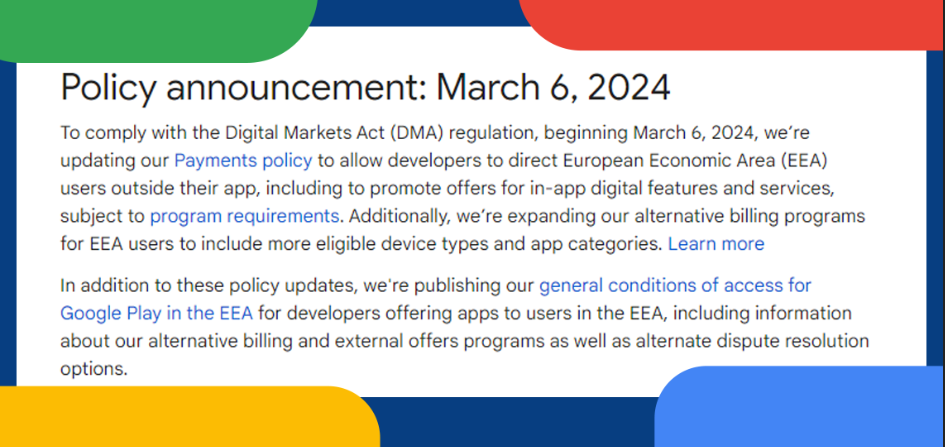
These updates empower developers to direct users within the European Economic Area (EEA) towards external platforms, significantly broadening the scope for in-app digital goods and services. Additionally, the expansion of the Alternative Billing programme now accommodates a wider spectrum of devices and application categories, fundamentally altering the app monetisation landscape.
Understanding the DMA-Driven Policy Framework
Expanding Payment Flexibility and Commercial Autonomy
Google Play is revising its payment and billing policies to align with DMA stipulations. These amendments permit developers to direct EEA users towards external transaction platforms, subject to specific programme requirements and eligibility criteria. This marks a paradigm shift in digital marketplace dynamics, granting developers enhanced autonomy in managing their in-app economies and customer relationships directly.
Introducing Google Play's General Conditions for the EEA
Developers serving the EEA market will soon access the Google Play General Conditions of Use—a comprehensive framework detailing alternative billing systems, external promotion protocols, and compliance obligations. This initiative establishes operational transparency and ensures a level playing field for app distribution and monetisation across the European market.
>>> Access the General Conditions of Use for Google Play in the EEA
Aligning with the Digital Markets Act
A Collaborative Journey Towards Compliance
Google's DMA compliance represents the culmination of extensive collaboration with engineers, product managers, and industry stakeholders across Europe. The adaptation process has involved rigorous product testing, developer workshops, and regulatory consultations, ensuring these changes balance innovation, user security, and statutory requirements.
Impact Assessment: Products and Services
Adjustments to Google's search algorithms and service presentation may redistribute online traffic patterns, potentially impacting direct suppliers and end consumers. The company has meticulously evaluated these trade-offs, striving to maintain equilibrium between technological innovation, platform security, and regulatory compliance whilst preserving viable economic models for developers.

Click "Discover ASO Solutions" to accelerate your apps and games business with ASO World's comprehensive app marketing and ASO services.
Strategic Changes Affecting Users and Businesses
Search Results and Enhanced User Choice
In direct response to DMA requirements, Google has introduced over 20 product modifications to facilitate seamless user access to comparison sites and alternative service providers. Android users within the EEA will encounter redesigned choice screens, enabling straightforward selection of preferred search engines, browsers, and virtual assistants from March 2024 onwards.
Enhanced Data Consent Mechanisms
EEA users now wield greater control over cross-service data sharing preferences. Google has implemented sophisticated consent mechanisms and advertising product upgrades that strictly adhere to existing EU user consent policies, including GDPR requirements and the ePrivacy Directive standards.
Developer-Focused Implementation Tools
Embracing Third-Party Ecosystems
Fully compliant with DMA Article 5 obligations, Google now supports third-party applications and alternative app stores on Android devices, providing users with genuine freedom to explore software from diverse sources. The launch of User-choice billing and the significant expansion of alternative billing options to include gaming developers exemplifies Google's commitment to diverse transaction methodologies.
The External Promotions Programme
Developers will benefit from the newly established External Offers programme, which permits directing EEA users to promotional content and pricing outside the app ecosystem. This initiative launched on 6 March 2024, significantly enhancing developers' capacity to engage audiences through competitive pricing strategies whilst maintaining Play Store discoverability.
>>> Navigate Google Play Store ASO and Keyword Optimisation Strategies
Data Governance and Portability Enhancements
Transparency in Data Sharing Practices
Google continues furnishing comprehensive analytics and performance insights to businesses, ensuring transparency in advertising metrics and campaign costs. The DMA has necessitated the provision of additional granular data to advertisers and publishers, with robust safeguards for privacy protection and data security standards.
Advancing Data Portability Standards
Google has strengthened its data portability infrastructure, including Google Takeout and the Data Transfer Project. The forthcoming Data Portability API for developers—launching initially across the EEA—represents significant progress in user data sovereignty and interoperability standards.
Ongoing Regulatory Engagement
 COVID-19 UPDATE