COVID-19 UPDATE


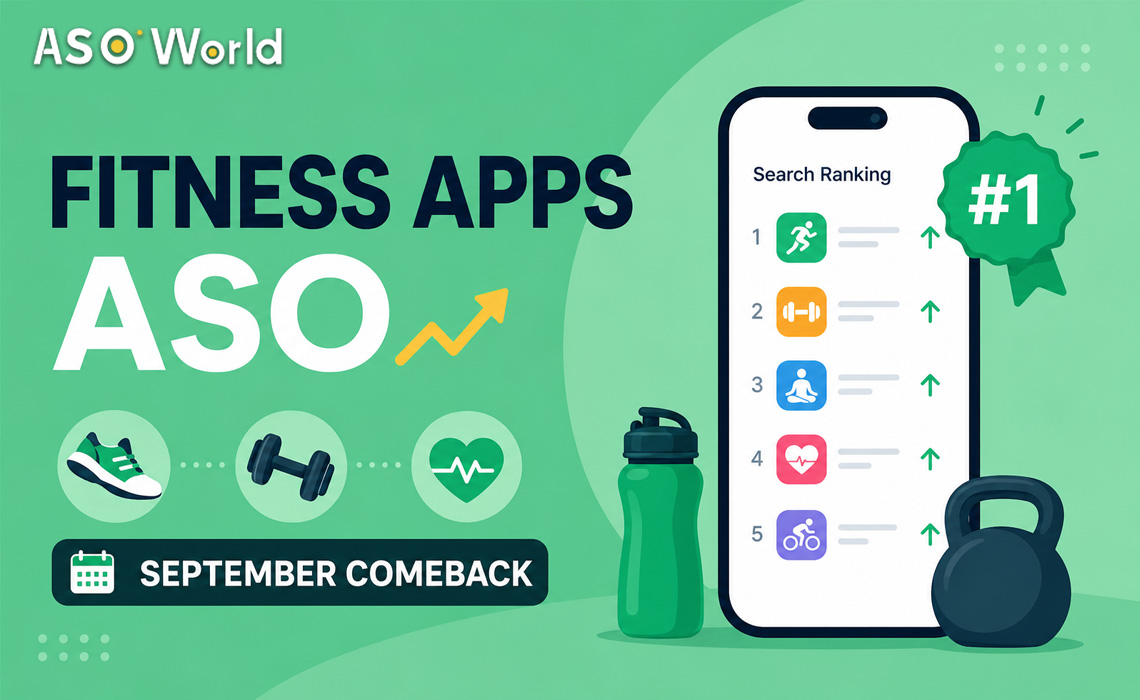
January receives all the attention as fitness app season. But there is a second, quieter spike almost every fitness marketer underprepares for: the September comeback, when summer schedules end, school routines return, and people who fell off their habit in July and August start looking for something to help them restart.
This is a case of app store seasonality that is easy to miss precisely because it is smaller than January — which is exactly why apps that show up for it well tend to face less competition for the win.
Why the September Spike Looks Different From January
January search behaviour is resolution-driven: broad, aspirational terms like “workout app” or “get fit” spike hard and fade fast as motivation drops off. September behaviour is routine-driven — searchers are looking to rebuild a schedule they already know works for them, which shows up in more specific queries: “workout tracker,” “running app for beginners,” “habit tracker for exercise.”
That shift in intent matters for keyword selection. Broad aspirational terms that work in January often underperform in September, while specific, routine-oriented long-tail terms convert better.
Building the September Keyword Set
Structure your keyword set around three types of searcher, since they do not use the same language:
- Restart searchers — people who used a fitness app before and stopped: “workout app,” “fitness tracker,” “habit tracker.”
- Structure searchers — people who want a plan, not just tracking: “workout plan app,” “beginner running app,” “home workout schedule.”
- Niche-specific searchers — walkers, hikers and runners in particular tend to have stronger post-summer retention than generalist fitness apps, so category-specific terms (“hiking tracker,” “running coach app”) are worth dedicated metadata space if they match your product.
What to Actually Change on Your Listing
- Refresh screenshots to show a “return to routine” narrative rather than generic feature tours — a calendar filling back up, a streak restarting, a plan adapting to a missed week.
- Update your subtitle or short description to speak to restarters specifically, not just first-time users. “Get back on track” language tends to outperform generic “achieve your goals” copy in this window.
- Test a custom product page for any paid social traffic tied to back-to-school or routine messaging, separate from your evergreen listing.
- Check your review prompt timing. A completed workout is a stronger moment to ask for a rating than app open — especially for someone who is returning after a break and just proved to themselves they could do it.
Don’t Assume It’s Global
The September routine-reset pattern is strongest in markets where school calendars and work schedules reset in early autumn — North America, the UK and most of Europe. It is much weaker or shifted in Southern Hemisphere markets, where the equivalent reset happens around late January and February.
Watching for the Follow-Through
The comeback spike is short — typically three to four weeks. Apps that convert well during it tend to hold onto users longer than apps acquired through always-on advertising, because the user arrived already motivated to rebuild a specific habit. That makes this a window worth tracking closely rather than optimising once and moving on.
Not sure where your current listing stands going into the window? Run ASOWorld’s free ASO diagnostic to see which keywords and metadata fields need attention before the spike hits.