COVID-19 UPDATE


Important Notice:Beware of scams using ASOWorld's name for part-time recruitment or ASO earning app activities. ASOWorld is not hiring any part-time staff. Trust only official information posted by ASOWorld.

Streaming and IPTV apps stand or fall on their ratings. See why fixing conversion and retention before scaling keywords drives real ASO growth, plus a keyword framework to follow.


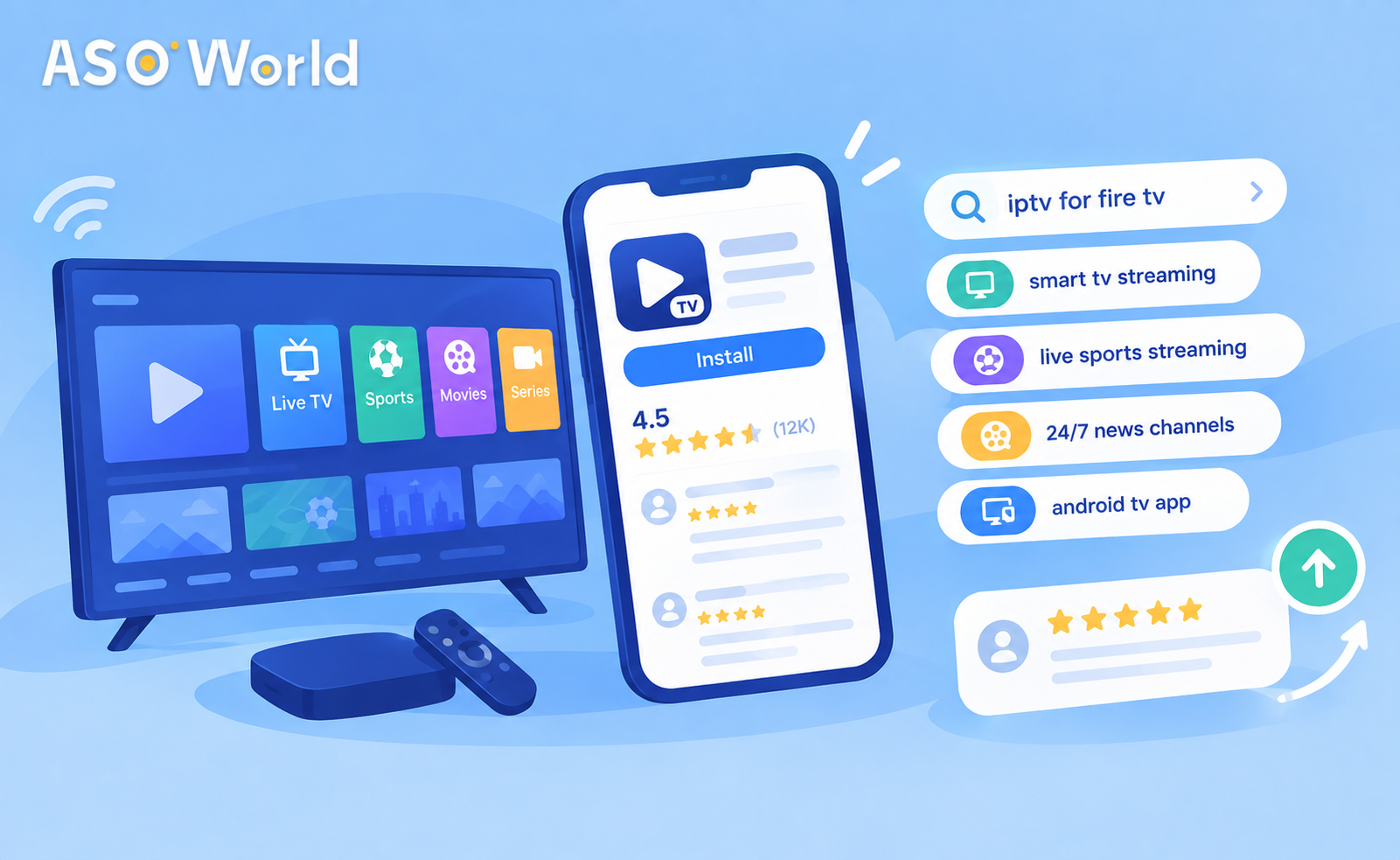
Apps in the streaming and IPTV category compete in one of the most crowded, trust-sensitive corners of the store. Users can't tell a dependable app from a broken one until after they've downloaded it, so ratings and reviews carry far more weight here than in most other categories. The winning approach isn't a choice between keyword ranking and reputation management. It's a matter of getting the sequence right: fix the rating problems that kill conversion first, then put your keyword budget into a portfolio that reflects how people really search for content, rather than just your app's brand name.
Most ASO advice defaults to a keyword-first mindset: rank higher, win more impressions, convert more installs. That sequence breaks down for streaming and IPTV apps for a specific structural reason: the category is unusually crowded with apps of wildly uneven quality, and users have learned to be wary. Someone searching "iptv player" or "live tv streaming" is choosing between dozens of similar-looking listings, most of them set apart only by their rating and review volume rather than their name or icon.
That changes the order of priorities. In most categories, a mediocre rating is a drag on conversion that you get round to fixing eventually. For streaming and IPTV apps, it's often the single factor that decides whether a user taps install or scrolls straight past you, because the rating is the only signal on offer that isn't just marketing copy.
1. A trust deficit at first glance. Because excellent, reliable apps and unreliable ones appear side by side in the same search results, users start from a position of scepticism. A 3-star average doesn't just cost you a few downloads. It actively confirms the doubts a searcher already had on arrival.
2. Content-library keywords, not just brand keywords. With a utility or productivity app, the core keyword sits close to what the app does. Streaming and IPTV apps are different: a meaningful share of search volume centres on what's available, such as channel types, content genres, regional programming and device compatibility (Fire TV, Android TV, Chromecast). The keyword list therefore needs to be considerably broader than "streaming app" or "live tv".
3. Sensitivity around subscription conversion. Many categories convert on the install alone, but streaming apps typically have a second conversion moment, from free trial to paid subscription, and the app store rating strongly influences whether a user trusts the app enough to enter payment details at all.
Sending more traffic to a listing with a rating problem is close to the least efficient use of an ASO budget in this category. You're paying, whether in ranking effort or install spend, for visits that convert at a fraction of their potential. Research consistently shows that a rating falling below 4.0 goes hand in hand with a meaningful, sometimes sharp, drop in install conversion, and for the category-level trust reasons above, the effect compounds.
The sequence of fixes that tends to work:
Once conversion is on a solid footing, the keyword opportunity in this category is genuinely large, because search behaviour is spread across far more terms than the app's core function:
| Keyword type | Example pattern | Why it matters |
|---|---|---|
| Device/platform terms | “iptv for fire tv,” “smart tv streaming app” | Picks up device-specific search intent that your generic brand keywords miss altogether |
| Content-genre terms | “live sports streaming,” “24/7 news channels” | Reflects what users actually want to watch, not just the app category |
| Format terms | “m3u player,” “catch-up tv,” “vod player” | Technical but genuine search terms, used by more experienced streaming users |
| Regional terms | “[country] live tv app,” “[language] channels streaming” | High-converting, lower-competition long-tail terms, especially valuable if your content library is strong in particular regions |
| Comparison/trust terms | “reliable iptv app,” “iptv app that actually works” | Speaks directly to the category's trust deficit, and a listing with a healthy rating has a real chance of ranking for these |
This is a case where a broad portfolio weighted towards the long tail outperforms chasing one or two head terms. The same scoring logic of volume, difficulty and chance that applies to any app category applies here too, but the insight specific to this category is that a much larger share of your realistic opportunity lies in device, genre and regional long-tail terms than in the generic head term.
Streaming and IPTV apps in this space usually sit at one of three growth stages, and the right ASO investment differs considerably between them:
ASOWorld's app promotion service is built around exactly this three-stage distinction, so your starting point matches where your app actually is, rather than being a one-size-fits-all package.
ASOWorld First Order Discount
Get 50% off on your first order to start your app growth!

Given the category's trust deficit, reviews do double duty here. They influence ranking just as they do everywhere else, but they are also the main credibility signal that a sceptical user is looking for before handing over payment details for a subscription. A provider that offers a genuine retention guarantee on reviews matters more here than in most categories, precisely because the review section is doing more of the persuading than the screenshots or description. ASOWorld's Guaranteed Reviews service commits to more than 80% of ordered reviews staying live for 30 days or longer, with a refund if that threshold isn't met. That's a meaningful distinction in a category where the durability of reviews is directly tied to conversion trust.
Treating conversion health and keyword growth as a single connected project, rather than two separate initiatives, tends to produce a recognisable before-and-after pattern:
| Stage | Before | After |
|---|---|---|
| Rating | 3.8, with buffering and billing complaints dominating recent reviews | 4.5, with review volume rebuilt around genuine, lasting feedback |
| Conversion rate | Traffic arriving but converting poorly against the category's trust deficit | +250% uplift once rating and review health improved |
| Retention | Subscribers churning after the trial period with no clear cause identified | +430% increase in retention once the underlying causes were addressed |
| Keyword rankings | Concentrated on one or two brand/category head terms | A broader long-tail portfolio across device, genre and regional terms, reaching the Top 3 on priority terms |
| Downloads | Flat, reliant on whatever traffic the head terms produced | +160% daily downloads once the broader keyword portfolio began to rank |
The pattern worth noticing is that the rating and retention fixes came first in this sequence, with the gains in downloads and rankings following, not the other way round. Apps in this category that reverse the order (scaling keyword spend before fixing conversion) tend to see the poorest return for every pound spent.
Because users can't check content quality or reliability before installing, the rating serves as the main trust signal available at the point of decision, more so than in categories where what the app does is obvious from the description alone.
In this category, specific terms almost always win. Broad terms are dominated by major platforms with enormous review counts, whereas device- and content-specific long-tail terms reflect genuine intent and are realistically within reach.
That depends entirely on how strong your content library is in particular regions. If your regional content is strong, those terms are often less competitive and higher-converting than generic English-language head terms.
Both. Rating and review health feed into the ranking algorithms on both platforms, so a rating fix isn't purely about conversion. It also improves your starting position for the keyword work that follows.
Meaningful movement is often visible within weeks of review volume being rebuilt, although full stabilisation, especially rebuilding trust after a prolonged period of low ratings, tends to take a few months of consistent review health.
Yes. These terms attract users searching in the context of a particular device purchase or setup moment, which tends to convert at a higher rate than a generic category search, even if your app supports far more devices than the one named in the query.
If your app's rating is holding back a keyword strategy that would otherwise work, ASOWorld's ASO service can audit both sides together, conversion health and keyword opportunity alike, rather than treating them as separate projects, which is where most streaming and IPTV apps leave real growth on the table.
 Mobile App Growth,App Store Optimisation,Customer Acquisition,
Get FREE Optimization Consultation
Let's Grow Your App & Get Massive Traffic!
All content, layout and frame code of all ASOWorld blog sections belong to the original content and technical team, all reproduction and references need to indicate the source and link in the obvious position, otherwise legal responsibility will be pursued.