In a landmark development, Apple has unveiled substantial modifications to iOS, Safari, and the App Store to comply with the European Union's Digital Markets Act (DMA).
The tech giant is introducing over 600 new APIs, enhanced app analytics, alternative browser engines, and new payment processing and app distribution methods across the 27 EU member states, whilst maintaining robust safeguards against privacy and security risks.
>>> Apple Developer Support: Update on apps distributed in the European Union
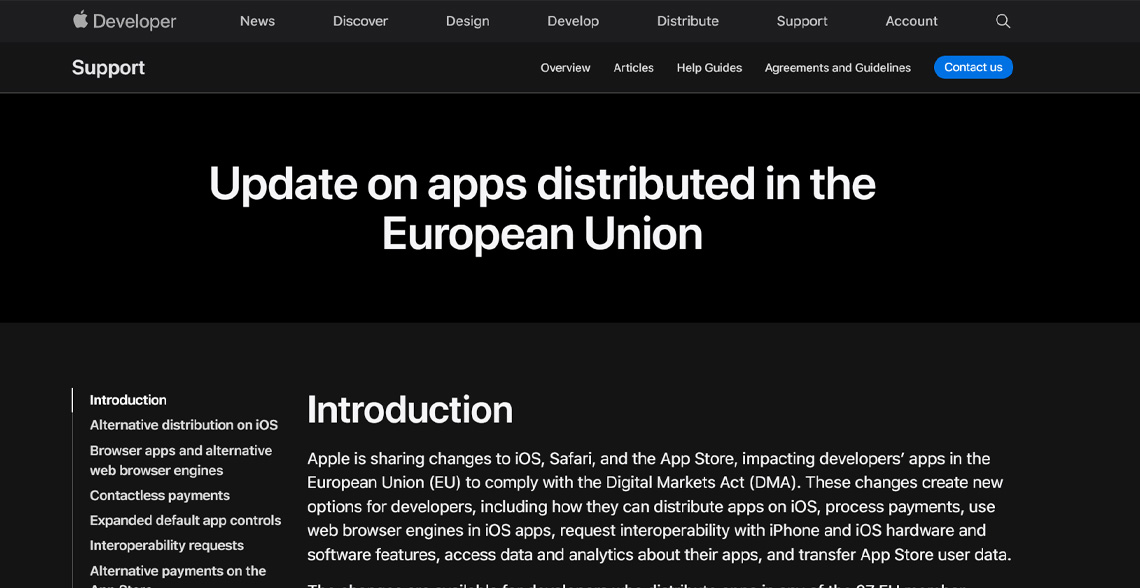
Complying with the DMA
New Developer Options
Apple's DMA compliance introduces alternative app distribution and payment processing avenues. These changes empower developers with greater flexibility in user acquisition and transaction management, though selecting the new business terms requires careful analysis of the Core Technology Fee structure.
User Protections and Controls
For EU users, the changes promise enhanced transparency and control. Apple is implementing expanded safeguards to mitigate privacy and security risks inherent in alternative distribution. However, the company acknowledges that residual risks associated with third-party marketplaces and payment systems cannot be entirely eliminated under the DMA framework.
Preparing for March 2024
Developers can access detailed technical documentation on the Apple Developer Support page and commence testing with the iOS 17.4 beta. The full capabilities rollout begins March 2024 across all 27 EU markets.
Detailed Changes Across Platforms
(Source: Apple)
iOS: Embracing Flexibility and Security
Apple is charting a new course for iOS app distribution by authorising alternative app marketplaces. This paradigm shift is supported by new APIs and notarisation requirements designed to protect developers' intellectual property and system integrity.
> Third-party App Marketplaces
A groundbreaking framework enables the creation of third-party app marketplaces with full capability for managing app installations and updates. Mandatory notarisation for these marketplace apps ensures baseline security standards and system integrity, even when distributed outside the App Store.
> Alternative Browser Engines
Authorised developers may now utilise alternative browser engines beyond WebKit, marking a significant departure from Apple's longstanding policy. This enables enhanced app experiences and feature parity with Android versions, particularly for browsers and web-based applications.
> Contactless Payments
Aligning with DMA requirements, Apple is introducing new APIs enabling developers to integrate NFC technology into banking and wallet applications, facilitating contactless payments throughout the European Economic Area.
Users benefit from expanded default app controls, gaining autonomy to select preferred app marketplaces and contactless payment defaults. The browser selection process is similarly streamlined, with users able to set non-Safari browsers as defaults with reduced friction.
To support innovation, Apple has introduced an interoperability request form, allowing developers to petition for deeper integration with iPhone hardware and iOS system features, fostering enhanced functionality and competitive parity.
Safari: Browser Choice on First Launch
EU users will encounter a mandatory choice screen upon first launching Safari, prompting selection of a default browser from available options. This requirement directly implements DMA mandates to enhance user autonomy and reduce default bias.
App Store: Informed Choices and Risk Management
The App Store is diversifying payment solutions significantly. Developers may now integrate alternative Payment Service Providers (PSPs) within their apps, offering choice beyond Apple's In-App Purchase system for digital goods and services across iOS, iPadOS, macOS, tvOS, and watchOS.
Furthermore, developers gain link-out capabilities, directing users to external websites to complete transactions. This enables promotion of discounts, bundles, and alternative pricing structures outside the App Store ecosystem, fundamentally altering the commerce landscape within Apple's platforms.
New Business Terms & Developer Support
Developers must elect either new EU-specific business terms or retain existing global terms—a binding choice that significantly impacts monetisation strategy. These terms accommodate DMA provisions for alternative distribution and payment processing.
>>> iPhone Sideloading Set to Transform EU App Market in 2024

New Business Terms
Apple's revised commission structure for digital goods and services requires strategic consideration. Under the new EU terms, developers choose between alternative distribution channels and modified fee structures.
> Reduced Commission Structure
For most developers, particularly smaller businesses and subscription services beyond their first year, the commission reduces to 10%. Larger developers face a 17% rate for digital goods and services transactions—a reduction from the standard 30%, but with additional fees.
> Payment Processing Options
Developers utilising Apple's payment infrastructure pay an additional 3% processing fee. Alternatively, using external PSPs or directing users to external websites for completion incurs no Apple processing charges, though developers assume responsibility for payment security and dispute management.
> Core Technology Fee (CTF)
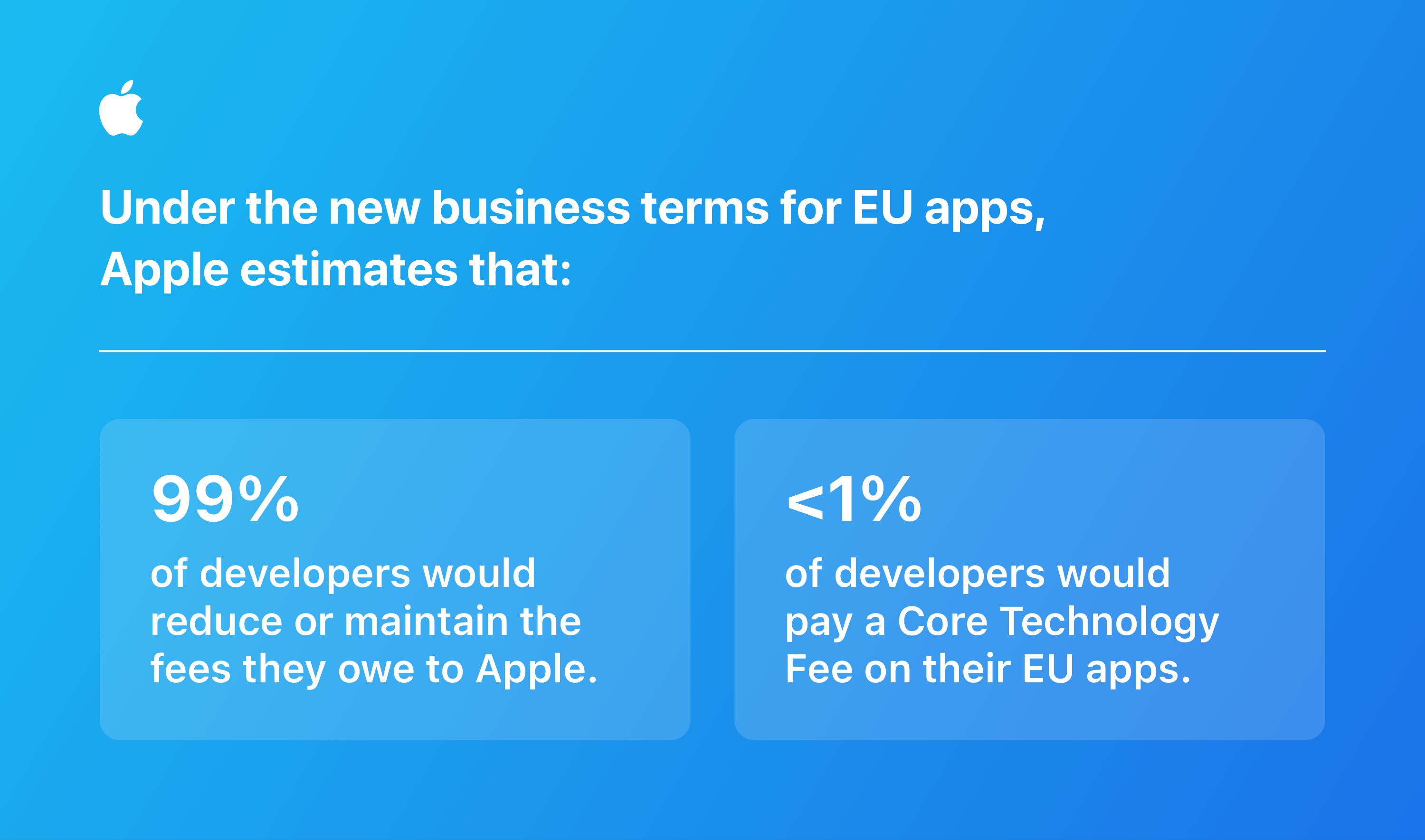
The controversial Core Technology Fee charges €0.50 for each first annual install exceeding one million downloads. This applies across all distribution channels—App Store and alternative marketplaces alike—significantly impacting high-volume, low-margin applications.
(Source: Apple)
These business terms reflect Apple's attempt to balance regulatory compliance with platform value. Developers must utilise the fee calculator to model scenarios, as the CTF fundamentally alters unit economics for viral or freemium applications.
Strategic Implementation Support
Beyond fee calculators, Apple provides detailed transaction reports and API documentation to facilitate migration. Developers should conduct thorough cost-benefit analyses comparing total fees under new terms versus existing arrangements, particularly accounting for CTF exposure and payment processing responsibilities.

Click "Learn More" to drive your apps & games business with the ASO World app promotion service now.
Editor's Comments
Apple's DMA compliance represents a watershed moment for digital marketplace competition in Europe. Whilst the introduction of alternative app stores and payment systems promises increased developer autonomy and potentially reduced commissions, the Core Technology Fee creates complex strategic calculations.
High-volume developers may find the €0.50 per install charge prohibitive, effectively favouring established players with diversified revenue streams. Meanwhile, smaller developers benefit from reduced 10% commissions but must navigate increased operational complexity regarding payment processing and distribution channel management.
The success of these reforms ultimately depends on whether alternative marketplaces can deliver superior discovery and monetisation whilst maintaining Apple's security standards. Developers should approach the March 2024 deadline with detailed financial models rather than assumptions of universal benefit.
 COVID-19 UPDATE