COVID-19 UPDATE


중요 공지:파트타임 채용이나 ASO 수익 앱 활동을 위해 ASOWorld의 이름을 사용하는 사기에 주의하세요. ASOWorld는 파트타임 직원을 채용하지 않습니다. ASOWorld가 게시한 공식 정보만 신뢰하세요.

2026년 7월 App Store 검색 변동성으로 인해 수천 개의 iOS 앱에서 대규모 키워드 손실이 발생했습니다. 데이터, 가능한 원인, 그리고 ASO 전략 인사이트를 확인하세요.


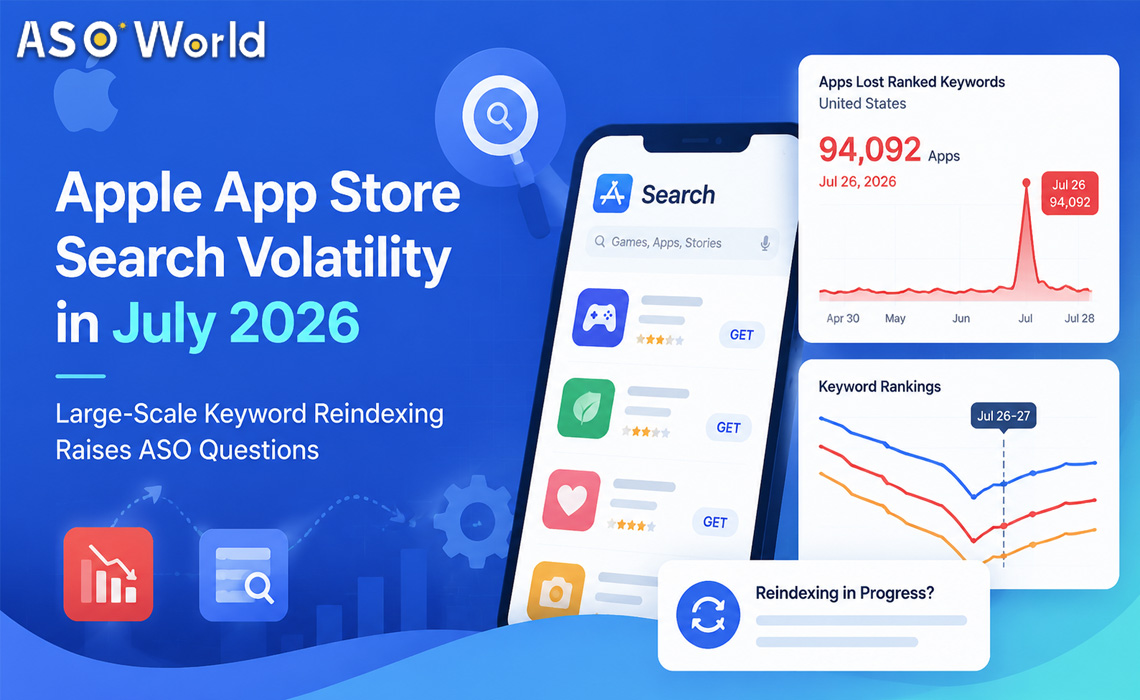
Apple의 App Store 검색 생태계가 2026년 7월 26~27일경 상당한 변동성을 겪은 것으로 보입니다. 여러 지역의 ASO 실무자들이 짧은 시간 내에 수천 개의 애플리케이션이 광범위한 키워드 순위 변동, 갑작스러운 키워드 소실, 그리고 예상치 못한 노출도 변화를 경험했다고 보고했습니다.
Apple이 공식적으로 어떤 검색 알고리즘 업데이트도 확인하지 않았지만, 제3자 ASO 모니터링 플랫폼에서 수집된 초기 데이터는 App Store가 대규모 검색 관련성 재보정(relevance recalibration) 또는 키워드 재인덱싱(reindexing) 과정을 거쳤을 가능성을 시사합니다.
ASO 커뮤니티 전반에 공유된 관찰 결과에 따르면, 7월 26일부터 상당수의 앱들이 순위에 있던 키워드를 잃기 시작했습니다. ASO 플랫폼을 통해 모니터링된 데이터는 이 기간 동안 키워드 손실을 경험한 앱의 수가 급격하고 비정상적인 급증세를 보였음을 드러냈습니다.
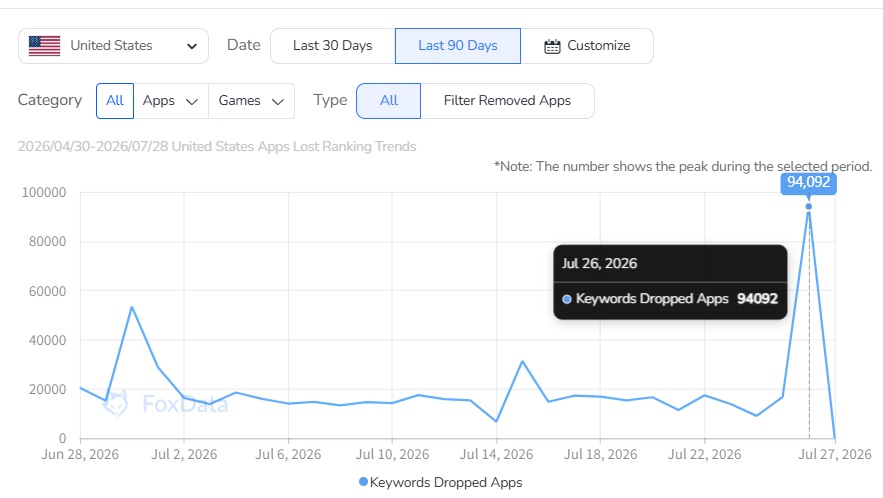
그림 1 · 일별 미국 앱 순위 키워드 손실 건수 (4월 30일 ~ 7월 28일, 2026). 7월 26일 정점에서는 94,092개의 앱이 키워드를 잃었으며, 이는 90일 기준선을 훨씬 웃도는 이례적인 수치입니다.
키워드가 점진적으로 오르거나 내려가는 일상적인 순위 변동과 달리, 많은 앱들이 ASO 전문가들이 키워드 클리어링(keyword clearing) 또는 디인덱싱(deindexing)이라고 표현하는 현상을 경험했습니다:
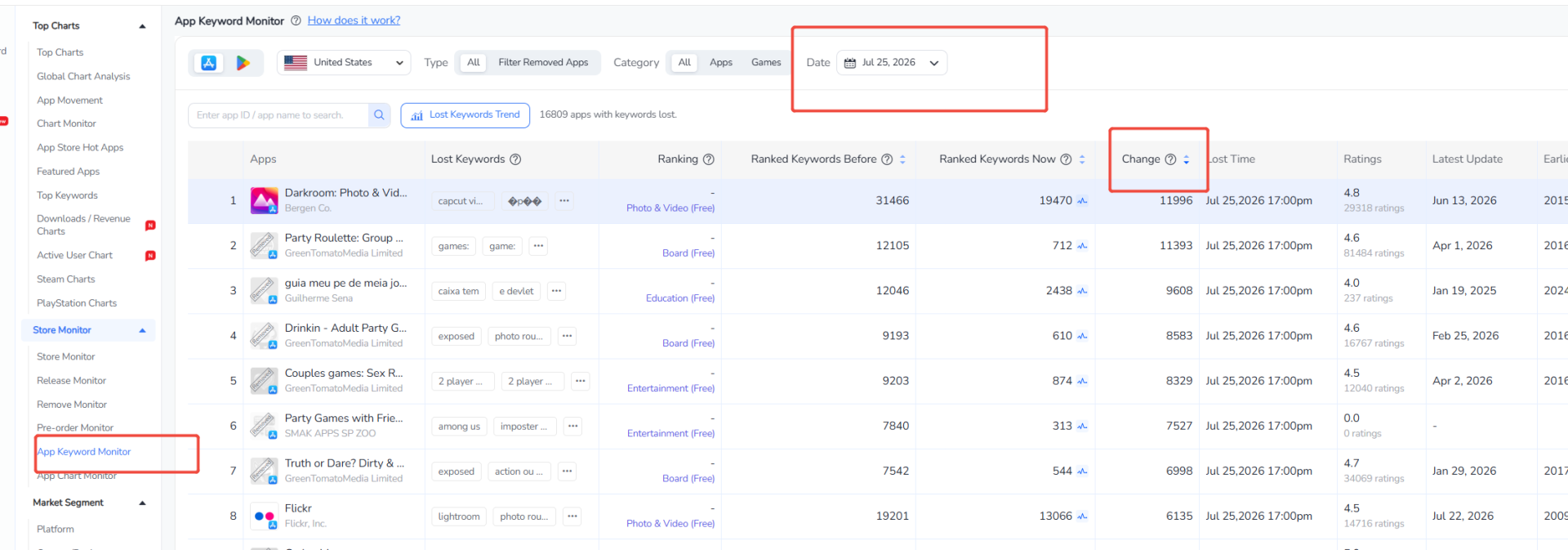
그림 2 · App Keyword Monitor 스크린샷. 단 하루에 미국에서만 16,000개 이상의 앱이 키워드 손실을 기록했으며, 가장 영향을 크게 받은 앱들은 각각 수천 개의 순위 키워드를 잃었습니다.
ASO 실무자들 사이에서 핵심 쟁점은 이번 사건이 전통적인 순위 알고리즘 업데이트를 의미하는 것인지, 혹은 Apple이 각 앱에 대한 관련 키워드의 범위를 재정의하는 대규모 인덱싱 새로고침인지 여부입니다.
역사적으로, App Store의 키워드 인덱싱은 앱 제목, 부제목, 키워드 필드, 그리고 카테고리 관련성에 크게 의존해왔습니다. 그러나 최신 앱 검색 시스템은 점점 더 복잡한 신호들을 통합하고 있습니다 — 사용자 참여 행동, 전환 성과, 검색 의도 매칭, 품질 지표, 그리고 쿼리와 앱 기능 간의 의미론적 관계 등을 포함합니다. 이러한 신호들의 재보정이 일부 앱은 키워드를 잃고 다른 앱은 노출도를 얻게 된 이유를 설명할 수 있습니다.
주목할 만한 점은, 관찰된 변화가 일률적으로 부정적인 것은 아니었다는 사실입니다. 많은 애플리케이션이 커버리지를 잃은 반면, 일부 앱들은 7월 26일 이후 키워드 발굴이 확대되었습니다.
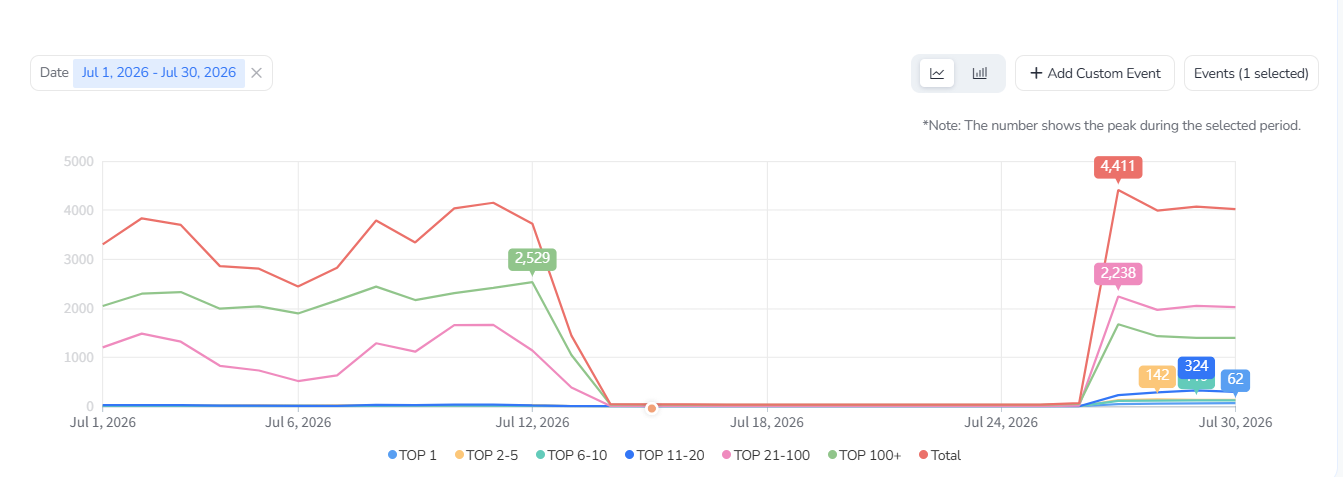
그림 3 · 7월 중순 전체 순위 구간에서 급격한 붕괴를 겪은 후, 7월 말 부분 회복을 보인 앱의 사례 — 재인덱싱 기간이 얼마나 불안정했는지를 보여줍니다.
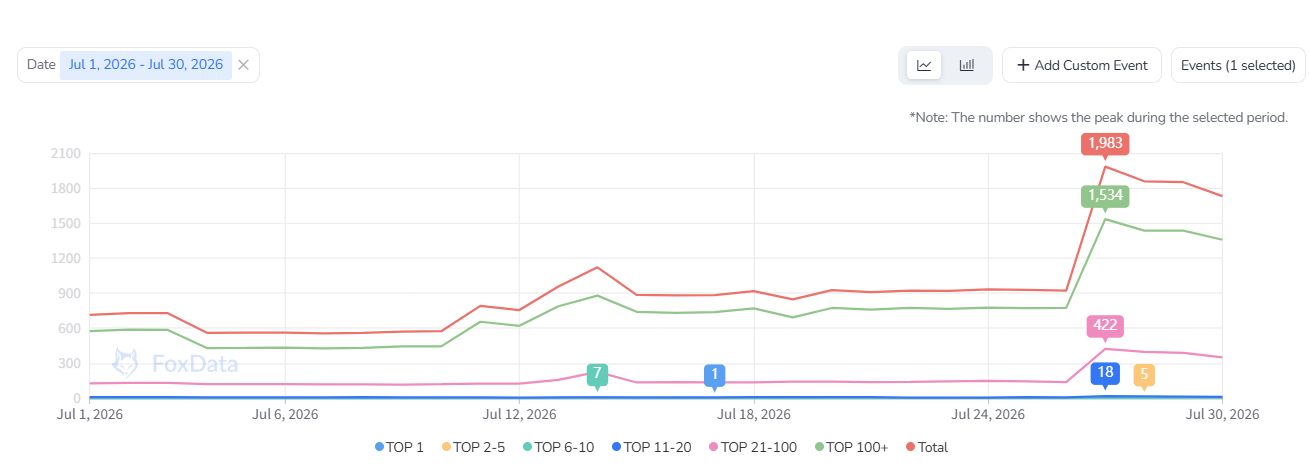
그림 4 · 같은 기간 동안 순위 키워드를 얻은 앱의 사례로, 이는 전체 시스템 축소가 아닌 관련성의 재배분을 시사합니다.
이러한 패턴은 시스템이 단순히 전반적인 인덱싱 커버리지를 줄인 것이 아님을 보여줍니다. 대신, 키워드 관련성이 업데이트된 평가 기준에 따라 재배분되었을 가능성이 있습니다 — 넓은 키워드 매칭에서 더 정교한 검색 의도 이해로의 전환입니다.
한 가지 가능성은 App Store가 의미론적 매칭(semantic matching) 방향으로 더욱 진화하여, 앱이 쿼리 용어를 단순히 포함하고 있는지가 아니라 해당 쿼리 뒤에 숨겨진 의도를 진정으로 충족하는지 평가하고 있다는 것입니다. 이러한 모델 하에서는 의도 정렬(intent-alignment)이 강한 앱들이 노출도를 유지하거나 얻게 되고, 느슨하게 연관된 용어로 순위를 유지하던 앱들은 키워드를 잃게 됩니다.
일부 초기 관찰 결과는 최근 출시되거나 업데이트된 앱들이 이전보다 더 높은 검색 위치를 달성하고 있음을 시사합니다. 이것이 확인된다면, 출시 모멘텀(launch momentum), 최근 업데이트 활동, 그리고 초기 전환 성과가 더 무겁게 가중되고 있음을 나타낼 수 있습니다. 다시 한번 강조하지만, 이는 제한된 데이터에서 나온 추론이며 확인된 변경 사항은 아닙니다.
이러한 재배분 패턴은 또한 사용자 참여, 리텐션, 전환에 더 큰 가중치를 두는 시스템과도 일치합니다 — 이러한 신호들은 자연스럽게 메타데이터 커버리지에만 의존하는 앱보다 설치 후 성과가 우수한 앱들에게 유리하게 작용할 것입니다.
7월 26~27일에 관찰된 재보정이 App Store 검색의 지속적인 특성이 된다면, 고려해야 할 몇 가지 전략적 함의가 있습니다. 다음의 권장사항은 확정된 플랫폼 동작에 기반한 처방이 아닌, 예방적이고 분석적인 성격의 것입니다.
수년간, 많은 ASO 전략은 원시 키워드 커버리지를 극대화하는 데 집중해왔습니다. 더 넓은 인덱싱이 더 이상 가시성을 보장하지 않을 수 있습니다. 미래의 최적화는 다음을 우선시하는 데 도움이 될 수 있습니다:
신선도 신호가 더 무겁게 가중된다면, 출시 후 첫 몇 주 — 그리고 주요 업데이트 후 — 전략적 중요성이 증가할 수 있습니다. 철저한 사전 출시 키워드 리서치, 최적화된 제목과 부제목, 현지화된 메타데이터, 강력한 크리에이티브, 그리고 조율된 초기 사용자 확보 모두 레버리지가 더 높은 활동이 됩니다.
메타데이터 개선, 크리에이티브 업데이트, 현지화 확장과 함께 중요한 릴리스를 맞추는 것은, 시스템이 적용하는 신선도 관련 평가 윈도우에서 혜택을 볼 수 있게 해줍니다.
공식적인 확인이 발표되지 않았으므로, 우리는 공격적인 즉각적인 메타데이터 대대적 수정에 대해 경고합니다. 대신, 신중하고 증거에 기반한 접근법이 더 적절합니다:
2026년 7월의 변동성은 올해 가장 주목할 만한 ASO 사건 중 하나로 남을 것입니다. 공식적인 알고리즘 업데이트는 발표되지 않았지만, 모니터링 플랫폼과 커뮤니티 논의에서 나온 증거는 대규모 재인덱싱 또는 검색 관련성 조정 가능성을 가리킵니다.
앱 마케터들에게 가장 중요한 시사점은 App Store 최적화가 단순한 키워드 매칭에서 벗어나, 의미론적 관련성, 사용자 의도, 전환 품질, 신선도 신호, 그리고 전반적인 사용자 경험에 의해 주도되는 더 지능적인 검색 시스템으로 계속 진화할 수 있다는 것입니다. 플랫폼이 생태계에 더욱 발전된 기술을 통합함에 따라, ASO 전략은 순수한 키워드 최적화에서 더 넓은 검색 경험 최적화(search experience optimization)로 진화할 필요가 있을 것입니다.
향후 몇 주간은 이 사건이 일시적인 재계산이었는지, 아니면 App Store 검색의 더 지속적인 변혁의 시작이었는지를 판단하는 데 결정적일 것입니다. ASOWorld는 상황을 계속 추적하고 새로운 데이터가 이용 가능해지는 대로 업데이트를 공유할 것입니다.
Get FREE Optimization Consultation
Let's Grow Your App & Get Massive Traffic!
All content, layout and frame code of all ASOWorld blog sections belong to the original content and technical team, all reproduction and references need to indicate the source and link in the obvious position, otherwise legal responsibility will be pursued.