COVID-19 UPDATE


Important Notice:Beware of scams using ASOWorld's name for part-time recruitment or ASO earning app activities. ASOWorld is not hiring any part-time staff. Trust only official information posted by ASOWorld.


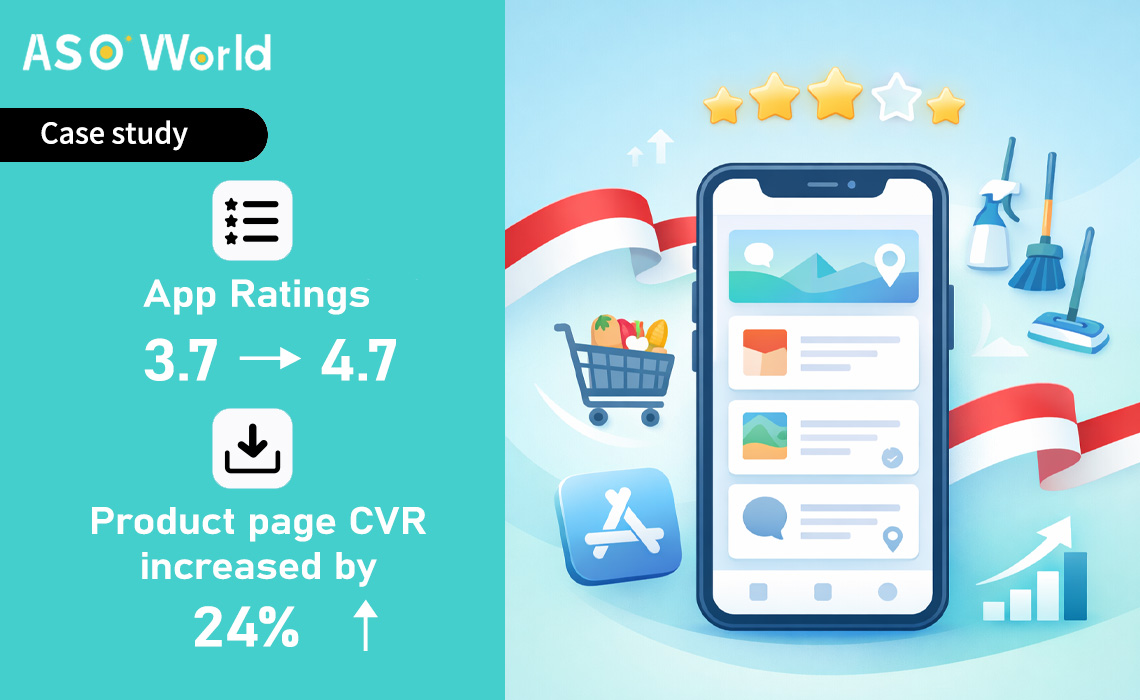
For local service apps, users aren't comparing feature lists. They're asking one basic question: Can I trust this company to actually show up?
That makes App Store ratings the main trust signal before download. According to Apptentive, 79% of users check ratings before downloading, and apps with ratings below 4.0 see 30–40% lower install conversion compared to apps rated 4.5+.
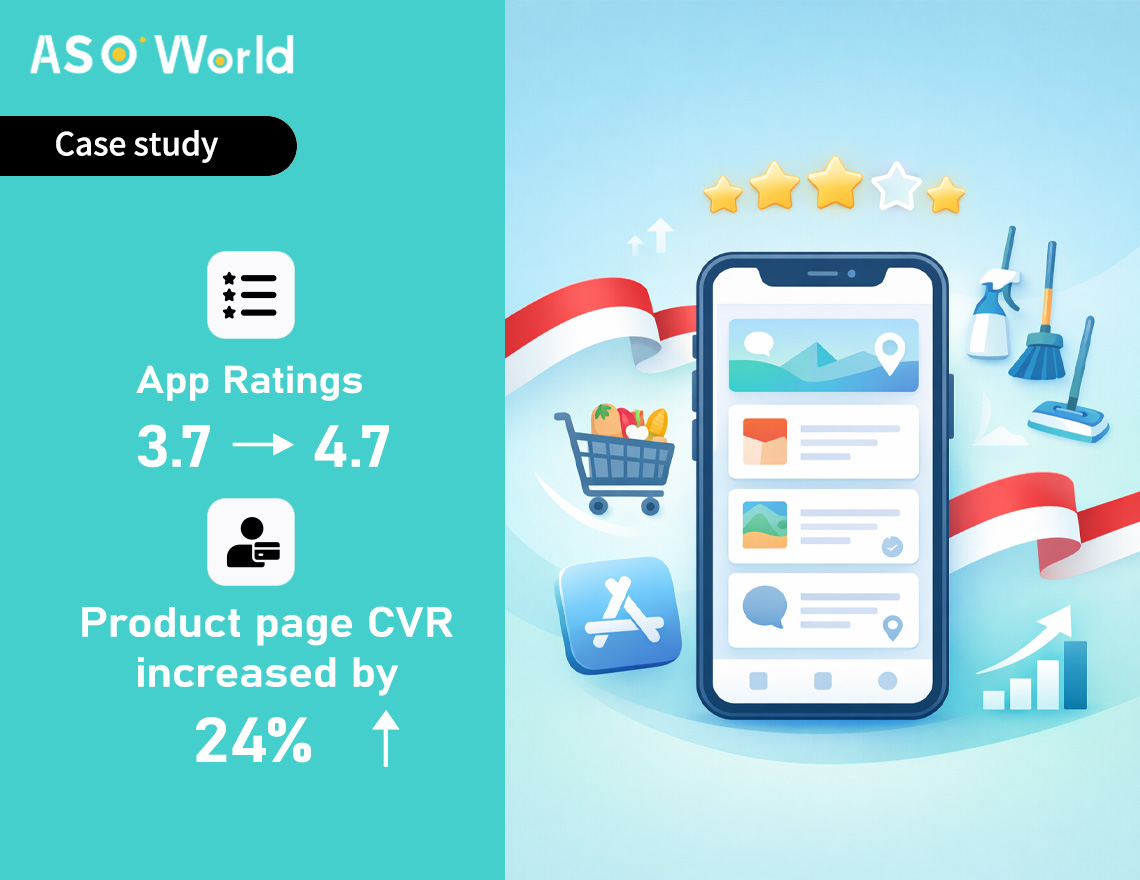
This case study shows how ASOWorld worked with an Indonesian grocery delivery and home cleaning app to lift its App Store rating from 3.7 to 4.7 stars in 30 days—and what that did to their key growth metrics.
Indonesia
iOS App Store
Before optimization, the app had a 3.7-star rating on the App Store—about 0.6 stars below the Lifestyle/Food & Drink category average of ~4.3 in Indonesia.
The odd part? Internal data looked nothing like those reviews:
The product wasn't broken. The review sample was.
Here's what happens in service apps: happy users finish their order and move on. Users who experience a delay, missing item, or scheduling problem feel strongly about leaving feedback.
Over time, this creates a rating profile dominated by the worst 5–10% of experiences—while the 88%+ smooth transactions leave no trace.
Fixing a rating issue at this scale isn't about one change—it's a sequence. We built a 30-day plan around four key moves.
Generic review prompts hit users at random emotional times.
Most apps ask for reviews after a set number of sessions or time delay. That means users get the prompt whether their last experience was good or bad—and someone who just had a late order isn't going to leave a 4-star review just because the app asked nicely.
We replaced that logic with a simple two-step check:
Only when both were true did the App Store review prompt appear.
This lines up with Apple's own SKStoreReviewAPI guidelines, which suggest asking during positive moments. Asking at genuine satisfaction points means the users seeing the prompt are already leaning toward positive feedback.
In practice: the prompt-to-review conversion rate went up by an estimated 40% compared to the old generic trigger, and the average star value of those reviews climbed significantly.
With a backlog of old 1- and 2-star reviews, organic improvement alone would’ve taken 6–9 months to meaningfully shift the overall rating. The team decided to reset the rating alongside a major v3.0 update—a legitimate App Store feature that clears old ratings when tied to a new version.
The reset worked, but it created an immediate challenge.
Right after reset, the app showed “No Ratings.” In competitive categories, this can be worse than a low rating—it signals uncertainty. Install conversion dropped in the first 72 hours.
To avoid that conversion penalty, the team used ASOWorld's rating service to quickly rebuild a baseline:
The goal wasn’t an inflated rating—it was to avoid the “no rating” conversion drop while organic reviews built up.
ASOWorld service details:
👉 How to Improve App Ratings & Reviews Safely in 2026?
Star count matters, but review content is an underused ASO lever.
Before optimization, most organic reviews looked like this:
“Good app”
“Nice service”
“Works well”
These do nothing for App Store search visibility. Apple's algorithm indexes review text as part of relevance signals—so reviews mentioning “fast grocery delivery Jakarta” or “reliable home cleaning service” help the app rank for those terms.
Working with ASOWorld, the app guided early reviews to include relevant phrases:
Beyond search, these reviews also work as social proof. Someone looking for home cleaning doesn't just want stars—they want to see others used it exactly for that and it worked.
ASOWorld First Order Discount
Get 50% off on your first order to start your app growth!
Even with better rating mechanics, negative reviews will come. The question is whether they stay negative.
We connected App Store review monitoring to their support system:
The result: ~22% of users who left negative reviews updated their rating after their issue was fixed.
Comparing 30 days before and after optimization:
|
Metric |
Before |
After |
Change |
|
App Store Rating |
3.7 ⭐ |
4.7 ⭐ |
+1.0 star |
|
Product Page CVR |
18.2% |
22.6% |
+24% |
|
Organic Installs |
Baseline |
+18% |
From better search visibility |
|
Paid UA CPA |
Baseline |
-15.4% |
From improved page conversion |
The CVR jump from 18.2% to 22.6% is the headline—but the 15.4% CPA drop matters more for long-term economics. Each paid install now costs 15.4% less, not because ad spend changed, but because the product page converts better.
Yes. The “No Ratings” state right after reset lowers conversion until a baseline rebuilds. ASOWorld’s 14-day rating service exists to cover that gap—rebuilding a natural rating baseline quickly to avoid significant install drops.
ASOWorld reviews come from real users, follow natural distribution (not all 5-star), use localized language, and never offer direct incentives (which breaks Apple’s rules). The service focuses on rebuilding a natural rating profile within Apple’s framework.
Yes. App Store search indexes review content as a relevance signal. Reviews with category-related keywords—like service type, location, or use case—help the app show up for those searches.
In this case, rating improvement was visible within 2–3 weeks of implementing timing changes and the rating service. CVR gains followed as the rating stabilized above 4.5. Full results settled over the 30-day measurement period.
The framework works anywhere, but Indonesia's specific need is localization. Indonesian App Store users respond better to reviews in Bahasa Indonesia—both for trust and search. ASOWorld offers localized review services for each market.
If you're facing similar rating issues—especially in Indonesia or Southeast Asia—ASOWorld's rating optimization framework is proven. The 14-day service is designed to handle the fragile post-reset window while setting up long-term organic review growth.
Want to see how ASOWorld's rating service could work for your app?
👉 [Contact us for a 30-day optimization plan tailored to your category]
Categories