COVID-19 UPDATE


Important Notice:Beware of scams using ASOWorld's name for part-time recruitment or ASO earning app activities. ASOWorld is not hiring any part-time staff. Trust only official information posted by ASOWorld.

Technical analysis of Apple's WWDC 2024 agenda, detailing on-device machine learning implementations, Siri algorithm upgrades, and OS developments.


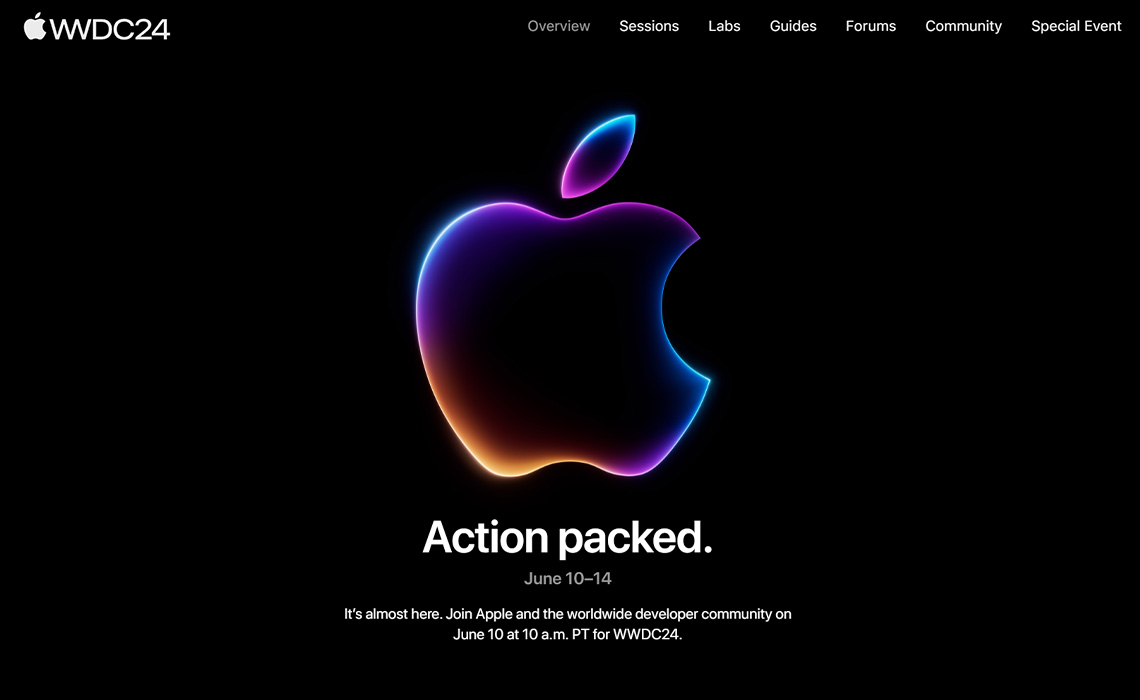
Apple's annual Worldwide Developers Conference (WWDC) 2024 focuses strictly on infrastructural software revisions and artificial intelligence (AI) integration.
Scheduled from 10th to 14th June at the Apple Park campus in Cupertino, California, the conference outlines core architectural updates, notably the iOS 18 and macOS 15 platform iterations.
Prioritising generative AI models and their systematic application across the Apple ecosystem, the WWDC brief serves to establish technical parameters for Apple’s developmental trajectory.
WWDC 2024 operates as an online symposium structured for registered developers, engineering students, and accredited technical media.
The initial presentation commences at 18:00 BST (10:00 PDT) on 10th June, concluding on 14th June. Telecast access is available via the official Apple WWDC 2024 portal or the designated YouTube streaming channel.
In response to industry shifts towards Large Language Models (LLMs), Apple has outlined plans for the implementation of generative AI architectures.
The presentation is projected to detail the integration of machine learning within operating systems, primarily targeting the operational efficiency of the Siri interface.
* Reference materials on local processing: Apple's ReALM AI: Context-Aware Computing Architecture, indicating data processing model shifts.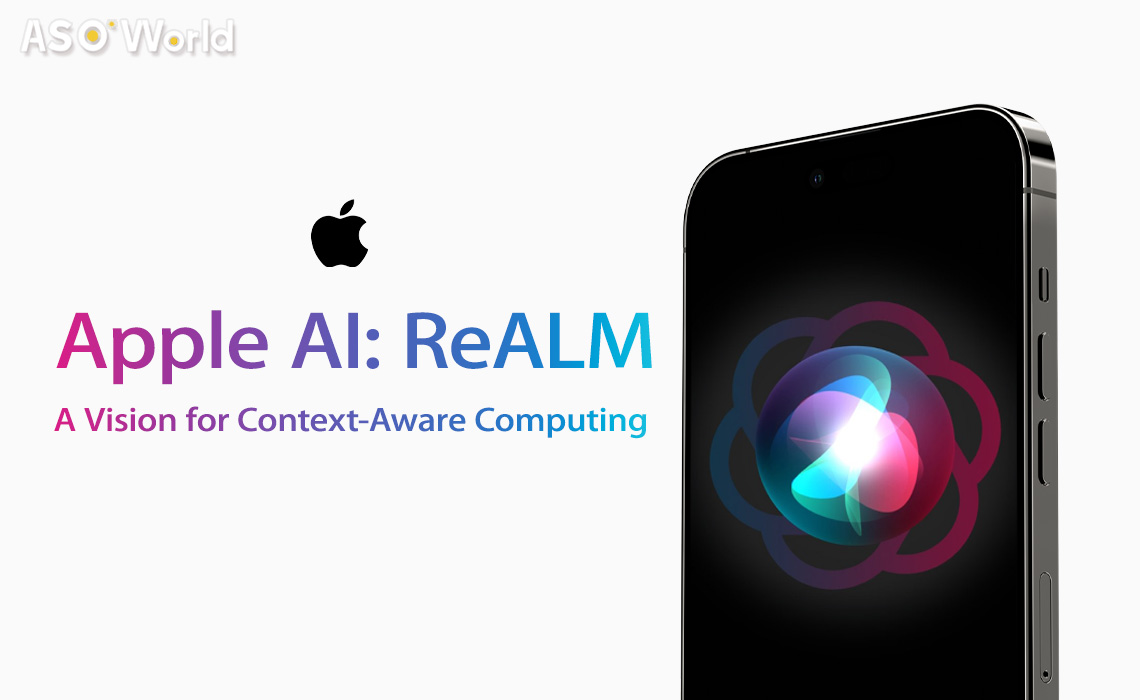
Latency Reduction in Voice Assistance
Apple's published research highlights modifications to its virtual assistant protocols. The objective revolves around deploying on-device AI functionality (edge computing) to circumvent standard cloud processing latency.
This mechanism incorporates memory-efficient model execution algorithms. Engineering documentation details new computational parameters that permit accessing language models directly from flash memory rather than relying entirely on operational RAM (Random Access Memory).
Modifications to Voice Trigger Protocols
A notable system alteration involves the depreciated dependency on the "Hey Siri" activation phrase.
Apple is investigating acoustic pattern recognition frameworks that allow the device processor to infer user intent dynamically.
Concurrently, system upgrades address precise wake-word detection loops and syntactical understanding of regional dialects and atypical lexical items.
🔗 System Integration Review: Upgraded Siri Algorithms and AI Implementations
AI Implementation Beyond OS Interfaces
Apple’s machine learning deployment extends operational scope beyond voice interaction protocols.
Current data outlines algorithmic approaches to biometrics and software-assisted design:
Apple software architecture integrates analytical tools configured to process multi-variable health telemetry to generate quantitative reports.
In operational workflows, algorithms are calibrated to support non-linear image synthesis, structurally modifying editing applications to operate via automated prompts.
Projected Core AI Utilities
Market assessments indicate structural API arrangements with third-party LLM providers, including OpenAI, facilitating expanded computing parameters. Expected functions comprise:
Image Manipulation: Algorithmic background object deletion tools.
Audio to Text Transcription: Automated phonetic conversion algorithms within Voice Memos.
Predictive Text Frameworks: Contextual syntax generation for Mail and Messages.
Graphic Synthesis: On-device rendering of custom pictorial assets based on text variables.
Notification Automation: LLM-based summarisation of aggregate data.
Semantic Query Indexing: Upgraded crawling parameters within Safari and Spotlight.
Algorithmic Curation: Automated sequence generation in Apple Music.
Generative Text Processing: Document creation support in Pages and Keynote.
Syntax Automation: Machine learning diagnostics for developers in Xcode.
Siri Protocol Revision: Implementation of complex LLMs to parse continuous and contextually linked variables.

iOS 18 functions as the foundational update dictating mobile framework compatibility this cycle.
Confirmed engineering modifications include:
Siri Restructuring: Parameter expansion for local macro execution, specifically in Mail and Photo applications.
Native Application ML Support: Incorporation of generative models in Safari and Voice Memos.
Asset Generation: Custom graphical emoji modules executed locally.
GUI Modifications: Removal of grid-lock restrictions for application alignment.
RCS Adoption: Implementation of Rich Communication Services protocols, standardising data transmission across operating systems.
Concurrent desktop operating configurations (macOS 15) establish parity with mobile AI parameters:
Productivity Tool Automation: Core APIs in iWork suite updated to execute generative operations.
System Preferences Hierarchy: Further structural alignment to reflect iOS environments.
Accessibility Protocols: Upgraded sensor tracking and UI navigation modifiers.
Application Reconstruction: Complete logic and GUI rebuild for the default scientific Calculator.

Proceed to "Account Initialisation" to access quantitative data metrics via the ASO World application optimisation module.
HomePod Firmware v18
Network data logic dictates an update matrix shifting from version 17 to version 18, addressing audio latency and multi-node functionality.
watchOS 11
The wearable division receives an OS revision concentrating on biometric precision algorithms and machine learning telemetry sorting.
visionOS 2
Spatial computing algorithms receive update variables focused on rendering efficiency and visual-tracking latency reduction.
Firmware iterations are projected for the central media box unit. Hardware modifications remain statistically improbable.
WWDC 2024 represents a critical node in Apple's release cycle, prioritising generative AI architectures and unified API toolkits over hardware announcements. Interfacing with established AI infrastructures defines the developmental scope for Apple platforms entering Q3.
For historical documentation on preceding hardware variations, review the WWDC 2023 technical audit.
 iOS 18 App Store Optimisation & SKAdNetwork,Latest Updates,
Get FREE Optimization Consultation
Let's Grow Your App & Get Massive Traffic!
All content, layout and frame code of all ASOWorld blog sections belong to the original content and technical team, all reproduction and references need to indicate the source and link in the obvious position, otherwise legal responsibility will be pursued.