A little-known safety app built for people living alone moved from obscurity to the top of app store charts in a matter of days. With minimal features, almost no marketing budget, and a name that sparked debate, “Are You Dead?,” later rebranded as Demumu, became one of the most talked-about apps of early 2026.
Its rapid rise offers more than a viral story. It provides a clear signal of how app growth is shifting and why social pain points are becoming powerful growth engines.
It didn’t feel like an app launch. It felt like a question people couldn’t ignore.
Why everyone started sharing this app
The spread did not begin with ads or influencer campaigns. It started with screenshots, reposts, and simple questions across social platforms. How could such a bluntly named app exist? Why would anyone pay for it? What problem was it really solving?
The answer was immediately understandable.
The app addresses a quiet but widespread anxiety among people who live alone: what happens if something goes wrong and no one knows. That clarity made the product easy to explain, easy to forward, and easy to discuss. Each share carried a built-in story, turning ordinary users into distribution channels.
What the app store rankings reveal about real demand
Once attention moved from social feeds to app stores, the signal became stronger. The app climbed quickly in paid utility rankings, not just in China but across multiple overseas markets after international media coverage.
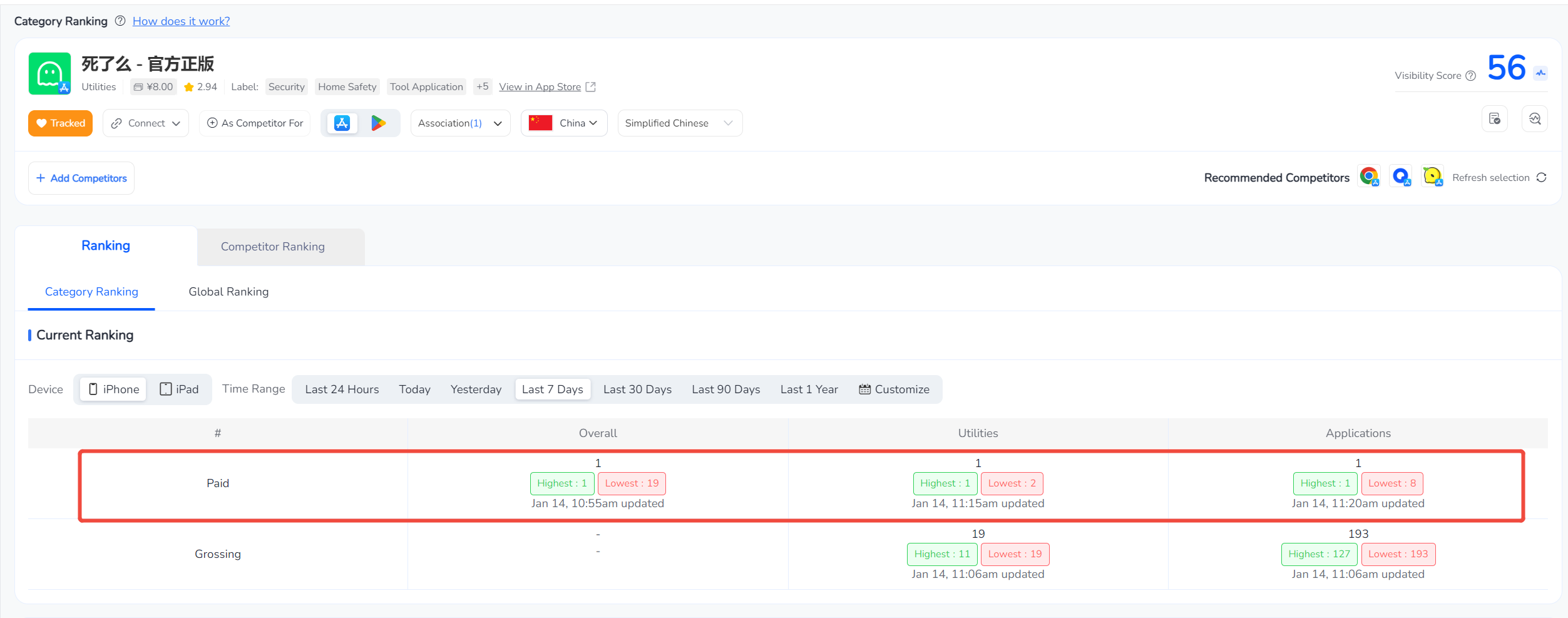
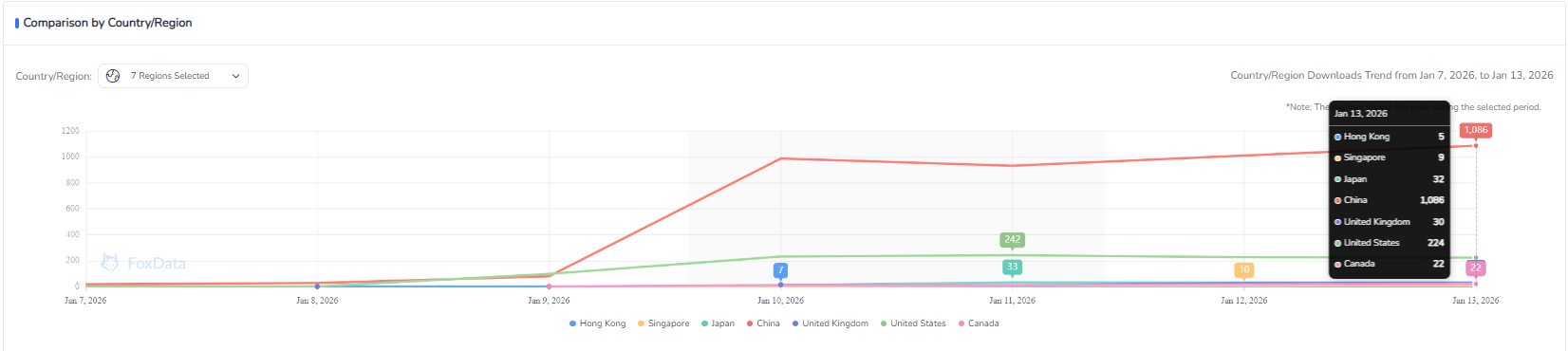
(Source from FoxData)
This mattered for two reasons.
First, paid placement indicated intent, not curiosity. Users were not downloading out of novelty alone but committing money to a simple function they felt might one day matter.
Second, the category itself was telling. This was not entertainment or productivity software chasing daily engagement. It was a situational tool designed for rare but critical moments, which made conversion more meaningful than raw download volume.
Why this growth was not an accident
The success was often described as luck, but several underestimated factors worked together.
The name acted as a distribution trigger. It was uncomfortable, direct, and impossible to ignore. That discomfort created conversation before any feature was evaluated. At the same time, the product logic remained extremely simple. There was no learning curve and no feature overload. The value could be grasped in seconds.
Most importantly, the app surfaced a problem that many people felt but rarely articulated publicly. By giving that concern a concrete form, it lowered the psychological cost of acknowledging it. Once the problem was named, sharing the solution felt natural.
What can actually be copied and what cannot
Not every part of this story is repeatable. Timing, media exposure, and social mood played a role that cannot be engineered. However, several elements are transferable.
The first is problem selection. Opportunities often sit in areas people discuss quietly or only in anonymous spaces. These problems tend to be emotionally charged, frequent enough to matter, and poorly served by existing products.
The second is expression. A product that can be described in one sentence travels faster than one that requires explanation. Growth accelerates when the product answers a question people already ask themselves.
The third is speed. By focusing on a minimal solution, the team reached the market before overthinking diluted the idea. Early exposure validated demand long before scalability or perfection became concerns.
As copycat apps flood the market, speed becomes the only real advantage. ASOWorld helps teams validate demand fast, optimize store visibility, and capture rankings before the window closes.
What this case says about app marketing in 2026
This case highlights a broader shift. Discovery no longer begins inside app stores alone. It starts in conversations, communities, and shared anxieties. App stores increasingly function as amplifiers rather than origins of demand.
For developers, this changes priorities. Messaging clarity can matter more than feature depth in early stages. Social relevance can outperform traditional growth tactics. Products that align with real-world stress points are more likely to earn organic advocacy, especially when the value proposition is immediately obvious.
Editor’s Comments
The rise of Demumu shows that breakout apps do not always come from technical breakthroughs or aggressive marketing. They often emerge from sharper problem framing and faster execution. As competition intensifies and acquisition costs rise, growth advantages are more likely to come from understanding human concerns than from optimizing funnels. In the near future, more successful apps may look simpler, more direct, and more socially grounded than their predecessors.
 COVID-19 UPDATE