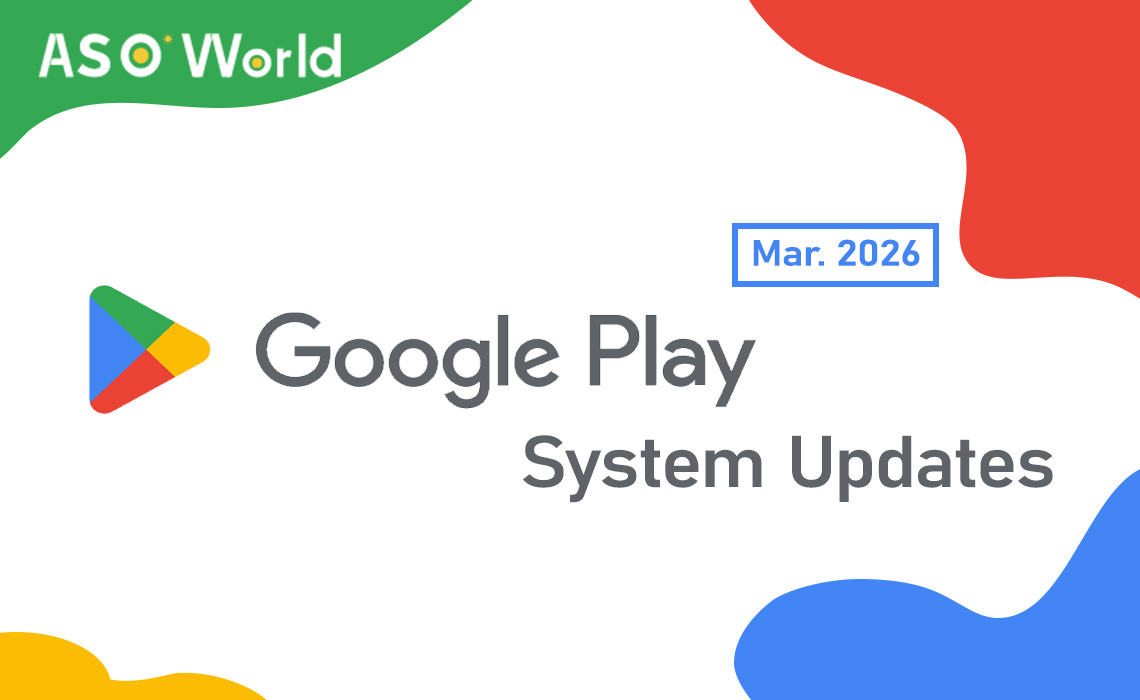
Every month, Google rolls out a series of system-level updates to keep Android devices secure, stable, and packed with new capabilities. March 2026 is no exception — from smarter Wi-Fi connectivity to expanded wallet support, cross-platform gaming, and Maps API enhancements, this month’s updates bring meaningful changes for both end users and developers.
In this article, we’ll break down everything new in the March 2026 Google Play System Updates, analyze what these changes mean for app developers, and share actionable ASO and development strategies to help you stay ahead.
What's New in March 2026 Google Play System Updates
Here’s a complete breakdown of all updates rolled out this month:
Google Play services v26.08 (2026-03-02)
Developer Services
-[Auto, PC, Phone, TV, Wear] New developer features to support Analytics & Diagnostics related processes across all major platforms.
Device Connectivity
-[Phone] New developer features to support Device Connectivity related processes in apps.
System Management
-[Auto, PC, Phone, TV, Wear] System management updates that improve Privacy across all platforms.
What this means for developers: The month kicks off with a strong focus on cross-platform analytics tooling and privacy infrastructure. If your app operates across multiple form factors — phones, tablets, TVs, wearables, or Auto — now is the time to review how you’re collecting diagnostics data and ensure it aligns with Google’s tightening privacy standards.
Google Play Store v50.4 (2026-03-02)
-[Phone] App recommendations are now surfaced through short-form video content.
What this means for developers: This is a significant ASO opportunity. Short-form video is now officially a discovery channel within the Play Store. Developers should invest in creating compelling preview clips and promotional videos that highlight their app’s core value proposition within the first few seconds. Think of it as your app’s “TikTok moment” — the store is evolving to reward visually engaging content.
ASO Strategy Tip: Update your Google Play listing with a high-quality, attention-grabbing promo video. Vertical format, fast pacing, and clear value delivery in the first 3 seconds are critical.
The industry is already talking about this shift — are you ready for it? Join the conversation on LinkedIn, where marketers and ASO experts are debating whether Play Shorts will lower CPAs through better discovery, or simply trigger a new creative arms race. Share your thoughts 👇
Google Play services v26.09 (2026-03-09)
Account Management
-[Phone] Users can now control screen brightness in WebViews.
Developer Services
-[Phone] Autofill with Google and Credential Manager now coordinate to prevent simultaneous dialogs — delivering a smoother sign-in and password-saving experience.
Device Connectivity
-[Phone] New developer features to support Device Connectivity related processes.
Security & Privacy
-[Phone] Find Hub now has additional security options.
System Management
-[Auto, PC, Phone, TV, Wear] Improvements to Device Connectivity.
-[Phone] Updates to improve Stability.
Wallet
-[Phone] More support for digital credentials.
-[Wear] Users can now pay at retail stores without opening the Wallet app on their watch.
-[PC, Phone] New developer features for Digital Wallet & Payments integrations.
What this means for developers:
The Autofill + Credential Manager coordination is a game-changer for apps with login flows. Duplicate dialogs have long been a pain point that increases drop-off at sign-in. This fix should naturally improve your Day 1 retention and onboarding completion rates — but you should still audit your authentication UX to ensure you’re leveraging Credential Manager correctly.
The expanded digital credentials support and Wear OS contactless payments signal Google’s continued investment in the mobile wallet ecosystem. If your app operates in fintech, retail, loyalty, or ticketing, integrating with Google Wallet APIs should be a priority this quarter.
Developer Strategy Tip: Implement the latest Credential Manager APIs to take full advantage of the improved sign-in coordination. Frictionless onboarding is one of the strongest levers for improving conversion and early retention.
Google Play Store v50.5 (2026-03-09)
-[Phone] The “Latest official videos” section on app detail pages now supports portrait format videos.
-[Phone] New PC Games on Play feature — discover and play mobile games on PC.
-[Phone] Revamped wishlist — save favorite games and get notified on price changes.
-[Phone] Faster updates to Gamer Profile features (e.g., Streaks) after game activity.
-[Phone] Cross-platform game purchases — buy once, play on phone, tablet, and PC.
-[Phone] Expanded media recommendations — now includes movies and TV shows with poster images.
What this means for developers:
This update is a landmark moment for mobile game developers. The introduction of PC Games on Play and cross-platform purchases (buy once, play everywhere) fundamentally changes the competitive landscape. Mobile-first studios now have a pathway to reach PC gamers without building a separate PC product.
Meanwhile, portrait format video support on app detail pages is a direct response to how users consume content today. Your app store creative assets need to evolve.
The wishlist with price-change notifications creates a new behavioral signal — users who wishlist your game are high-intent, and a well-timed price promotion could convert them efficiently.
ASO Strategy Tips:
- Add portrait-format videos to your Play Store listing immediately — this format aligns with how mobile users naturally hold their phones.
- Consider PC compatibility for your game if you haven’t already — the “PC Games on Play” feature dramatically expands your potential audience.
- Run strategic LTO (Limited Time Offers) to convert wishlisted users. The price-change notification feature makes promotions more effective than ever.
- Focus on Gamer Profile engagement — Streaks and activity-based features can boost session frequency and long-term retention.
Google Play services v26.10 (2026-03-16)
Device Connectivity
-[PC, Phone] Wi-Fi Sync — easily share and sync known, trusted Wi-Fi networks across a user’s personal device ecosystem for seamless connectivity.
What this means for developers: Wi-Fi Sync reduces friction for users switching between devices. For apps that rely on local network connectivity, real-time sync, or smart home integrations, this creates a more reliable environment. It also reduces the likelihood that poor connectivity is the cause of session drops or failed background syncs.
Google Play Store v50.6 (2026-03-16)
-[Phone] Try select premium games for a limited time before purchasing.
-[Wear] Animated placeholders appear while the Browse page loads on Wear OS.
What this means for developers:
The “try before you buy” model for premium games is a significant monetization strategy shift. For developers of paid games, this removes one of the biggest barriers to purchase — uncertainty. Users who get a taste of your game are far more likely to convert.
If you publish a premium game, consider how you’ll structure the trial experience: Which features do you unlock? How long is the trial? What’s the paywall moment? These UX decisions will directly impact trial-to-purchase conversion rates.
Monetization Strategy Tip: Design your premium game trial experience to deliver a “wow moment” early and leave users wanting more. The trial is your best marketing tool — treat it like a demo, not a crippled version.
Android System Intelligence B.23 (2026-03-20)
-[Phone] Maintenance changes.
Private Compute Services B.23 (2026-03-16)
-[Phone] Maintenance changes.
Google Play services v26.11 (2026-03-23)
Developer Services
-[Auto, Phone, TV, Wear] New developer features to support Maps related processes across Auto, Phone, TV, and Wear.
Support
-[Phone] New Android features from Gemini, Search, Photos, Gmail, and Messages.
System Management
-[Auto, PC, Phone, TV, Wear] Updates that improve Device Storage and Stability.
What this means for developers:
The Maps API enhancements across Auto, Phone, TV, and Wear open up new possibilities for location-aware applications across every Android surface. If your app uses Maps — whether for navigation, local discovery, delivery tracking, or AR — check the latest Maps SDK documentation for newly available features.
The Gemini, Search, Photos, Gmail, and Messages integration signals Google’s continued push to weave AI deeply into the Android ecosystem. Developers building apps in productivity, communication, or content creation should pay close attention to how these integrations might create new touchpoints or API opportunities.
Developer Strategy Tip: If your app has any Maps-related functionality, review the updated Maps developer features in v26.11. Cross-platform Maps support (now including Wear and Auto) opens new UX possibilities, particularly for fitness, travel, and navigation apps.
Google Play Store v50.7 (2026-03-23)
-[Phone] Use search terms to find information on the All Reviews Page faster.
What this means for developers:
This is a subtle but important change for reputation management. Users can now search within your reviews — meaning specific pain points, bugs, or feature requests are more discoverable than ever. A cluster of reviews mentioning a specific bug or complaint will be far more visible to prospective users.
👉 Wondering how to improve your app ratings and reviews without triggering app store penalties?
ASO & Reputation Strategy Tip: Conduct a review audit immediately. Use the new search functionality yourself to identify recurring negative themes in your reviews. Prioritize fixing the most commonly cited issues and respond publicly to complaints — your responses are visible to all future users browsing reviews.
Final Thoughts
March 2026’s Google Play System Updates mark a pivotal moment for the Android ecosystem. The convergence of cross-platform gaming, AI-powered Android features via Gemini, expanded Maps capabilities, and new in-store discovery mechanisms means that developers who act quickly will gain a meaningful competitive edge.
Whether you’re a game developer eyeing the PC Games on Play opportunity, a fintech app looking to deepen Wallet integration, or a content app optimizing for short-form video discovery, there’s something in this update cycle that should directly inform your roadmap.
Stay tuned for our April 2026 update breakdown — and as always, keep iterating on your store listing, your onboarding flow, and your engagement mechanics. The platform is evolving fast, and so should you.
 COVID-19 UPDATE