COVID-19 UPDATE


Important Notice:Beware of scams using ASOWorld's name for part-time recruitment or ASO earning app activities. ASOWorld is not hiring any part-time staff. Trust only official information posted by ASOWorld.

Analysis of Artificial Intelligence integration within ASO, focusing on Google's App Highlights, metadata quality & implementation strategies for the UK market.



The framework of App Store Optimisation (ASO) is undergoing structural changes driven by Artificial Intelligence (AI). As developers integrate AI capabilities into their workflows, an objective evaluation of the operational benefits and inherent risks is necessary. The strategic incorporation of AI into ASO processes requires systematic execution to remain competitive in the current data-driven marketplace.
AI's function in metadata auditing is operational automation; it systematically identifies and rectifies syntax errors, keyword stuffing, and duplication—tasks that are highly susceptible to human error and consume significant operational hours.
Algorithms provide baseline architectures for keyword expansion and initial creative mock-ups. However, these AI-generated structures must undergo rigorous human review to ensure linguistic accuracy, regional search behaviour alignment, and adherence to UK market standards.
AI models can output varied iterations of app descriptions for A/B testing implementation, enabling marketing analysts to isolate and measure conversion rates. Strict human editorial oversight remains necessary to verify brand consistency and ensure regulatory compliance within the generated text.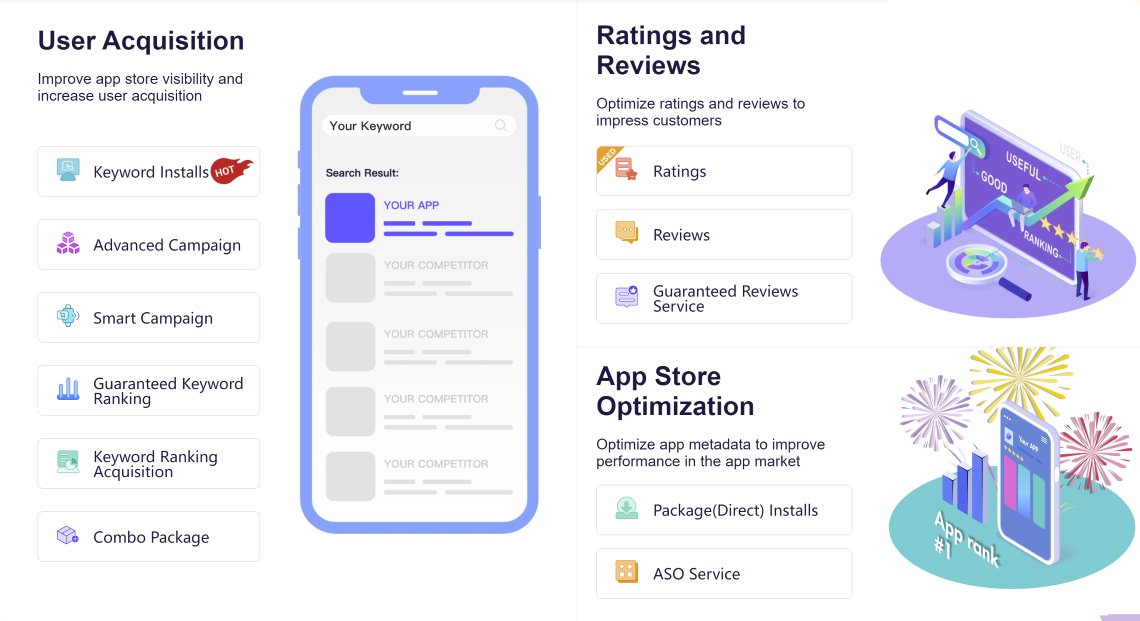
* Execute your app scaling strategy—select a Guaranteed Keyword Ranking Acquisition service for tier-1 app ranking placement, thereby increasing organic traffic. Alternatively, engage with the image above (to access the increase application install volumes service for improved algorithm visibility).
Google has experimentally deployed AI tools for developers on the Google Play Store. It is critical to rationally weigh the operational frictions against efficiency gains. We examine Google's current AI deployment to quantify the variables in this sector.
💡 Strategic Insight: Google's Developer Console AI function for ASO is explicitly classified as "experimental," indicating systemic volatility. Primary concerns include algorithmic hallucinations, flawed machine translation, and strict adherence to Play Store compliance guidelines.
Google's recent AI integration, "App Highlights," alters app discovery by employing generative AI to distil long-form descriptions into concise snippets. Currently in a restricted testing phase, the interface displays at the top of a Play Store listing: "Get details about this app summarised by Google AI." Users are required to actively select "Show" to view the parsed data, which introduces an additional validation step into the user journey funnel.
The objective of App Highlights is to deliver a frictionless, accessible overview of an application's core functionality, algorithmically extracted from the primary description.
The functional parameters of App Highlights include:
Evaluating the operational implications:
👉 Google Play Description Optimisation Guidelines
Within the context of algorithm-driven App Store Optimisation, a systematically constructed Play Store Listing is an operational prerequisite. Google's algorithms now scrape existing listing text to populate the App Highlights feature—a mechanism parallel to dynamic mobile Google Ads. The structural integrity of your application's listing sets the baseline for these highlights. Substandard or heavily unstructured text will inevitably result in compromised AI outputs or total exclusion from algorithmic indexing.
Constructing a highly indexable listing requires quantifiable strategies:
A scientifically tested listing acts as the primary data relay for visibility in application marketplaces, forming the core of a sustainable ASO operational strategy.
Click "Register for ASO Services" to execute your apps & games operational blueprint with the precise ASO World mobile app scaling campaigns available.
The deployment of AI into the ASO framework introduces measurable operational risks that must be quantified:
👉 App Store Ranking Algorithms: iOS App Store vs. Google Play Store
The intersection of AI and ASO offers quantifiable efficiencies offset by an absolute requirement for quality assurance. As we observe the ecosystem in April 2026, Google's phased experimental deployment highlights the rigid balance required between scaling artificial intelligence capabilities and enforcing app store compliance.
For comprehensive technical documentation regarding the implementation of AI utility models in App Store Optimisation, consult our prior operational guide 👉 Improving App Store Optimisation (ASO) through ChatGPT Implementation
AI is systematically restructuring ASO protocols, establishing a dual mandate of automation and stringent manual oversight. The integration of machine learning fundamentally alters dataset processing and app discovery mechanisms. However, operational teams must treat AI as a supplemental tool engineered to boost efficiency, rather than an autonomous decision-maker. Industry practitioners must base their ASO execution on empirical data, strict risk evaluation, and ongoing platform compliance algorithms.
 App Store Optimisation,Creative Optimisation & Creative Strategy,
Get FREE Optimization Consultation
Let's Grow Your App & Get Massive Traffic!
All content, layout and frame code of all ASOWorld blog sections belong to the original content and technical team, all reproduction and references need to indicate the source and link in the obvious position, otherwise legal responsibility will be pursued.