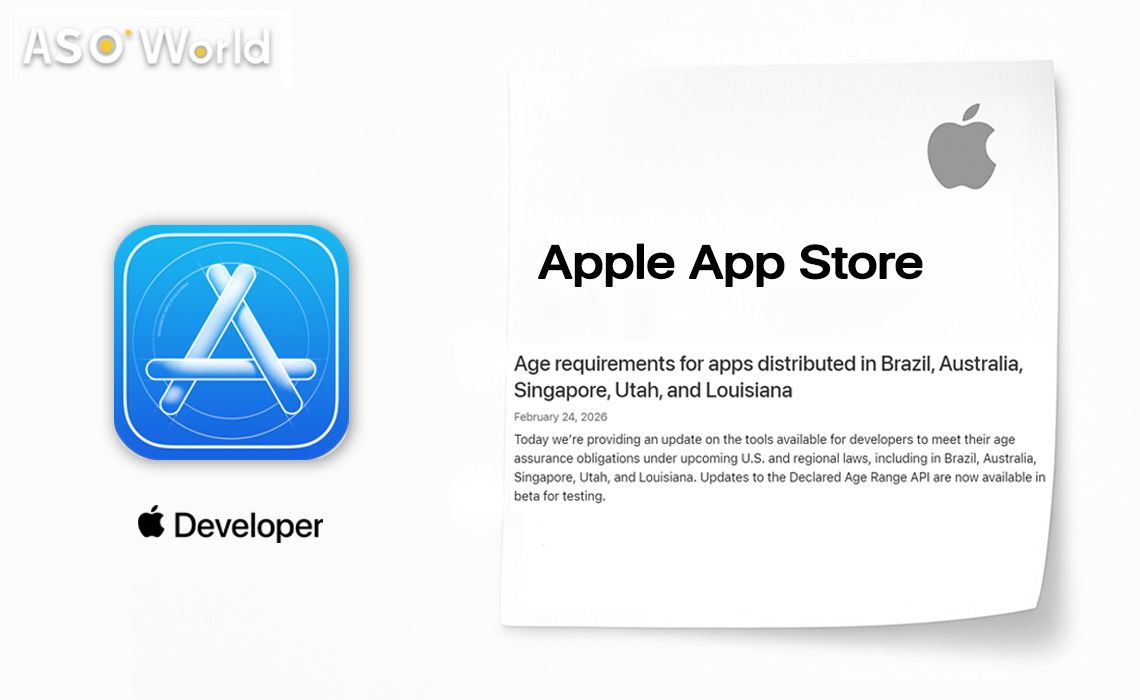
Apple has announced updates to the age assurance framework on the App Store, bringing in a wider set of tools and tougher controls on downloads in several regions. The changes affect how apps are distributed in Brazil, Australia, Singapore, Utah and Louisiana, and are intended to help developers comply with changing regional laws on age verification and the protection of children.
At the heart of the update is the Declared Age Range API, which is now available in beta with new capabilities. Alongside it, Apple is introducing further compliance signals and restrictions on downloading 18+ apps.
Stronger Age Assurance to Support Compliance Worldwide
As governments tighten regulations on the online safety of young people, Apple is strengthening the age verification infrastructure on its platform. The updated Declared Age Range API lets developers request a user’s age category, as long as the user (or a parent or guardian, where required) consents to sharing it.
The API now also returns:
- The method of age assurance used on the device
- Whether regulatory requirements relating to age apply to the user
- Whether the user is obliged under local law to share their age range
- Whether parental approval is needed for significant app updates
These additions give developers clearer signals on compliance without disclosing precise dates of birth, which reinforces Apple’s focus on privacy.
Brazil: Age Categories and What It Means for Loot Boxes
In Brazil, developers can use the updated API to access a user’s age category once consent has been given. This supports compliance with local digital regulations that put the emphasis on protecting young people.
Loot Boxes Automatically Trigger an 18+ Rating
If an app distributed in Brazil declares in the age rating questionnaire that it includes loot boxes, its App Store age rating will automatically be set to 18+ on the Brazilian storefront.
This change increases scrutiny of monetisation mechanics commonly linked with gambling-like behaviour, and fits with Brazil’s tougher stance on digital consumer protection.
Automatic Blocking of 18+ Apps
Australia, Singapore and Brazil
From 24 February 2026, users in Australia, Brazil and Singapore will be blocked from downloading apps rated 18+ unless they have been confirmed as adults through reasonable methods of verification.
The App Store will handle this confirmation of adult status automatically. Developers may nonetheless have separate legal obligations under local regulations to verify the age of users independently.
The Declared Age Range API, which is available on iOS, iPadOS and macOS, provides a supporting signal to help developers meet these requirements.
Utah and Louisiana: Broader Obligations for Developers
New requirements at state level in the US bring additional compliance responsibilities.
- Utah: Applies to new Apple Accounts created from 6 May 2026
- Louisiana: Applies to new Apple Accounts created from 1 July 2026
When requested through the Declared Age Range API, age categories will be shared with apps for users in these states.
To support compliance, Apple has widened its set of tools:
Declared Age Range API
Supplies data on age categories and regulatory signals.
Significant Change API (PermissionKit)
Lets developers ask users to acknowledge major updates.
New Age Rating Property in StoreKit
Helps manage rating metadata in line with regional regulations.
App Store Server Notifications
Gives your backend awareness of relevant events relating to accounts or regulation.
Developers releasing significant updates must follow Apple’s Human Interface Guidelines and explain clearly what an update contains when they ask users for consent. A new Significant Update Action (beta) allows adult users in Utah and Louisiana to review and approve such updates where required.
Editor's Comments
Apple’s latest expansion of age assurance reflects a wider global trend: governments are moving responsibility for child safety on to digital platforms and developers. By centralising the signals used for age verification at system level, Apple reduces friction for developers while keeping privacy safeguards in place.
Early adoption of the Declared Age Range API and related tools is likely to become a baseline strategy for compliance among apps aimed at markets that young people can reach.
 COVID-19 UPDATE