In March 2026, both Apple and Google introduced structural changes that significantly reshape how app visibility is distributed.
Apple expanded search ad placements inside the App Store, increasing sponsored inventory within search results. Meanwhile, Google Play accelerated its transition toward short-form, video-driven discovery experiences.
At first glance, these updates appear to focus on monetization and content format. However, the deeper shift is strategic: both platforms are redefining where visibility is earned and how user intent is captured.
In this article, we break down:
- What changed in the App Store search results
- How Google Play short-form video is altering discovery
- Why visibility is shifting upstream and sideways
- What ASO teams must prioritize in 2026
App Store Search Ads Expansion: What Changed in 2026
Beginning March 3, 2026, Apple rolled out expanded search ad placements in the UK and Japan, followed by a broader global release later in the month.
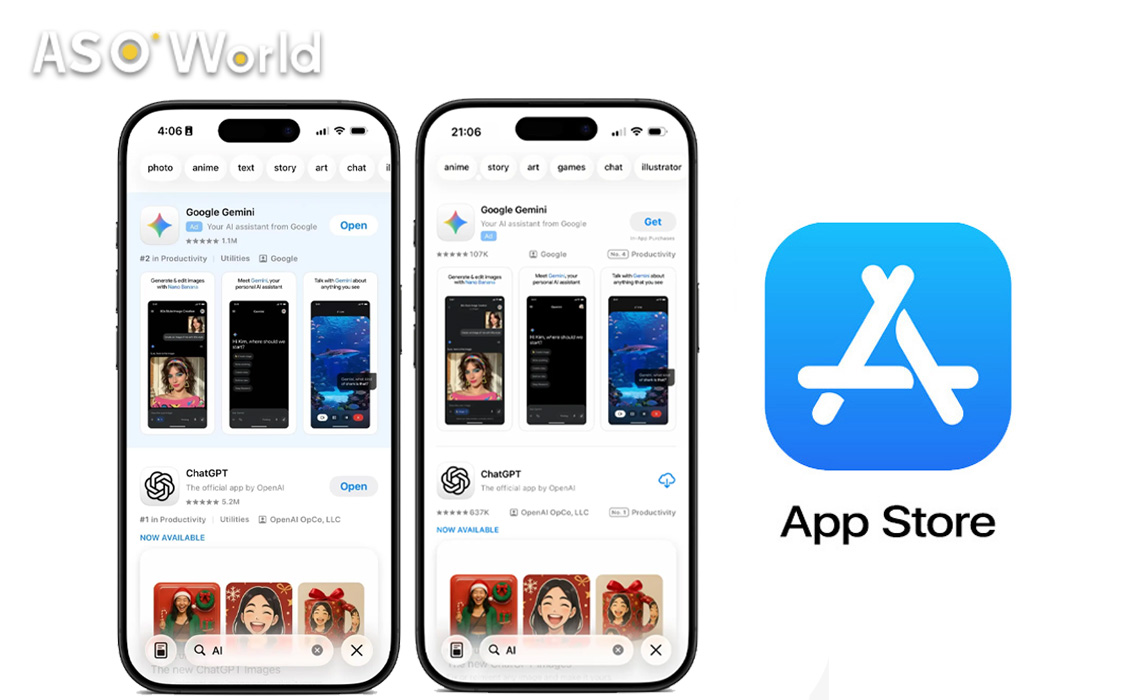
Previously, App Store search results displayed a single sponsored ad in the top position. The updated layout now allows ads to appear in multiple placements, including mid- and bottom-search positions, interspersed among organic listings.
This updated format is currently visible on devices running iOS 26.2 / iPadOS 26.2 or later, meaning its impact will grow steadily as adoption increases.
Key characteristics of the update include:
- No campaign restructuring required for advertisers
- All ads automatically eligible for new placements
- Existing ad formats remain unchanged (default product page, CPP, deep links)
- No placement-level bidding controls currently available
Search results are no longer a single sponsored slot followed by organic rankings. Instead, they resemble a layered, monetized feed in which paid and organic visibility coexist more dynamically.
How This Impacts ASO: Visibility Is Shifting Upstream
The immediate concern surrounding this update is reduced organic exposure.
With additional ad placements:
- Lower organic positions are pushed further down the screen
- Scroll depth increases before users encounter fully organic clusters
- High-intent keywords become more competitive and costly
However, the more significant change is not simply reduced space. It is the relocation of strategic advantage.
When the results page becomes more crowded, the most stable organic opportunity begins earlier in the search journey.
From Search Results to the Search Bar: The Rise of Auto-Suggestion Strategy
As more attention is captured by sponsored placements within search results, the most reliable organic exposure increasingly occurs before results even load — inside the search bar.
When users begin typing, Apple's auto-suggestion system determines which keyword queries are displayed. These suggestions strongly influence the final query a user submits. In many cases, users select directly from suggested terms rather than completing their original input.
If an app does not appear within relevant suggested queries, it may never reach the competitive stage of ranking — regardless of how strong its position would have been for that keyword.
Auto-suggestion coverage therefore becomes a critical component of modern ASO. Visibility no longer starts at ranking; it starts at query formation.
👉 How to Improve Auto-Suggestion Keyword Ranking to Boost Your App Visibility
Why Auto-Suggestion Is Difficult to Control
Traditional ASO practices are not always sufficient to influence suggestion coverage.
Metadata alignment alone does not guarantee inclusion in suggestion pools, and strong keyword rankings do not automatically generate suggestion visibility.
In competitive categories, relying solely on passive organic signals rarely produces stable results.
Effective suggestion strategy requires:
- Intentional activation of target keywords
- Early-stage signal generation
- Ongoing stabilization mechanisms to maintain presence
Without these elements, apps risk remaining invisible at the earliest and most influential stage of user intent development.
As search results become increasingly monetized, controlling upstream visibility becomes strategically essential.
For teams seeking a more structured approach, ASOWorld offers dedicated auto-suggestion optimization solutions designed to improve suggestion coverage, strengthen early-stage keyword signals, and maintain long-term visibility stability in competitive categories.
Google Play Short-Form Video: Discovery Is Becoming Content-Driven
While Apple's shift affects search structure, Google Play's evolution targets discovery architecture.
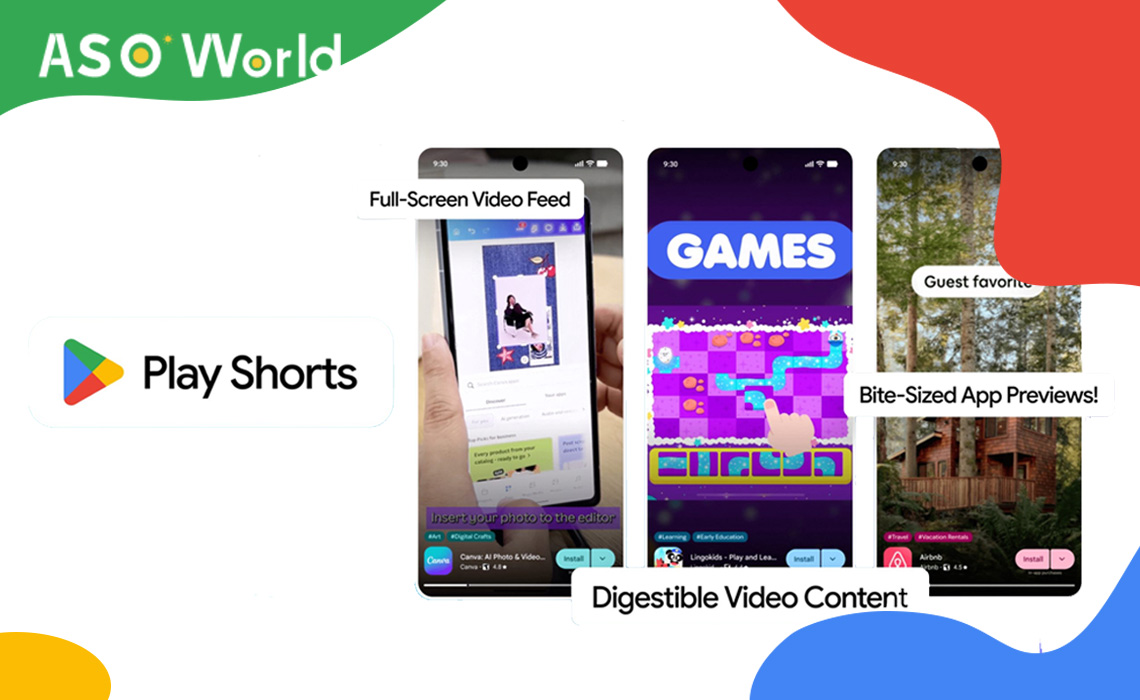
Short-form video formats are gaining prominence across Google Play's recommendation surfaces, creating scrollable, immersive experiences that resemble social content feeds.
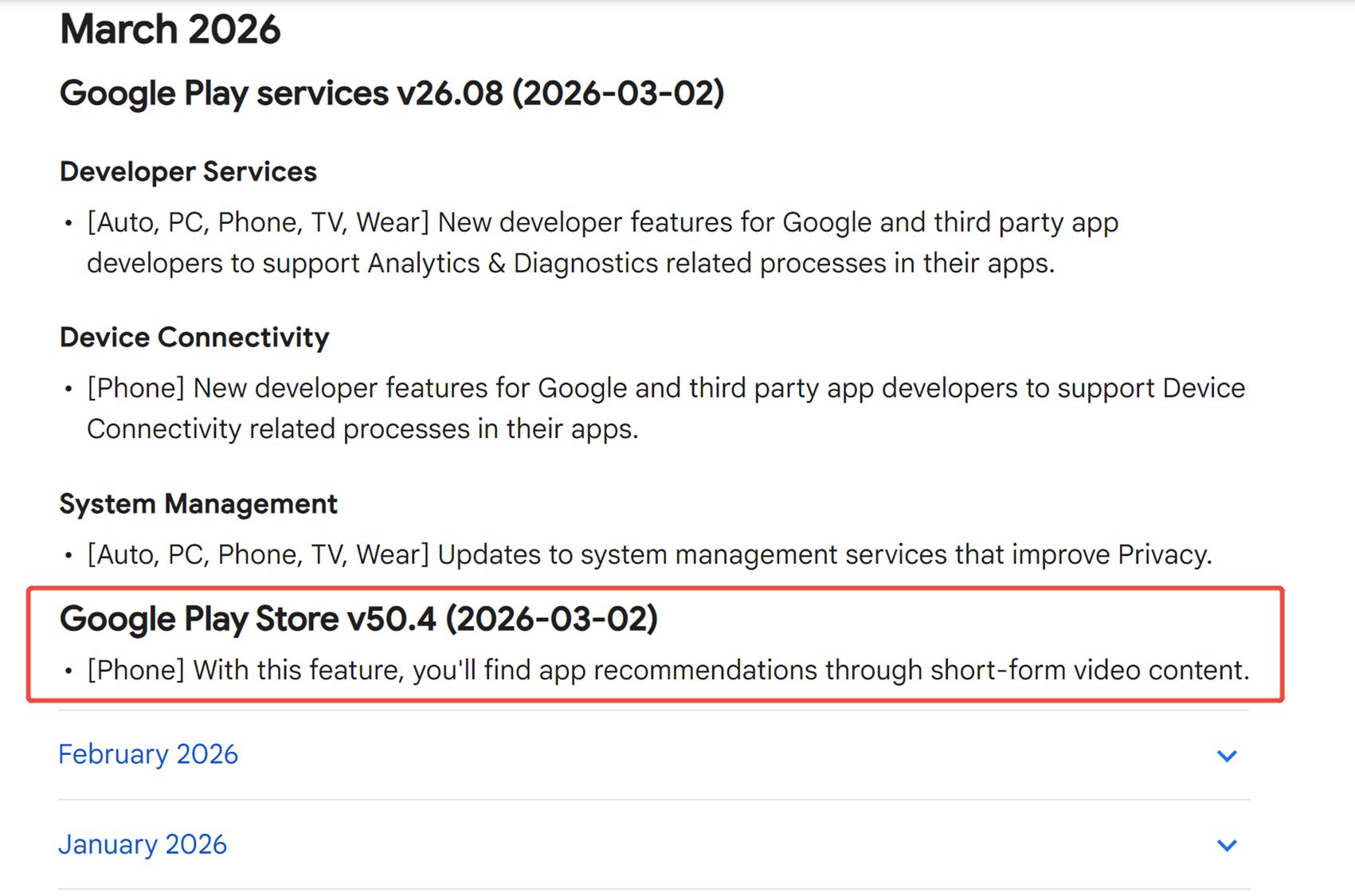
Google Play has introduced short-form video content in v50.4 (2026-03-02)
This transition reduces reliance on purely keyword-driven discovery. Instead, apps are surfaced based on engagement signals, behavioral clustering, and content performance.
In this environment, discovery is no longer limited to expressed intent through search queries. It is increasingly influenced by algorithmic interpretation of user behavior.
From Search Intent to Scroll Intent
Short-form video discovery changes the sequence of influence.
Users may encounter an app through video before actively searching for it. Engagement metrics such as watch time, completion rate, and interaction depth shape how broadly that app is distributed.
The product page becomes a confirmation step rather than the primary persuasive moment.
Just as auto-suggestions influence typed intent on iOS, algorithmic feeds influence browsing intent on Google Play.
ASO must therefore account for both query-driven visibility and behavior-driven exposure.
What This Means for ASO in 2026
Across both platforms, AI systems are increasingly responsible for interpreting user intent.
Rather than matching exact keywords alone, app stores now evaluate contextual relationships, semantic themes, behavioral similarity clusters, and review language patterns.
This evolution changes the strategic focus of ASO.
Ranking across hundreds of loosely related keywords is less meaningful than dominating tightly defined intent clusters. Consistency across metadata, creative assets, reviews, and paid campaigns becomes more important than isolated optimization tactics.
Search inside app stores is maturing into a performance-driven ecosystem — one that rewards structured experimentation, data feedback loops, and precision in positioning.
The Strategic Takeaway: ASO Is Not Dying — It's Evolving
The expansion of search ads does not signal the end of organic growth, and the rise of short-form video does not eliminate keyword strategy. What these changes truly represent is the end of surface-level ASO — approaches that depend on broad keyword coverage, infrequent updates, or siloed paid and organic efforts.
In 2026, sustainable growth belongs to teams that view visibility as a structured system rather than a ranking outcome. Effective strategies now require securing presence at the auto-suggestion stage, integrating paid and organic initiatives within a unified search architecture, leveraging creative assets as discoverability tools, and organizing optimization around clear intent clusters instead of disconnected keywords.
Visibility no longer begins exclusively on the results page. It begins when a user starts typing and suggestions shape the query. It begins when a user starts scrolling and algorithmic feeds introduce new options. It begins when AI systems evaluate contextual intent and determine which apps deserve exposure.
The defining question for ASO teams has therefore shifted. Success is no longer determined solely by whether an app ranks well for a specific keyword. It is determined by whether a team can influence the stages that precede ranking — the moments where intent is formed, guided, and ultimately captured.
In that sense, ASO is not diminishing. It is expanding into a broader discipline of intent engineering and structured visibility management.
Frequently Asked Questions (FAQ)
1. Are App Store search ads reducing organic traffic in 2026?
Expanded App Store search ads don’t directly change ranking algorithms, but they do reduce visible organic space. With multiple sponsored placements in search results, organic listings may receive fewer taps. ASO strategies must now account for visibility shifts, not just ranking position.
2. What is auto-suggestion in the App Store and how does it affect ASO?
Auto-suggestion refers to the keyword prompts shown when users type in the App Store search bar. These suggestions influence what users ultimately search. If an app does not appear in suggested queries, it may never compete on the results page, making suggestion coverage a critical ASO factor.
3. How can developers improve auto-suggestion visibility?
Improving auto-suggestion visibility typically requires activating target keywords early, strengthening relevance signals, and maintaining consistent keyword reinforcement. Metadata alone is often insufficient. A structured strategy focused on suggestion-stage visibility is usually necessary in competitive categories.
4. Does Google Play short-form video influence app ranking?
Short-form video primarily affects discovery rather than direct keyword ranking. Apps that generate strong engagement signals — such as watch time and interaction rate — can gain increased exposure in recommendation feeds. Creative performance is therefore becoming part of ASO strategy.
5. Is ASO still important with more ads and AI in app stores?
Yes. ASO remains essential but has evolved. Modern ASO includes managing auto-suggestions, optimizing around intent clusters, aligning paid and organic efforts, and adapting to AI-driven discovery systems. It is no longer just about keyword density or ranking volume.
 COVID-19 UPDATE